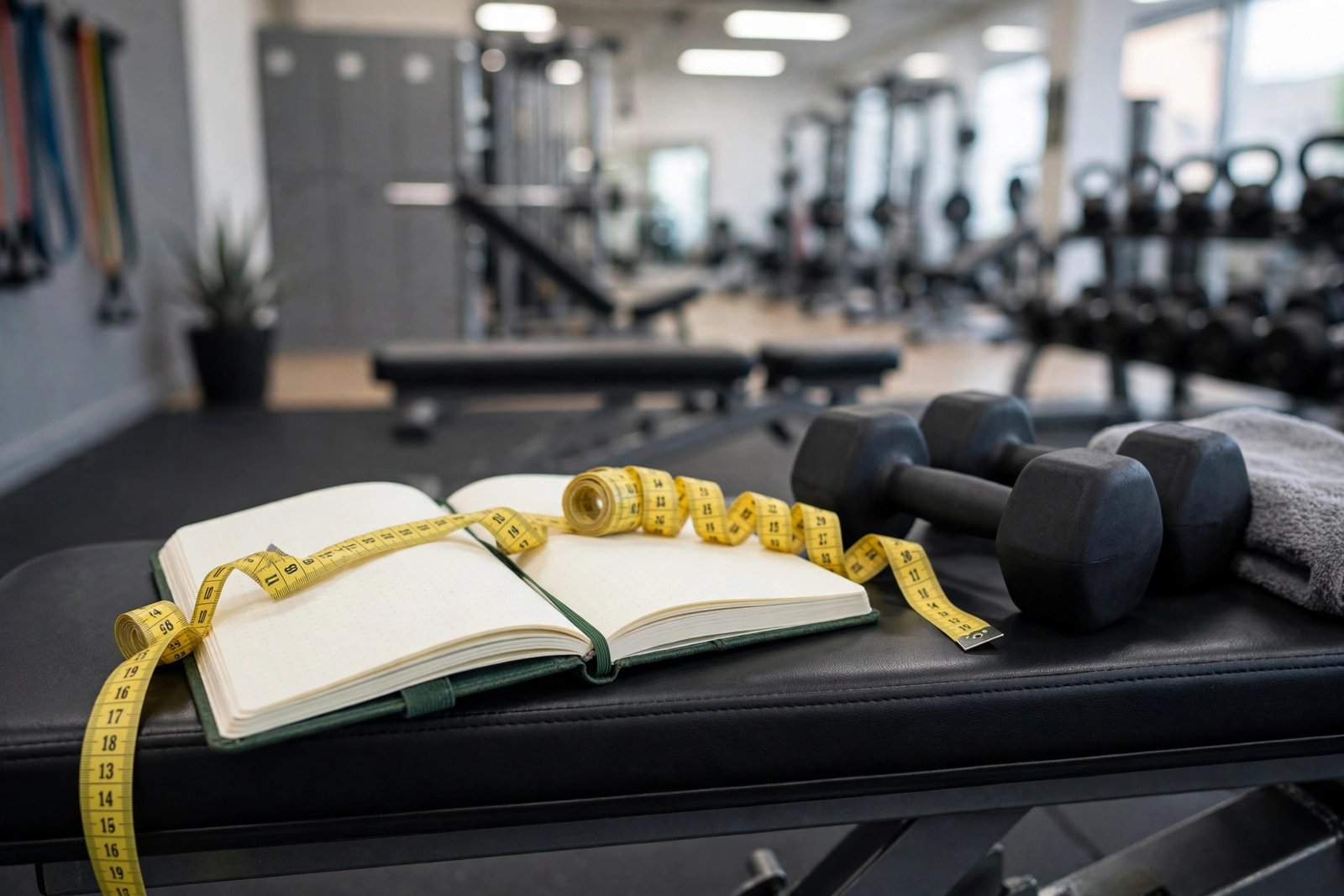
The scale is a liar — or at least, a bad storyteller. It can’t distinguish fat from muscle, water from tissue, or a great week of training from a bad one. Yet millions of people let a single number, fluctuating for a dozen meaningless reasons, dictate their mood and their motivation. If you’ve ever “done everything right” for a month only to see the scale barely move, you know the particular despair it manufactures.
Here’s the liberating alternative: ten better ways to track fitness progress that actually reflect what’s happening in your body — plus how to use the scale sanely if you keep it at all.
Why the Scale Misleads (The Science)
Your weight can swing 2–5 pounds in a single day from water, glycogen, sodium, hormones, and digestive contents — none of which reflect fat change. Worse, the scale punishes the exact adaptation you want: building muscle while losing fat (body recomposition) can leave scale weight unchanged while your body transforms. New exercisers often gain 2–4 pounds of water weight in the first weeks as muscles store glycogen — the scale says you’re failing while you’re succeeding.
The CDC’s guidance on assessing weight acknowledges these limitations, emphasizing that weight is one data point among several — waist circumference, in particular, predicts health risk better than scale weight alone. The National Institute of Diabetes and Digestive and Kidney Diseases similarly stresses body composition over raw pounds. The science is clear: the scale is the least informative metric most people track most obsessively.
The 10 Better Metrics
1. Strength progress: Are your lifts going up? More pushups than last month? Strength gains are unambiguous proof of adaptation — log them.
2. Measurements: Waist, hips, chest, arms, thighs measured monthly with a tape. Waist circumference especially — it tracks visceral fat, the dangerous kind, better than any scale.
3. Progress photos: Same lighting, same pose, monthly. The mirror lies daily; photos tell the truth monthly. Most people are shocked by 3-month comparisons the scale said were “nothing.”
4. Clothing fit: The jeans test is honest in a way numbers aren’t. Keep one “reference” outfit and note the fit monthly.
5. Performance benchmarks: Run a mile time, max plank hold, stair-climb test — repeat monthly. Improving performance is fitness, full stop.
6. Energy and mood: Rate daily energy 1–10. The trend over weeks reflects real physiological change that no scale captures.
7. Sleep quality: Regular training improves sleep architecture measurably — track it with a wearable or a simple morning rating.
8. Consistency streaks: Workouts completed per month is a process metric you fully control, and it’s the metric most correlated with long-term results.
9. Resting heart rate: A declining RHR over months signals improving cardiovascular fitness — most smartwatches track it automatically.
10. How you feel in your body: Subjective but real — confidence, ease of movement, and physical self-trust are legitimate outcomes of training.
Building Your Tracking System
Pick 3–4 metrics, not all ten. A practical starter set: monthly photos + measurements, a strength or performance log, and a simple consistency count. Review monthly, not daily — fitness changes on monthly timescales, and daily scrutiny manufactures noise. Apps help, but a notes file works; the system you’ll maintain beats the system with the best features. If you want structure for the training itself, our review of whether AI can create a workout plan that actually works covers the current options — and don’t neglect fueling the work, including how much protein you actually need to build muscle.
If You Keep the Scale (The Sane Protocol)
There’s nothing wrong with weighing — the problem is how. Weigh first thing in the morning, after the bathroom, before food, in similar clothing. Track the weekly average, not daily readings. Evaluate trends over 3–4 weeks minimum. And set a rule: the scale informs, it doesn’t decide — if the trend stalls for a month but photos, measurements, and performance improve, the program is working and the scale is wrong.
The Monthly Review Ritual
Tracking without reviewing is just data hoarding. Once a month, spend 20 minutes with your metrics: compare this month’s photos to last month’s (not yesterday’s — monthly deltas are where change is visible), check measurement trends (waist trending down over three months matters; one week’s fluctuation doesn’t), review your consistency count (did you hit your workout target?), and note energy and sleep patterns.
Then make one adjustment — not five. If strength stalled, add volume or calories. If energy dipped, check sleep and stress before changing the program. If consistency slipped, fix the schedule before fixing the workout. This single-adjustment discipline prevents the program-hopping that kills progress; most plateaus resolve with one targeted change, not a new routine. Keep a simple log of adjustments and results — over six months, it becomes a personalized training manual no coach could write for you. And celebrate the non-scale wins explicitly: the heavier lift, the easier stairs, the better sleep. Motivation follows evidence, so make the evidence impossible to ignore.
Conclusion
The scale measures one thing — your gravitational relationship with Earth at 7 a.m. — and tells you nothing about fat, muscle, fitness, or health. Track instead: strength progress, measurements, photos, clothing fit, performance benchmarks, energy, sleep, consistency, resting heart rate, and how you feel. Review monthly, trust multi-metric trends over any single number, and judge your program by the full picture. Fitness is a body of evidence, not a number on a screen. Build the evidence, and the results take care of themselves.
Frequently Asked Questions
How do I track fitness progress without obsessing over the scale?
Use monthly progress photos, body measurements (especially waist), strength/performance logs, clothing fit, and consistency tracking. Review trends monthly — fitness changes on monthly timescales.
Why isn’t the scale moving even though I’m exercising?
Common reasons: water retention from new training (2–4 lbs initially), muscle gain offsetting fat loss (recomposition), and normal daily fluctuations of 2–5 lbs. Photos and measurements usually show progress the scale hides.
What is the best single metric for fitness progress?
Waist circumference for health, strength progress for capability, progress photos for visible change. No single metric tells the whole story — use 3–4 together.
How often should I take progress photos?
Monthly, same lighting, same poses, same clothing. Weekly photos show too little change and invite obsession; monthly comparisons reveal real transformation.
Should I throw away my scale?
Not necessarily — used sanely (morning, weekly averages, 3–4 week trends, one metric among many), it’s fine. If it affects your mood or motivation negatively, removing it is the healthier choice.
How often should I take body measurements?
Monthly — same day, same conditions (morning, before eating). Weekly measuring captures mostly water fluctuation noise; monthly captures real change. Measure waist at the navel, plus hips, chest, arms, and thighs for the full picture. Record them in the same log as your photos so the trends are visible together — the combination of shrinking waist plus steady strength numbers is the clearest possible signal your program is working.
Why do I look different in photos versus the mirror?
The mirror shows a reversed, familiar image you’ve seen ten thousand times — your brain has literally learned to prefer it (the mere-exposure effect). Photos show what others actually see, which is why they can be jarring at first. For progress tracking, this is a feature: photos are more objective than the mirror. Take them consistently (same lighting, distance, and pose) and compare across months, not days — the trend is the truth.