
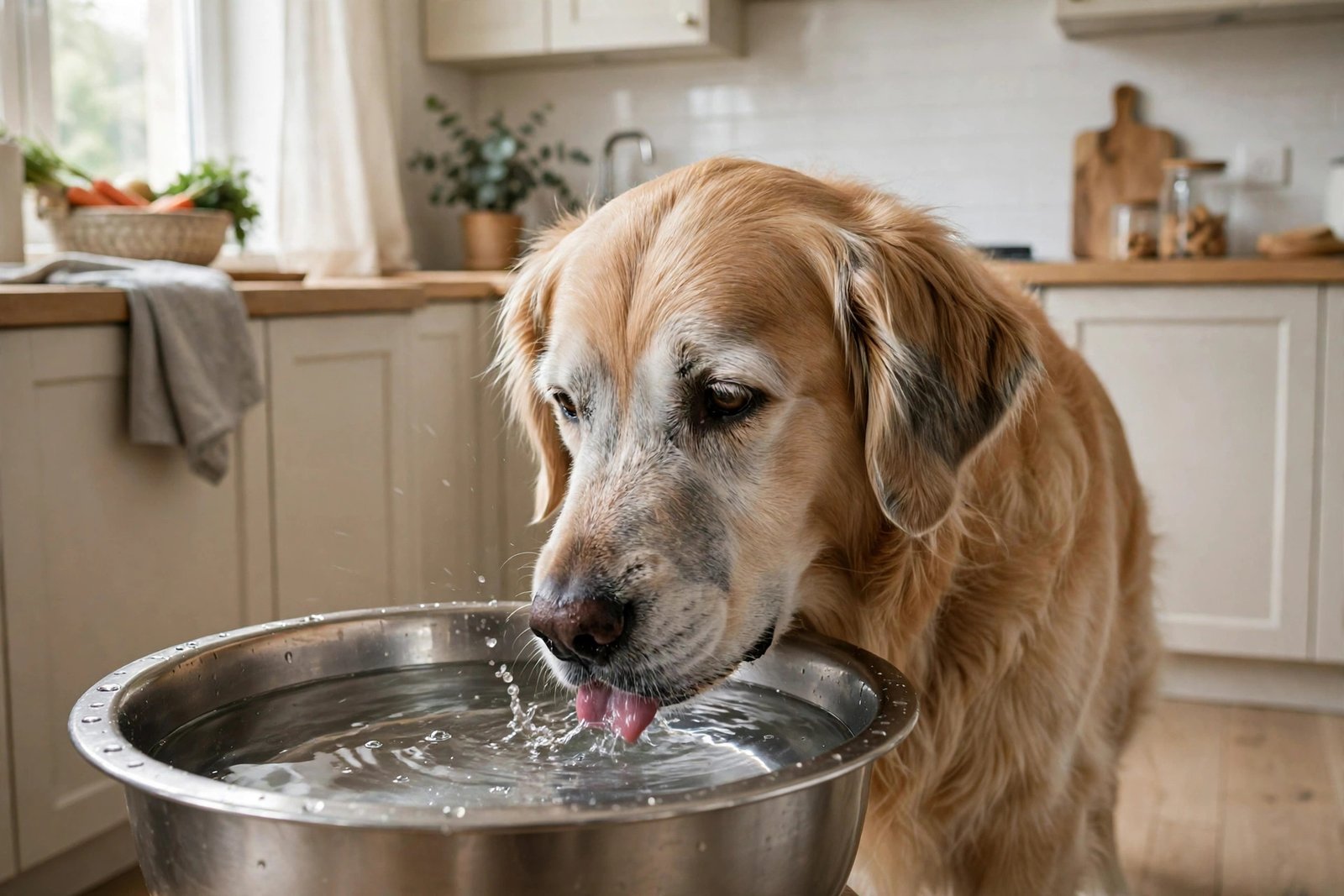
Your 11-year-old Lab has started draining the water bowl twice a day — and then asking to go out at 2 a.m. A sudden increase in thirst in an older dog is one of those changes owners notice but often dismiss: “he’s just thirsty.” In veterinary medicine, though, polydipsia (excessive drinking) in senior dogs is a flashing indicator light. It’s the early warning sign for several of the most common — and most treatable — conditions of old age. Here’s what the thirst means and what to do about it.
How Much Water Is Too Much?
First, quantify it. Normal water intake for dogs is roughly 1 ounce per pound of body weight per day — a 60-pound Lab drinks about 60 ounces (just under half a gallon). Consistently drinking more than 1.5 ounces per pound daily (90+ ounces for that Lab) qualifies as polydipsia. Measure for 2–3 days: fill the bowl with a known amount, note refills, or weigh the bowl on a kitchen scale (one fluid ounce of water weighs one ounce, making measurement easy). “Seems like a lot” isn’t data; measured intake is what your vet needs.
Rule out the benign causes first. Hot weather and increased exercise raise intake legitimately — a Chicago heat wave will do it. Diet changes matter enormously: switching from wet food to dry kibble can nearly double water intake overnight, and salty treats or table scraps spike thirst. Certain medications (steroids like prednisone, diuretics, some anti-seizure drugs) famously increase drinking — if the thirst started within days of a new prescription, call the prescribing vet before panicking.
The Big Three: Kidney Disease, Diabetes, Cushing’s
If benign causes don’t explain it, three conditions cause the majority of senior polydipsia cases:
Chronic Kidney Disease
The kidneys lose the ability to concentrate urine, so the dog urinates dilute volumes and must drink constantly to compensate. Early signs are subtle: drinking more, urinating more (often needing nighttime outings), and gradual weight loss. Bloodwork (BUN, creatinine, SDMA — a newer early marker) confirms it. Caught early, kidney disease is highly manageable for years with prescription diet, hydration support, and monitoring. This is the single most common cause of increased thirst in dogs over 10.
Diabetes Mellitus
Excess blood sugar spills into urine, dragging water with it — the dog urinates huge volumes and drinks to keep up. The classic cluster: ravenous appetite plus weight loss plus massive thirst. Untreated diabetes progresses to ketoacidosis, which is life-threatening. But managed diabetes — usually twice-daily insulin injections owners learn to give at home — gives dogs years of good life. If your older dog is drinking oceans and losing weight while eating everything in sight, don’t wait on this one.
Cushing’s Disease (Hyperadrenocorticism)
Excess cortisol from a pituitary or adrenal tumor drives thirst, hunger, panting, a pot-bellied appearance, and thinning hair. It’s most common in middle-aged to older small breeds (Dachshunds, Poodles, Beagles). Diagnosis takes specific testing (ACTH stimulation or low-dose dexamethasone suppression test), and treatment is daily medication (trilostane) with monitoring. Dogs with treated Cushing’s often feel dramatically better — owners report “getting their dog back.”
Other Causes Worth Knowing
Liver disease, urinary tract infections (the dog drinks more and urinates frequently in small amounts — different pattern from the big-volume urination above), pyometra in unspayed older females (a uterine infection that is a genuine emergency — lethargy, discharge, and thirst together mean go now), and hypercalcemia all belong on the differential. This is why “my old dog drinks a lot” always deserves a vet visit with bloodwork and urinalysis rather than internet triage — the causes share a symptom but need completely different treatments.
While you’re monitoring, keep water freely available — never restrict water to reduce the urination. Restricting water in a polydipsic dog risks dangerous dehydration, especially with kidney disease or diabetes. Instead, manage the logistics: more frequent outings, waterproof bedding, and easy-clean floors. Flooring that stands up to dogs plus washable rugs along the path to the door makes the nighttime-outing phase far less miserable for everyone.
The Vet Visit: What to Expect
Come prepared: your measured 2–3 day water intake log, notes on urination volume and frequency, appetite and weight changes, current medications, and diet details. Expect bloodwork (CBC, chemistry panel, thyroid), a urinalysis (specific gravity is the key number — dilute urine points toward kidneys or Cushing’s), and blood pressure (hypertension often travels with kidney disease). The AVMA’s pet owner resources explain these senior workups so you can ask informed questions.
Ask about SDMA testing if your vet doesn’t mention it — it detects kidney decline months before creatinine rises. And get a baseline now even if the news is good; senior dogs need bloodwork every 6 months, and trends matter more than single snapshots.
Supporting Your Senior at Home
Whatever the diagnosis, senior comfort care helps enormously. Multiple water stations around the house (old dogs shouldn’t have to climb stairs for a drink), raised bowls for arthritic necks, washed daily — stagnant bowls grow biofilm fast, and a real cleaning schedule for pet households should include daily bowl washing. Orthopedic bedding, rugs on slippery floors, and shorter, more frequent walks round out the senior setup. Many owners find pet water fountains encourage steadier drinking in seniors, and VCA’s senior pet health resources discuss hydration support strategies for aging dogs.
Chicago winters hit senior dogs hard: arthritic joints stiffen, and the trek outside for the now-frequent urination becomes genuinely difficult. A clear, salted path to a close-by potty spot, a warm coat, and paw protection aren’t luxuries for a 13-year-old — they’re what keep the routine working.
Conclusion
An older dog suddenly drinking much more water is telling you something important, and the message is usually one of three treatable conditions: kidney disease, diabetes, or Cushing’s. Measure the intake, rule out the benign causes (diet change, meds, heat), and get to the vet with your log — bloodwork and urinalysis will name the culprit, and every one of these conditions is manageable when caught early. The thirst isn’t “just old age.” It’s information. And in senior dog medicine, early information is everything.
Frequently Asked Questions
How much water should an older dog drink per day?
About 1 ounce per pound of body weight daily. Consistently exceeding 1.5 ounces per pound (e.g., 90+ ounces for a 60-pound dog) is polydipsia and warrants a vet visit with bloodwork — measure intake over 2–3 days to be sure.
What diseases cause excessive thirst in senior dogs?
Chronic kidney disease, diabetes mellitus, and Cushing’s disease cause the majority of cases. Liver disease, UTIs, pyometra (unspayed females — emergency), and certain medications round out the list. Bloodwork and urinalysis distinguish between them.
Should I limit my dog’s water intake?
No — never restrict water for a polydipsic dog; it risks dangerous dehydration. Manage the logistics instead: more frequent outings, waterproof bedding, and easy-clean floors while you pursue the diagnosis.
My senior dog drinks a lot but acts normal — is it urgent?
It’s not an ER visit unless there are additional red flags (vomiting, collapse, discharge in unspayed females), but don’t wait months. Book a vet visit within a week or two with your water-intake log — early diagnosis of kidney disease or diabetes dramatically improves outcomes.


