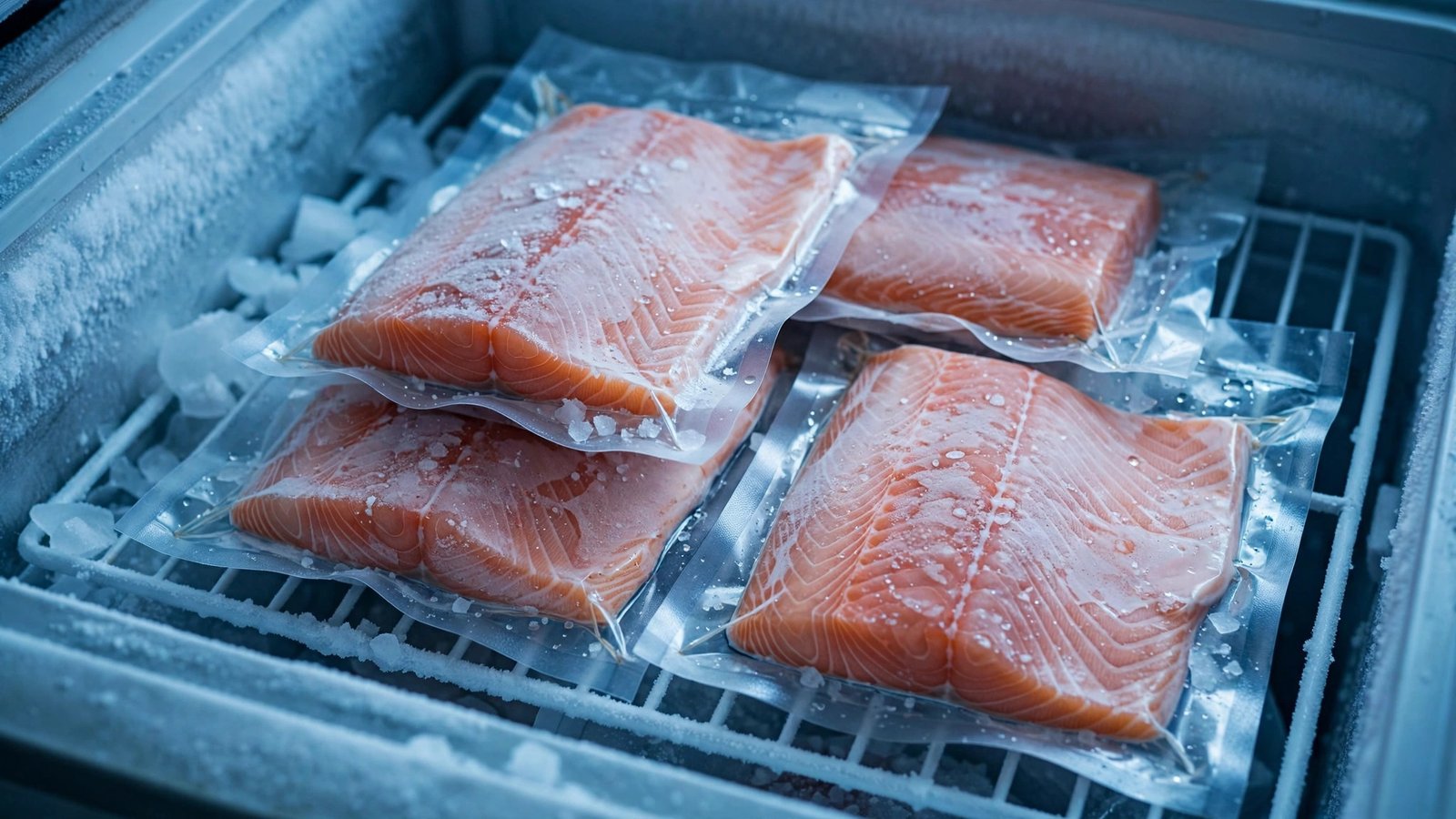
Salmon is good in the freezer for 2–3 months at peak quality, and it stays safe to eat indefinitely as long as it remains frozen at 0°F or below. After about 3 months, the texture and flavor start to decline — the fish gets drier and can pick up off-flavors — but it won’t make you sick. For the best results, wrap it tightly to prevent freezer burn and freeze it as fresh as possible.
Freezing is honestly one of the best things you can do with salmon, especially if you bought it on sale or caught more than you can eat this week. But there’s a meaningful difference between “safe” and “actually good,” and the wrapping method decides which one you get. Here’s the full picture.
How Long Does Frozen Salmon Last?
- Peak quality: 2–3 months. This is the USDA’s recommended window for fatty fish like salmon.
- Still good: Up to 6 months if vacuum-sealed and kept at a stable 0°F.
- Safe indefinitely: Freezing pauses bacterial growth entirely. A year-old frozen salmon fillet won’t harm you — it just won’t taste great.
- Lean vs. fatty fish: Salmon is a fatty fish, which means it goes rancid in the freezer faster than lean fish like cod or tilapia (those hold quality for 6–8 months).
The USDA’s Food Safety and Inspection Service is clear on this point: frozen food stored continuously at 0°F is safe indefinitely — quality is what degrades, not safety. You can review their full freezing and food safety guidance for the details.
How to Freeze Salmon the Right Way
The goal is simple: keep air away from the fish. Air is what causes freezer burn — those grayish, leathery patches that taste like nothing good.
1. Start with the freshest fish possible
Freeze salmon the day you buy it (or the day it’s caught). Every day it sits in the fridge before freezing is quality you’ll never get back. If you need a refresher on fridge timelines, see our guide on how long salmon keeps in the refrigerator.
2. Portion it first
Cut the salmon into meal-sized portions before freezing. Thawing a giant slab to use half of it means refreezing the rest, which wrecks the texture.
3. Wrap tightly — twice if you can
Press plastic wrap directly against the surface of each fillet, squeezing out all air pockets. Then place the wrapped portions in a heavy-duty freezer bag and press out the remaining air before sealing. A vacuum sealer is the gold standard here and genuinely extends quality life toward the 6-month mark.
4. Label with the date
Write the freeze date on every bag. Frozen salmon all looks the same after a month, and you’ll thank yourself later.
5. Freeze fast and keep it cold
Spread portions in a single layer so they freeze quickly — slow freezing forms large ice crystals that damage the flesh. Keep your freezer at 0°F or below, and avoid storing salmon in the door where temperatures fluctuate.
How to Thaw Frozen Salmon Safely
Best method: overnight in the fridge. Move the salmon from freezer to refrigerator the night before you plan to cook it. A 1-inch fillet thaws in about 12 hours; thicker portions may need a full 24.
Quick method: cold water. Keep the salmon in its sealed bag and submerge it in cold water, changing the water every 30 minutes. A fillet thaws in 1–2 hours this way. Never use hot water — it creates a bacterial playground on the exterior while the center stays frozen.
From frozen, directly to heat. You can cook salmon straight from frozen — just add about 50% more cooking time. It works surprisingly well for baking and pan-searing.
Never thaw on the counter. Room-temperature thawing lets the outer layers sit in the bacterial danger zone (40–140°F) for hours. The FDA’s safe food handling guidelines are explicit about this.
Signs Your Frozen Salmon Has Gone Bad
Safety-wise, continuously frozen salmon doesn’t spoil. But quality-wise, watch for:
- Heavy freezer burn: Large gray-white patches and a dry, spongy texture. Small spots can be trimmed; extensive burn means it’s time to toss it.
- Rancid smell after thawing: A sour or paint-like odor means the fats have oxidized. Don’t eat it.
- Mushy texture: If thawed salmon feels slimy or falls apart unusually, its quality is shot.
- Damaged packaging: Torn wrapping lets air in, which accelerates freezer burn dramatically.
Can You Refreeze Thawed Salmon?
Yes, with conditions. If you thawed the salmon in the refrigerator and it hasn’t been sitting out, you can refreeze it — but expect a texture hit each cycle. Never refreeze salmon that was thawed in cold water or on the counter, and never refreeze cooked-then-thawed leftovers more than once. When in doubt, cook it now and freeze the cooked dish instead.
Freezer strategy matters for all kinds of meat, not just fish. If you hunt or buy in bulk, our guide on how long deer meat lasts in a freezer covers the same principles for game meat, which follows nearly identical rules.
FAQs
How long is salmon good in the freezer?
2–3 months at peak quality, up to 6 months if vacuum-sealed. It remains safe to eat indefinitely at 0°F, but texture and flavor decline after the 3-month mark.
Can frozen salmon go bad?
It can’t become unsafe if kept continuously frozen, but it can become unpleasant. Freezer burn, rancid fats, and mushy texture are the signs that frozen salmon has passed its quality prime.
Should I thaw salmon before cooking?
Thawing in the fridge overnight gives the most even results, but cooking from frozen works fine — just increase the cooking time by about 50%. Avoid thawing at room temperature.
How can you tell if frozen salmon is freezer-burned?
Look for dry, grayish-white patches on the surface of the fish. Minor freezer burn can be trimmed away and the rest cooked normally; severe freezer burn affecting most of the fillet means the texture and taste are ruined.
Is it better to freeze salmon raw or cooked?
Raw, almost always. Raw salmon freezes and thaws with far better texture than cooked salmon, which tends to dry out through a freeze-thaw cycle. If you must freeze cooked salmon, use it within 2–3 months and expect it to work best in dishes like chowders or pasta rather than as a standalone fillet.