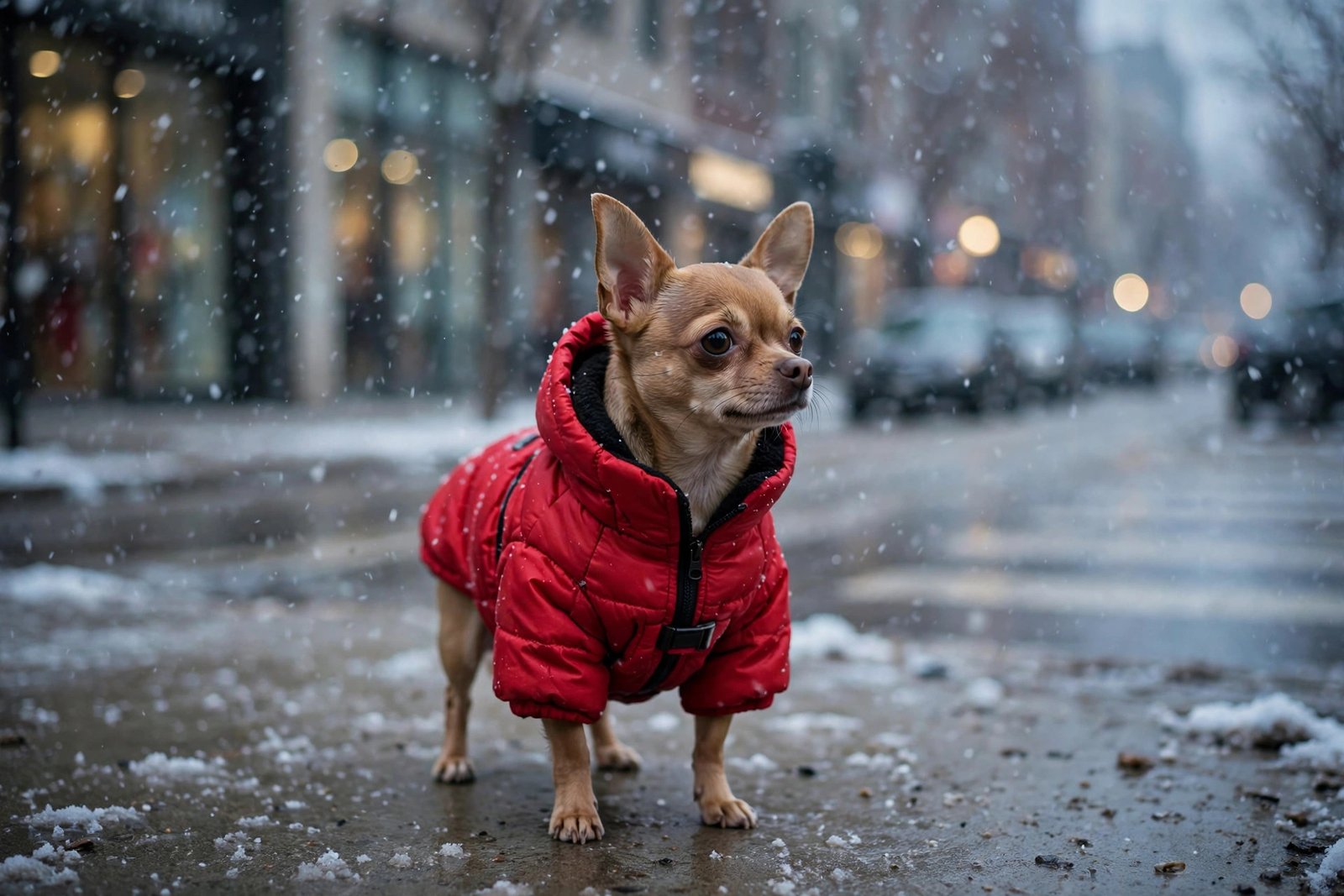
Chicago winters are brutal — the kind of cold that makes Lake Michigan steam and turns your morning commute into an expedition. So when you’re layering up in a parka, it’s natural to look at your shivering Chihuahua and wonder: should my dog be wearing clothes too? The short answer is that some dogs genuinely need winter clothing in Chicago, some don’t, and dressing the wrong dog wrongly can cause real problems. Here’s how to tell the difference.
Which Dogs Actually Need Winter Clothes in Chicago
Chicago’s January average high hovers around 32°F (0°C), with wind chills regularly plunging to -20°F or worse during polar vortex events. At those temperatures, the question isn’t fashion — it’s physiology. Dogs differ enormously in cold tolerance based on three factors: coat type, body size, and body fat.
Dogs that genuinely need winter clothing include small breeds under about 15 pounds (Chihuahuas, Yorkies, Maltese, Italian Greyhounds), short-coated breeds with little insulation (Boxers, Pit Bulls, Dalmatians, Vizslas), hairless breeds, puppies, senior dogs with arthritis or thinning coats, and dogs with medical conditions like hypothyroidism or Cushing’s disease. Greyhounds — famously lean with almost no body fat — shiver at temperatures that wouldn’t bother a Labrador.
Dogs that generally don’t need clothes: double-coated northern breeds (Huskies, Malamutes, Samoyeds), and healthy large dogs with dense coats (Labrador Retrievers, German Shepherds, Bernese Mountain Dogs). These dogs were built for cold, and an unnecessary coat can actually cause overheating and restrict their natural movement.
Signs Your Dog Is Too Cold (With or Without a Coat)
Learn the signals, because your dog can’t tell you the wind chill is -15°F. Shivering and trembling are the obvious ones, but subtler signs come first: the dog tucks its tail, lifts paws off the ground one at a time, hunches its body, whines, slows down or stops on walks, or tries to turn back toward home. A dog that suddenly refuses to keep walking in January isn’t being stubborn — it’s telling you it’s cold.
More serious cold-weather dangers include frostbite (check ears, paw pads, and tail tips for pale or gray skin) and hypothermia (weakness, lethargy, shallow breathing). These are veterinary emergencies. The AVMA’s cold-weather pet safety resources recommend limiting outdoor time in extreme cold regardless of clothing, and keeping a close eye on vulnerable dogs.
Choosing the Right Winter Gear
Not all dog clothes are created equal, and in Chicago you need the real thing — not a novelty Halloween-costume-grade sweater.
Coats and Jackets
For Chicago winters, look for an insulated, water-resistant or waterproof coat that covers from neck to tail base, with a belly panel to protect the chest and abdomen — the areas with the least fur. Velcro or buckle closures around the neck and belly should be snug but allow two fingers underneath. Reflective strips are a genuine safety feature for dark 5 p.m. winter walks. Brands designed for real winter (not fashion) use the same insulation logic as human parkas. The AKC’s expert advice library has a dedicated section on winter dog care worth browsing before you buy.
Sweaters vs. Coats
A knit sweater works for cool fall days in the 40s and for indoor warmth for hairless or tiny breeds. But sweaters absorb moisture and freeze; once Chicago hits the 20s, a sweater alone is inadequate and can actually make things worse when wet. Think of it like this: sweater = Chicago October, insulated waterproof coat = Chicago January.
Boots: The Most Underrated Item
Honestly, for many Chicago dogs, boots matter more than coats. Road salt is everywhere — it burns paw pads, causes cracking, and is toxic if licked off in quantity. Booties protect against salt, ice-melt chemicals, and the sharp pain of ice balls forming between toes. Introduce them gradually indoors with treats; most dogs do the hilarious high-step dance for a day or two and then forget they’re wearing them. If your dog absolutely refuses boots, paw balm wax before walks and a thorough warm-water paw rinse after are the minimum.
How to Dress Your Dog Without the Drama
Many dogs hate clothes at first, and forcing the issue creates a dog that hides when the coat comes out. Desensitize properly: let the dog sniff the coat, drape it over their back with treats, then fasten one closure with treats, building up over several days. Always pair dressing with something good — a walk, a treat, a game. The coat should predict fun, not confinement.
Watch for signs the clothing itself is the problem: freezing in place, refusing to move, biting at the garment, or escalated panting (overheating). A dog standing like a statue in a sweater isn’t being funny — it’s stressed. And crucially, never leave a dog unsupervised in clothing; garments can snag on crates, furniture, or fencing.
Fit matters enormously. Too tight restricts breathing and movement; too loose catches on things. Measure your dog’s neck, chest (widest point behind the front legs), and back length (neck to tail base) before buying, and check the manufacturer’s size chart rather than guessing by breed.
The Indoor Side of Chicago Winter
Clothing conversations usually focus on walks, but Chicago’s indoor winter matters too. Drafty apartments, tile floors, and forced-air heating that dries the air all affect dogs. Small, short-coated, and senior dogs often benefit from a light indoor sweater when the apartment sits at 65°F — the same logic as you reaching for a hoodie. Heated beds are popular, but choose ones with chew-resistant cords and automatic shutoffs, and never use human heating pads, which can burn.
Dry winter air also means dry skin and static. A humidifier helps both you and your dog. And keep up the exercise — Chicago dogs get stir-cagey in February, so winterizing your home against deep freezes in fall is smart planning. Keeping a small dog happy in an apartment all day through an indoor winter takes creativity: puzzle feeders, indoor fetch down a hallway, and training sessions that tire the brain when the sidewalk is an ice rink.
When Clothes Are a Bad Idea
Dressing a dog that doesn’t need it isn’t harmless. Overheating is real — dogs cool primarily through panting, and an insulated coat on a Husky at 35°F traps heat dangerously. Matting is another issue: friction from clothing mats long coats, and matted fur loses its insulating ability, defeating the purpose. Some dogs develop skin irritation or hot spots under garments worn too long. And any clothing with small buttons, bows, or dangling parts is a chewing and choking hazard.
The rule of thumb from veterinary dermatologists: if your dog has a healthy double coat and is active outdoors, skip the clothes. If your dog shivers, lifts paws, or tries to go home — dress them, properly.
Conclusion
So, is it okay to dress your dog in clothes during a Chicago winter? For small, short-coated, senior, or lean dogs — it’s not just okay, it’s responsible ownership when the wind chill hits double digits below zero. For a healthy Husky, it’s unnecessary and possibly uncomfortable. Match the gear to the dog, not to the Instagram aesthetic: insulated and waterproof for January, boots for the salt, proper fit always, and watch your dog’s body language over any rule. Chicago winters are survivable for every breed — some just need a good coat to do it.
Frequently Asked Questions
At what temperature should I put a coat on my dog in Chicago?
Small, short-haired, or senior dogs often need a coat below 45°F; healthy medium-to-large dogs with normal coats typically need one below 32°F; and at wind chills below 0°F, limit all outdoor time regardless of clothing. Watch your individual dog’s signals over any chart.
Are dog boots really necessary in Chicago?
For most city dogs, yes — less for cold than for road salt and chemical ice melt, which burn paw pads and are toxic when licked. If boots are a non-starter, use paw wax before walks and rinse paws with warm water immediately after.
Can I leave my dog’s sweater on all day indoors?
It’s fine for small or hairless breeds in a cool apartment, but remove garments periodically to check for skin irritation and matting, and never leave any dog unsupervised in clothing that could snag. Take it off at night so the skin can breathe.
How do I get my dog to tolerate wearing clothes?
Desensitize over several days: sniff, drape, fasten one closure — each step paired with high-value treats. Always associate the coat with walks or play. If your dog freezes or panics, you’re moving too fast; back up a step rather than forcing it.