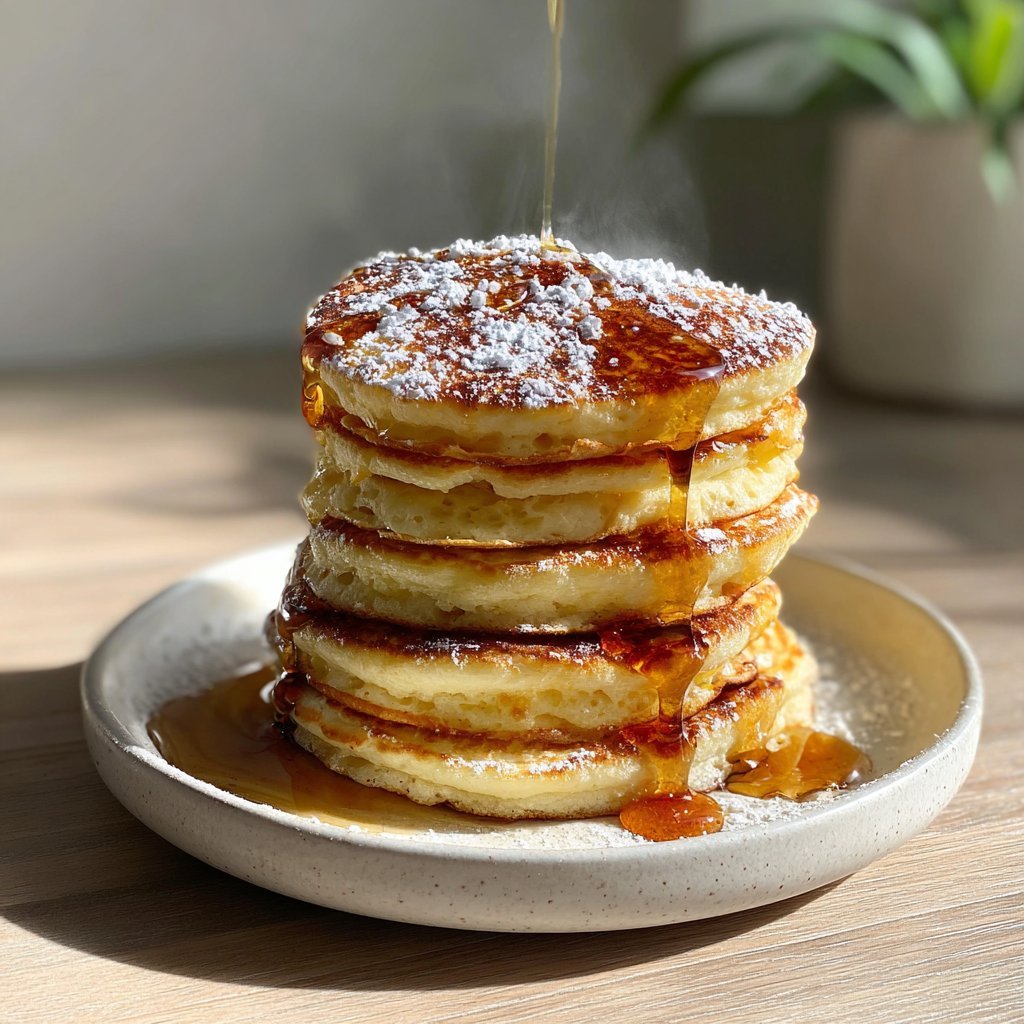
Flat, rubbery pancakes used to be my Saturday morning shame. I’d follow the recipe exactly and still get sad little discs. Learning how to make fluffy pancakes from scratch every time came down to understanding one thing: fluffiness isn’t about the recipe, it’s about protecting the air bubbles in your batter.
Once I fixed three small habits — how I mixed, how hot my pan was, and when I flipped — the pancakes started coming out tall and golden like a diner short stack. Here’s the whole method, plus the recipe ratios I use every weekend.
The Fluffy Pancake Batter Formula
Here’s my base recipe, which makes about 8 medium pancakes: 1.5 cups all-purpose flour, 3.5 teaspoons baking powder (yes, that much — this is the lift), 1 tablespoon sugar, 1/2 teaspoon salt, 1.25 cups milk, 1 egg, and 3 tablespoons melted butter. The high baking powder ratio is doing the heavy lifting here; it’s what creates the gas bubbles that make pancakes rise. Check that your baking powder is fresh — it loses power after about 6 months open. Drop half a teaspoon in hot water; if it fizzes vigorously, you’re good.
Whisk the dry ingredients in one bowl and the wet in another, then pour wet into dry and stir until just combined. Lumpy is not just okay, it’s required. Overmixing develops gluten, and gluten makes pancakes tough and flat instead of tender and tall. Count your strokes if you have to — 10 to 12 gentle stirs, then put the spoon down. A few flour streaks are fine; they’ll cook out on the griddle.
Griddle Temperature: The Make-or-Break Detail
Too hot and the outside burns before the inside sets; too cool and the pancakes spread into pale, dense frisbees. Medium heat is the zone — on most stoves that’s a 4 or 5 out of 10. Test with a few drops of water: they should dance and sizzle, not explode or just sit there. Let the pan preheat fully for 2 to 3 minutes before the first pancake goes down.
Lightly grease with butter or oil, then wipe most of it out with a paper towel — you want a thin film, not a pool. Pour about 1/4 cup of batter per pancake and don’t touch it. Wait for bubbles to form on the surface and the edges to look set, about 2 to 3 minutes, then flip once. The second side needs only 1 to 2 minutes. If your first pancake is always the ugly one, congratulations — that’s universal. Consider it the cook’s tax.
Mistakes That Cause Flat Pancakes
Overmixing is culprit number one, as covered above. Number two is old leavening — expired baking powder is just flavorless dust. Number three is flipping too early or too often; every flip deflates the rise you worked to build. Number four: pressing the pancake flat with the spatula. I know it’s satisfying. Stop doing it. You’re squeezing out the steam that’s keeping it fluffy.
Also, let the batter rest 5 minutes before cooking. That brief rest hydrates the flour and gives the baking powder a head start, and you’ll notice the batter thicken slightly. If you’re out of an ingredient mid-recipe, my guide to buttermilk substitutes for pancakes has saved many a Sunday morning in my kitchen.
- Mix dry and wet separately; combine with 10-12 gentle strokes
- Fresh baking powder is non-negotiable — test it in hot water
- Medium heat, preheated pan, thin film of fat
- Flip once, when bubbles set on the surface; never press
Serving and Storing Fluffy Pancakes
Keep finished pancakes warm in a 200°F oven on a wire rack (not a plate, which steams the bottoms soggy) while you cook the rest. Serve with real maple syrup warmed slightly, and if you want to get fancy, whipped butter with a pinch of salt is a diner-level upgrade.
Leftovers freeze beautifully: cool completely, stack with parchment between each pancake, and bag them. They reheat in the toaster straight from frozen and taste nearly fresh. For a bigger weekend spread, pair them with the crispy bacon-free breakfast sides routine — hard-boiled eggs and fruit round out the plate with almost no extra effort.
Make-Ahead Tips for Fluffy Pancakes From Scratch
You can absolutely prep fluffy pancakes from scratch ahead of time. Mix the dry ingredients the night before and store them covered; in the morning, just whisk in the wet ingredients. Don’t combine wet and dry ahead of time, though — the baking powder starts reacting the moment it hits liquid, and an overnight rest would exhaust its lifting power before the batter hits the griddle.
For the ultimate weekday shortcut, cook a full batch on Sunday and freeze the extras (parchment between each pancake, as mentioned earlier). They reheat in the toaster in 2 minutes and genuinely taste fresh. You can also keep a jar of homemade pancake mix — flour, baking powder, sugar, salt, and powdered milk — in the pantry; add egg, melted butter, and water, and you’re 5 minutes from pancakes. King Arthur Baking’s pancake mix formula is a great template for a DIY mix that rivals any store-bought box.
Why Your Fluffy Pancakes From Scratch Go Flat
If your fluffy pancakes from scratch still come out flat, run this diagnostic. First suspect: dead baking powder — test it in hot water; if it doesn’t fizz violently, replace it. Second: overmixed batter — if you stirred more than 12 times or until smooth, you built gluten that deflates the rise. Third: the wait — batter that sits 20+ minutes loses its leavening gas; cook within 10 minutes of mixing.
Fourth: griddle temperature. Too cool and the pancakes spread before the leavening sets the structure; too hot and the outside sets while the inside stays gummy. The water-drop test (drops should dance, not explode or sit still) takes 5 seconds and eliminates the guesswork. Fix the actual culprit rather than adding more baking powder — excess leavening tastes metallic and doesn’t solve technique problems.
The Bottom Line
Fresh baking powder, a lumpy barely-mixed batter, medium heat, and one confident flip. That’s how you make fluffy pancakes from scratch every time — tall, golden, and tender, no mix required.