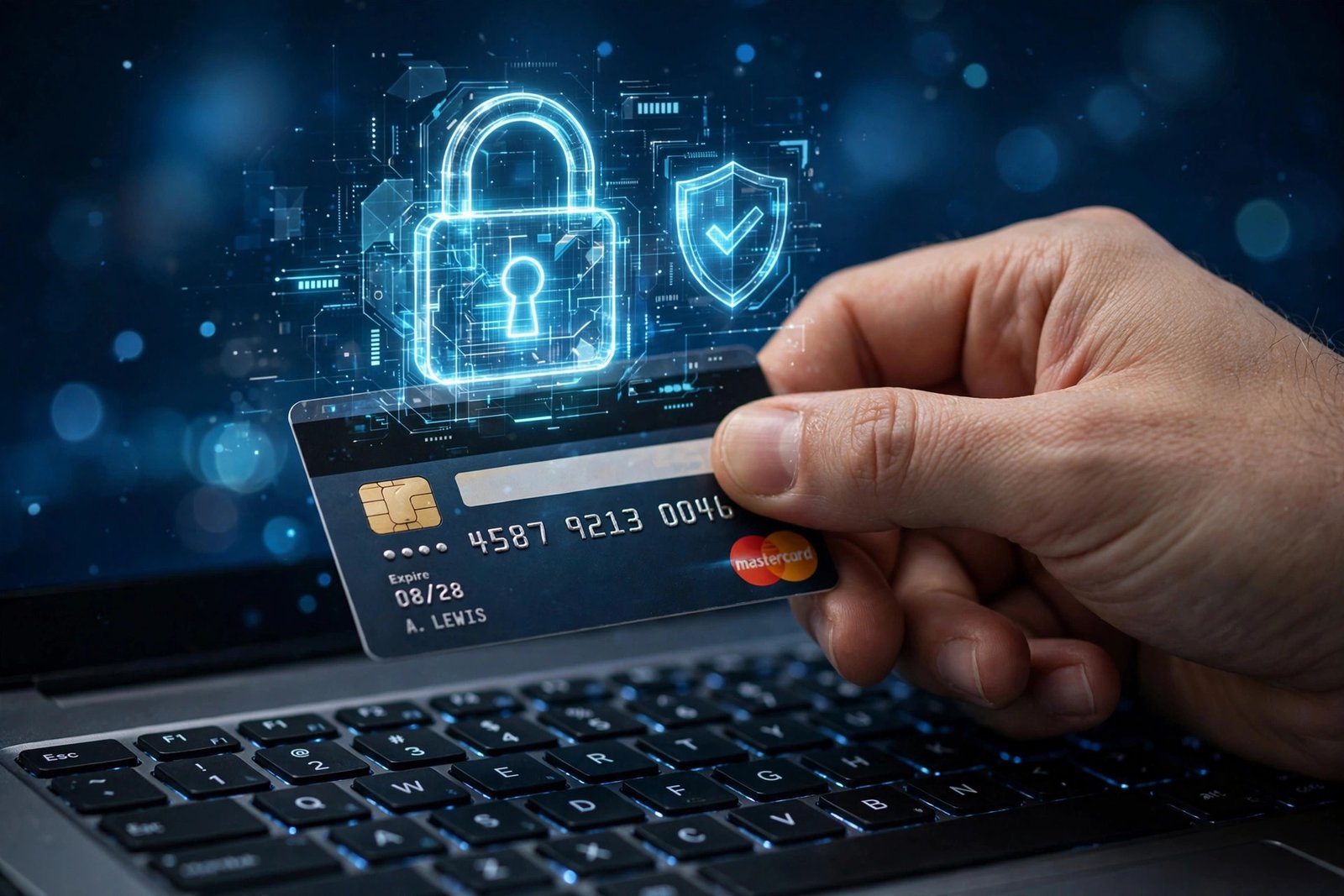
You’re buying coffee in your hometown when your phone buzzes: “Did you just spend $1,200 on electronics in another state?” You didn’t — and your bank caught it before you even knew. That wasn’t luck or a human analyst watching your account. So how does AI help detect fraud on my credit card? Machine learning models monitor every transaction in real time, learn your normal spending patterns, and flag anomalies in milliseconds — stopping most fraud before the charge even clears.
Learning What’s Normal for You
The foundation of AI fraud detection is your personal spending fingerprint. The model learns:
- Where you shop: your usual merchants, cities, and countries — plus whether you travel.
- What you buy: typical categories and amounts. $40 at grocery stores is normal; $4,000 at an electronics wholesaler is not.
- When you shop: time-of-day and day-of-week patterns. The 3am luxury purchase is a classic fraud signal.
- How you pay: in-person chip, online, phone order — each has different risk profiles.
- Device and location signals: whether the purchase came from your usual phone, your usual IP address, your usual city.
None of this requires you to do anything — it’s built from your transaction history automatically, and it updates continuously as your habits evolve.
Spotting What Doesn’t Fit
When a transaction arrives, the AI scores its fraud risk in milliseconds based on deviations from your pattern plus global fraud intelligence:
- Velocity checks: five purchases in ten minutes across three states is physically impossible for you — instant flag.
- Merchant risk: certain merchant categories and regions have higher fraud rates; transactions there get extra scrutiny.
- Amount anomalies: a charge 10x your typical purchase amount triggers review.
- Known fraud patterns: models trained on billions of transactions recognize the signatures of card-testing (tiny charges to validate stolen numbers), account takeover sequences, and emerging scam patterns — often detecting new fraud types before humans name them.
- Network effects: if your card number appears in a breached merchant’s data, the system can preemptively watch or reissue before fraud even occurs.
What Happens When Fraud Is Suspected
The response is tiered by risk score. Low-risk anomalies trigger a text: “Was this you?” — reply yes and you’re done. Medium risk might temporarily decline the transaction pending verification. High risk blocks the charge and may trigger a card reissue. The best systems now resolve most cases without you calling anyone — a massive improvement over the old “call the number on the back of your card and wait” experience.
False positives still happen — the classic “card declined on vacation” — which is why notifying your bank of travel remains smart. The models are tuned to balance catching fraud against annoying legitimate customers, and they err on the side of checking with you.
The Bigger Picture: An AI Arms Race
Here’s what most people don’t realize: fraudsters use AI too. Generative AI creates convincing phishing messages, deepfake voices for social engineering, and synthetic identities that pass traditional checks. Card fraud detection is an arms race between criminal AI and defensive AI, with billions at stake. The defensive side currently wins most battles — card fraud losses would be vastly higher without these systems — but the sophistication on both sides keeps escalating.
Your role in this: use the tools available. Enable transaction alerts on every card, use virtual card numbers for online shopping where offered, prefer chip/tap over swiping, and check statements monthly. AI catches most fraud, but an attentive cardholder catches the rest. For the broader context of AI in your financial life, see AI financial advisors.
Beyond Credit Cards: AI Fraud Fighting Everywhere
Card fraud is just one front in a much larger war. Identity theft detection uses AI to spot synthetic identities — fabricated personas built from stitched-together real data — by finding subtle inconsistencies across applications that humans miss. Insurance fraud detection analyzes claim patterns for staged accidents, inflated damages, and organized rings. Tax fraud systems flag suspicious return patterns at government scale. E-commerce fraud prevention evaluates every online order in milliseconds — device fingerprints, behavioral biometrics (how you type, move your mouse), and purchase patterns combine into risk scores.
Social engineering defense is the newest frontier: AI that detects deepfake voices in real time during calls, flags AI-generated phishing emails by their linguistic patterns, and verifies identities through behavioral analysis. The irony is rich — AI defending against AI. And cryptocurrency fraud monitoring traces blockchain transactions with pattern recognition that follows stolen funds through mixers and exchanges.
The common thread: fraud is a pattern-recognition problem, and AI is a pattern-recognition machine. Every transaction, claim, or application generates data; the models learn what legitimate looks like and flag what doesn’t. The system isn’t perfect — false positives inconvenience real customers, and sophisticated criminals continuously adapt — but the alternative (manual review of billions of transactions) isn’t an alternative at all.
Protecting yourself: the complete checklist
AI does the heavy lifting, but your habits matter. Enable transaction alerts on every card and account — real-time notifications catch what AI misses. Use unique passwords plus two-factor authentication everywhere financial; a password manager makes this painless. Prefer chip/tap over swipe and use virtual card numbers for online shopping where your bank offers them. Freeze your credit with all three bureaus when you’re not actively applying — it’s free and it’s the single strongest identity-theft defense. Check statements monthly (or review alerts weekly) — you’re the final sensor. Shred sensitive documents and be skeptical of unsolicited contact claiming to be your bank — they never ask for credentials by phone, text, or email. Do these consistently and you’re harder to victimize than 95 percent of consumers, AI or no AI.
The Takeaway
AI detects credit card fraud by learning your unique spending patterns and scoring every transaction in real time against them plus global fraud intelligence — flagging anomalies, testing velocities, and recognizing known fraud signatures in milliseconds. It’s why most fraud gets stopped before you notice, and why that “was this you?” text arrives so fast. Do your part with alerts, virtual card numbers, and regular statement checks. The Consumer Financial Protection Bureau explains your fraud liability rights (hint: you’re well protected by federal law), and the FTC tracks emerging scam patterns worth knowing.
Keep your broader AI use safe too — start with whether it’s safe to share personal information with AI chatbots.