
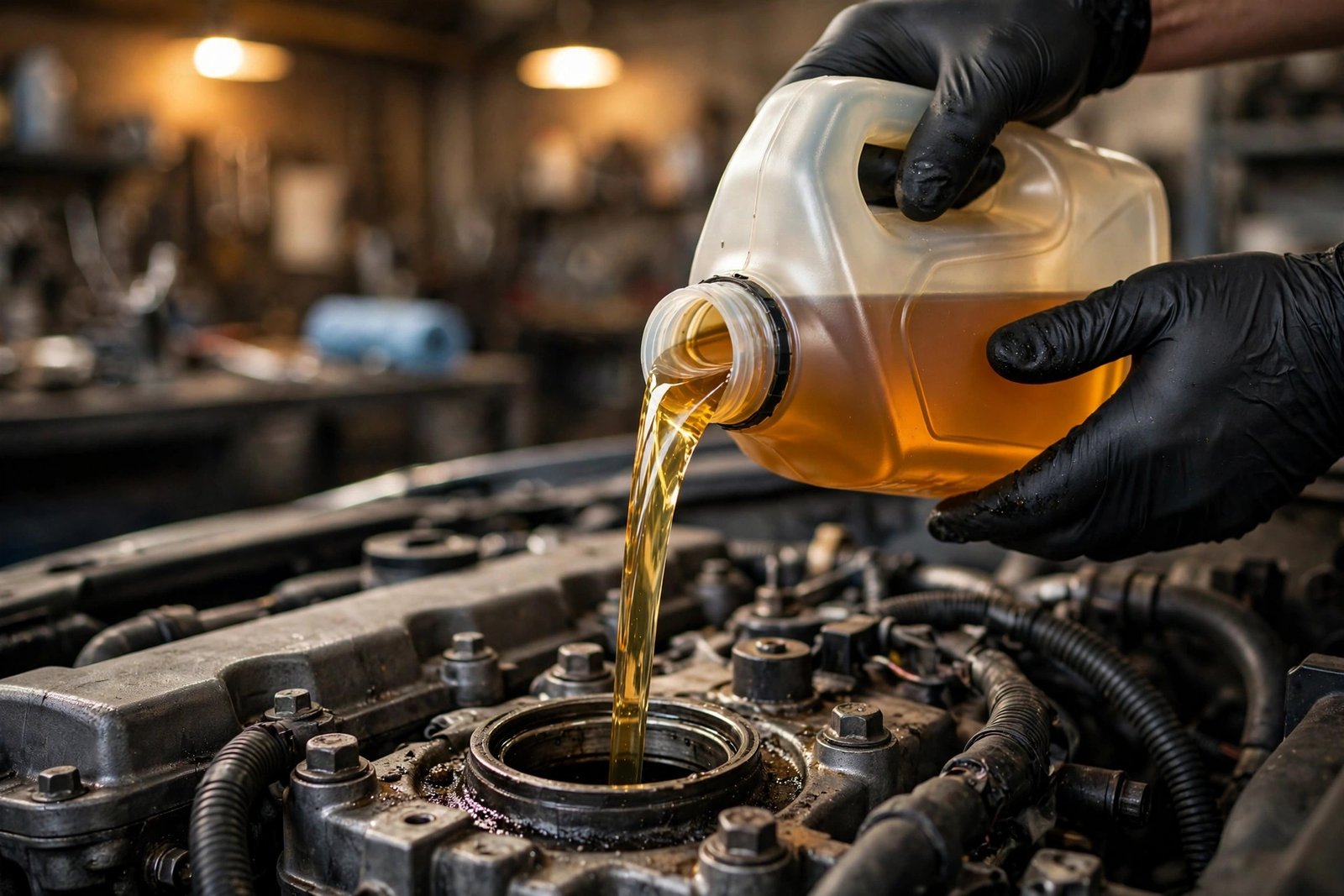
Every 3,000 miles. That number has been drilled into American drivers for decades — by quick-lube shops with a financial interest in seeing you often, mostly. But your 2026 car is not your grandfather’s sedan, and the oil inside it isn’t the same either. If you’re still changing oil every 3,000 miles in Chicago, you’re probably throwing money away. Here’s what the real answer looks like this year.
The honest version: most modern cars in 2026 need an oil change every 7,500 to 10,000 miles with full synthetic oil, or once a year — whichever comes first. But “most” hides important exceptions, and Chicago’s winters, stop-and-go traffic, and short trips can drag you into the “severe service” category that shortens the interval. Let’s sort it out.
Where the 3,000-Mile Rule Came From (And Why It’s Dead)
The 3,000-mile interval was legitimate advice — in the 1970s. Engines ran hotter and dirtier, conventional oil broke down faster, and fuel systems dumped contaminants into the crankcase. Quick-lube chains kept the number alive long after it expired because frequent visits mean frequent upsells. Modern engines run cleaner, tighter tolerances keep contaminants out, and full synthetic oil resists thermal breakdown far longer than the conventional oil the old rule assumed.
Today, nearly every manufacturer specifies intervals of 7,500 miles or more for normal driving, and many European brands go 10,000+. Your owner’s manual — not the sticker on your windshield — is the authority. If your Chicago mechanic insists on 3,000 miles for a 2024 vehicle running full synthetic, ask them to show you where the manufacturer says that. They usually can’t.
What 2026 Owner’s Manuals Actually Say
Pull the maintenance schedule for popular 2026 models and a pattern emerges. Toyota and Honda: 10,000 miles or 12 months on 0W-20 synthetic under normal conditions. Ford: 7,500 to 10,000 miles depending on model, guided by the oil-life monitor. GM: follow the oil-life system, which typically lands around 7,500 miles. Hyundai/Kia: 7,500 miles for most models on synthetic. The outlier is severe service, which nearly every manual defines separately — and Chicago driving often qualifies.
The oil-life monitor in your dashboard deserves respect. It doesn’t just count miles; it factors in engine temperature, RPM, idle time, and cold starts to estimate oil degradation. Studies have shown these systems are conservative by design. If your monitor says 15% life remaining, believe it — but don’t panic at 50%. And yes, if you’re planning a cross-country road trip on a budget, a fresh change before 3,000 highway miles is cheap insurance even if you’re technically early.
Chicago’s Winter Problem: Why Your Interval Might Be Shorter
Here’s the catch for Chicago drivers. “Severe service” in most manuals includes: trips under 10 miles (especially in cold weather), extensive idling, stop-and-go traffic, and sustained sub-freezing operation. That’s a description of a normal Chicago winter commute. Cold starts are brutal — oil thickens, fuel dilution increases because the engine runs rich until warm, and condensation doesn’t burn off on short trips, which promotes sludge.
Practical rule for Chicago: if your winter driving is mostly short hops under 15 minutes, treat yourself as severe-service from November through March and change every 5,000 to 7,500 miles during those months. If you regularly drive 30+ minutes so the engine fully warms up, the standard 7,500–10,000 mile interval holds year-round. Lake-effect cold snaps where your car sits outside overnight are the worst case — consider a block heater if you park outdoors, since warm starts dramatically reduce engine wear.
Synthetic vs. Blend vs. Conventional in 2026
This choice directly determines your interval. Full synthetic (what nearly all 2026 cars specify): 7,500–10,000 miles. Synthetic blend: 5,000–7,500. Conventional: 3,000–5,000 — and frankly, conventional oil has almost no place in a modern engine; the small savings per change vanish when you’re changing twice as often.
Check what your car actually requires. Many 2026 engines specify 0W-20 or 0W-16 full synthetic, and using a heavier conventional oil to save money can cause real problems with variable valve timing systems. The grade on the oil cap isn’t a suggestion. High-mileage synthetics (75,000+ miles) with seal conditioners are worth it for older Chicago cars battling salt-season leaks. And don’t fall for the “extended performance” oils promising 20,000 miles unless your manual blesses it — the oil might survive, but your filter won’t.
Signs You Need a Change Now (Regardless of Mileage)
Mileage is a proxy; condition is the truth. Check your dipstick monthly: oil should be amber and translucent. If it’s black and gritty, change it. If it smells like gasoline, change it — fuel dilution is common in cold-weather short-trip driving. If the level drops between checks, you’re burning or leaking oil, and topping off doesn’t reset the clock on degraded oil.
Dashboard warnings matter too. The oil pressure light (not the maintenance reminder) means stop driving and check immediately — that’s a lubrication emergency, not a suggestion. Unusual engine noise on cold starts, especially ticking from the top end, can indicate oil that’s too thick or too degraded to circulate properly. In Chicago’s January cold, that symptom alone justifies moving your change up. The NHTSA’s vehicle maintenance guidance reinforces the broader point: staying ahead on routine maintenance prevents small issues from becoming roadside emergencies.
How to Check Your Oil Like You Mean It
Park on level ground, wait at least 10 minutes after shutting off the engine (or check it cold in the morning — cleanest reading). Pull the dipstick, wipe it, reinsert fully, pull again. Read the level between the marks, note the color by wiping it on a white paper towel, and rub a drop between your fingers — grit means contaminants. This 90-second check once a month catches problems that mileage math misses, and it’s the single best habit for keeping a car past 150,000 miles. For a broader look at keeping car costs down, see our guide to reducing your monthly bills without changing your lifestyle — vehicle maintenance is one of the easiest wins.
Conclusion
In 2026, the real oil-change answer for most Chicago drivers is 7,500 to 10,000 miles on full synthetic, or once a year — tightened to 5,000–7,500 during winter if you’re a short-trip driver. The 3,000-mile rule is a relic that survives on habit and upselling. Trust your owner’s manual and your oil-life monitor over the windshield sticker, check the dipstick monthly, and spend the money you save on the maintenance that actually matters. Your engine doesn’t need more frequent oil changes. It needs the right oil, changed at the right time.
Frequently Asked Questions
How often should I really change my oil in 2026?
Most modern cars: every 7,500–10,000 miles on full synthetic, or once a year, whichever comes first. Chicago winter short-trip drivers should use the shorter end (5,000–7,500) from November through March.
Is the 3,000-mile oil change rule still valid?
No, for modern cars on synthetic oil. It was designed for 1970s engines and conventional oil. Today’s engines and synthetics safely go 2–3 times longer.
Can I trust my car’s oil-life monitor?
Yes. Oil-life monitors account for temperature, RPM, idle time, and cold starts — not just mileage — and are calibrated conservatively by the manufacturer.
Does cold Chicago weather mean more frequent oil changes?
It can. Frequent short trips in freezing weather count as “severe service” in most manuals, which shortens the interval. Long commutes that fully warm the engine are fine on the standard schedule.
What happens if I wait too long between oil changes?
Degraded oil loses its ability to lubricate and clean, leading to sludge buildup, increased wear, and eventually expensive engine damage. The fueleconomy.gov maintenance guide notes that proper oil changes also protect fuel economy — neglected oil costs you at the pump too.


