
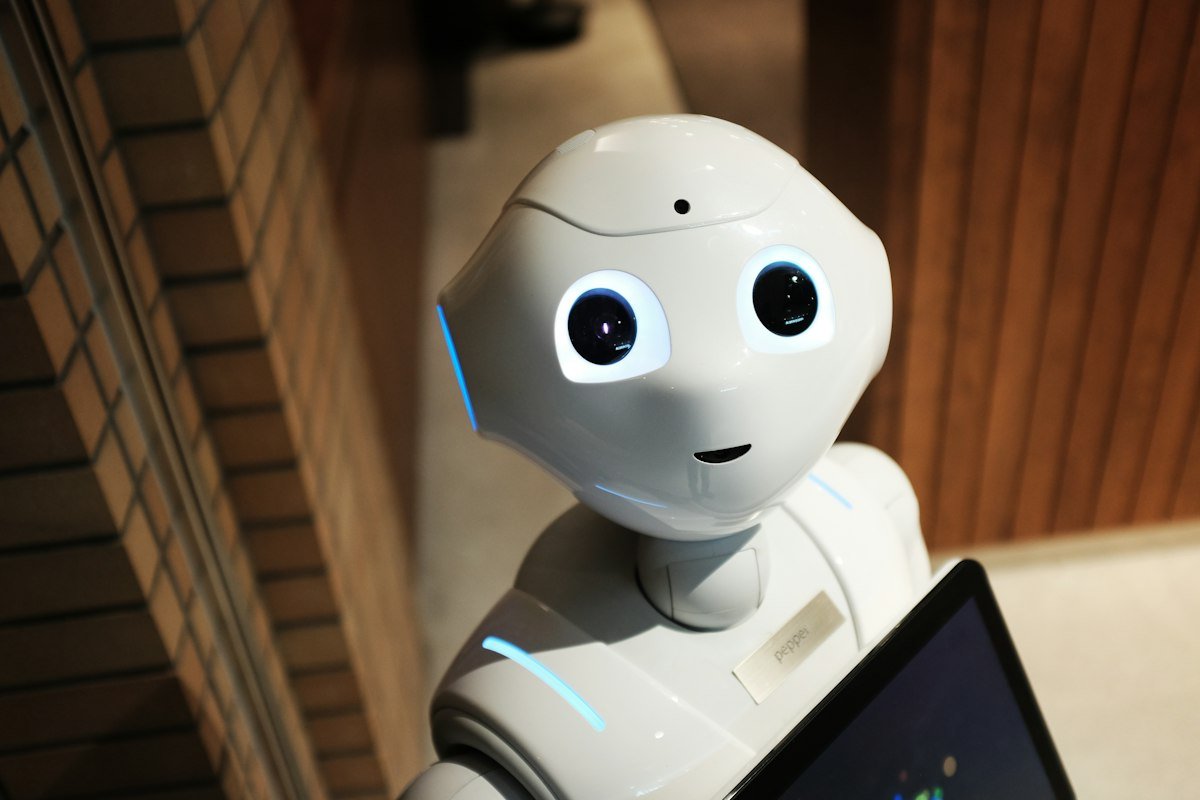
Most people’s understanding of AI comes from movies, headlines, and that one friend who won’t stop talking about robots taking over. The result is a set of confident beliefs that are mostly wrong. So what are the biggest misconceptions regular people have about AI? That it “thinks” like we do, that it’s either genius or useless, that it’s unbiased because it’s math — and several more that genuinely affect how people use (and fear) the technology.
Misconception 1: “AI Thinks Like a Human”
The biggest one. When a chatbot writes a beautiful essay, it feels like there’s a mind in there understanding your question. There isn’t — there’s a statistical model predicting which words plausibly come next, trained on vast amounts of text. It’s astonishingly good at mimicking understanding, which is different from having it. This matters because it leads directly to over-trust: people assume the AI “knows” things, when it’s really just generating plausible-sounding text. (For the technical distinction, see AI vs. machine learning.)
Misconception 2: “It’s Either Superintelligent or Totally Useless”
People swing between “AI will solve everything” and “it got one thing wrong so it’s garbage.” The reality is spikier: AI is superhuman at some narrow tasks (transcribing speech, finding patterns in millions of images) and oddly incompetent at things toddlers do effortlessly (understanding that a joke is a joke, knowing when a situation is novel). Judge AI task by task, not as a single intelligence level.
Misconception 3: “AI Is Objective Because It’s Math”
AI learns from human-generated data, which means it absorbs human biases — sometimes amplifying them. Hiring tools trained on historical hiring data learned to prefer men; facial recognition performed worse on darker skin because training sets skewed light. “The algorithm decided” is never a neutral statement. Always ask what data trained it.
Misconception 4: “AI Will Either Take All Jobs or Create Plenty”
Both extremes miss the real story. AI rarely eliminates entire occupations overnight; it transforms tasks within jobs. The radiologist still exists but reads AI-flagged scans; the customer service rep handles escalations while bots take routine calls (see AI and customer service jobs). The question isn’t “will my job exist” but “which parts of my job will change” — and whether you’re adapting to the new mix.
Misconception 5: “If It Sounds Confident, It’s Right”
AI systems are designed to produce fluent, confident-sounding output — including when they’re wrong. These “hallucinations” aren’t glitches; they’re the system doing exactly what it was trained to do (produce plausible text) in situations where it lacks real knowledge. The fix is boring but essential: verify important claims independently, especially for health, law, and money.
Misconception 6: “AI Understands Context Like I Do”
AI has no common sense, no lived experience, no understanding of your actual situation unless you spell it out. It doesn’t know your boss is difficult, your budget is tight, or that “fine” in your last message meant “definitely not fine.” The quality of AI output is bounded by the context you provide — which is why good prompting matters so much.
Misconception 7: “My Data Is Private Because It’s Just Me and the Chatbot”
As covered in our AI privacy guide, conversations may be stored, reviewed, and used for training. The intimate feel of chatting is a design choice, not a privacy guarantee.
More Misconceptions Worth Retiring
“AI is coming for everyone equally.” The impact is wildly uneven — routine digital work faces the most pressure while physical, relational, and judgment-heavy work is comparatively sheltered (see AI-resistant jobs). Blanket anxiety helps no one; specific assessment does.
“Newer AI is always better.” Model updates sometimes degrade specific capabilities, and the “best” model depends on the task. The newest chatbot isn’t automatically the best choice for your use case — test against your actual needs.
“AI will keep improving at this pace forever.” Progress has been astonishing, but it’s driven by scaling (more data, more compute) with diminishing returns and real constraints — energy costs (see AI’s environmental costs), data exhaustion, and the hard problems (reasoning, common sense) that scaling alone hasn’t solved. Extrapolating the last three years indefinitely is a bet, not a certainty.
“Only tech people need to understand AI.” AI now mediates hiring, lending, healthcare, education, and media. Understanding its basics is becoming civic literacy, like understanding how news or markets work. You don’t need to code; you need to know what it can and can’t do, where it’s used on you, and how to question it.
“AI has a political agenda.” AI reflects its training data and fine-tuning, which can produce skewed outputs — but that’s bias, not ideology. Attributing intent to a statistical model misunderstands what it is. The useful question isn’t “what does the AI believe” but “what data shaped this output, and what’s missing?”
How to stay accurately informed
The AI information environment is polluted with hype (from vendors), doom (from engagement farmers), and confident nonsense (from everyone). Reliable signal sources: MIT Technology Review and Nature/Science coverage for the science; researchers’ own blogs and papers for primary claims; and your own hands-on testing for capability questions. When you see a dramatic AI claim, ask three questions: Who benefits from me believing this? What’s the actual evidence (demo vs. deployment)? And what would change my mind? Those three questions cut through 90 percent of AI discourse. The goal isn’t to become an AI expert — it’s to become someone who can’t be easily misled about AI, which in 2026 is a genuine life skill.
The Takeaway
The biggest misconceptions about AI — that it thinks like us, that it’s uniformly brilliant or useless, that it’s unbiased, that it’s either job-destroyer or job-creator, that confidence equals correctness — all stem from treating AI as a mind rather than a tool. It’s a powerful, flawed, biased, occasionally brilliant pattern-matching tool. Understand that, and you can use it well without fearing or worshipping it. For clear-eyed ongoing coverage, MIT Technology Review consistently separates AI reality from AI marketing.


