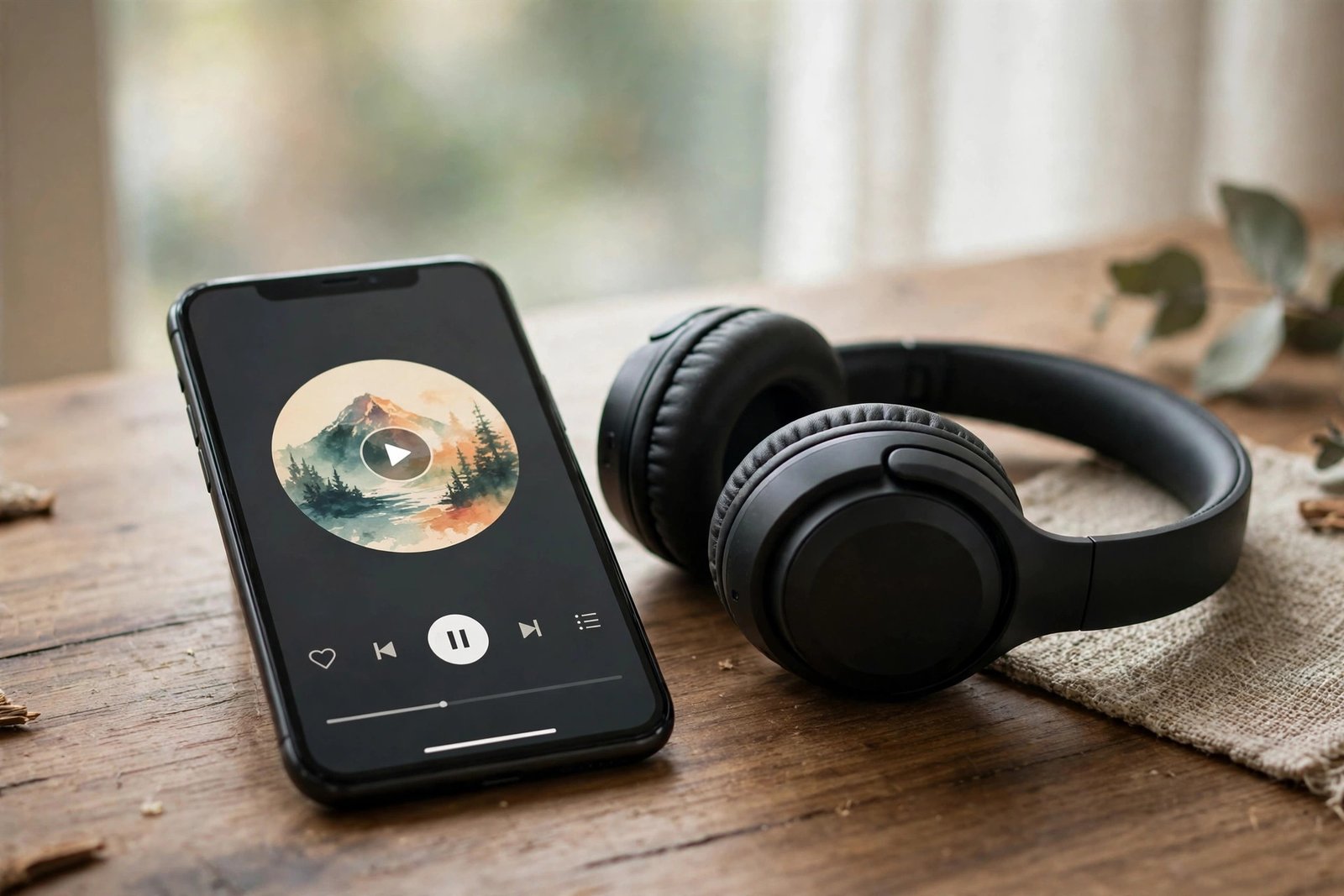
Spotify versus Apple Music is the streaming era’s great stalemate. Both cost about the same, both have 100+ million songs, and both will play whatever you ask. Yet people feel surprisingly passionate about their choice — because the differences that matter aren’t in the catalog. They’re in the algorithms, the audio quality, the ecosystem lock-in, and a dozen small daily frictions that add up over years of listening.
Here’s how to actually decide in 2026, based on how you listen rather than which logo you like.
Sound Quality: The Gap Closed
This used to be Spotify’s weak spot, but the lossless era arrived for both. Apple Music has offered lossless and spatial audio (Dolby Atmos) at no extra cost for years, and Spotify finally rolled out its long-promised HiFi tier. On everyday earbuds and Bluetooth speakers, most listeners can’t tell the difference — Bluetooth compression bottlenecks everything anyway. With wired headphones or a decent home setup, both now deliver excellent quality.
Practical takeaway: if you’re an audiophile with wired gear, compare the two services’ lossless implementations with your own ears during free trials. Everyone else can treat sound quality as a tie and decide on other factors. The RIAA’s industry data confirms streaming long ago became how America listens — the quality wars are now about margins, not fundamentals.
Discovery and Playlists: Spotify’s Home Turf
This is Spotify’s enduring superpower. Discover Weekly, Release Radar, Daylist, and the algorithmic rabbit holes remain the best music discovery engine in the business — Spotify’s recommendation system is genuinely better at surfacing songs you’ll love but haven’t heard. Its social features (shared playlists, Blend, listening parties, what friends are playing) make music feel communal in a way Apple Music still hasn’t matched.
Apple Music counters with human curation — excellent editorial playlists and radio shows (including artist-hosted stations) that feel crafted rather than computed. Some listeners strongly prefer this; it depends whether you want an algorithm that knows your taste or editors with good taste. If discovery beyond the algorithm matters to you, our guide to discovering new music beyond the radio works with either service.
Ecosystem and Devices
Be honest about your hardware. Deep in the Apple ecosystem (iPhone, Mac, HomePod, Apple Watch, CarPlay)? Apple Music integrates seamlessly — Siri control, offline sync across devices, and it just works. On Android, Windows, or a mixed setup, Spotify’s platform agnosticism wins: it runs well everywhere, including game consoles, smart TVs, and speakers Apple ignores. Spotify Connect — handing playback between devices effortlessly — remains a killer feature Apple hasn’t replicated.
Smart speaker choice often decides this silently: HomePod households should pick Apple Music; Alexa/Google/Sonos households should pick Spotify. Check what you actually own before choosing.
Price, Plans, and the Fine Print
Individual plans are priced within a dollar of each other (around $11/month in 2026), and both offer student, duo, and family tiers. The differences hide in the details: Spotify’s free tier (ad-supported) is a genuine on-ramp Apple doesn’t offer — great for testing or for kids. Apple Music bundles beautifully with Apple One if you already pay for iCloud storage or other Apple services. Spotify’s podcast integration is deeper if podcasts are half your listening; Apple treats podcasts as a separate app, which some prefer.
Chicago-specific note: both services work identically here, obviously — but if you’re building a physical collection alongside streaming, getting into vinyl affordably is a whole separate joy that pairs well with either subscription for discovery.
The Five-Minute Decision
Pick Spotify if: discovery matters most, you share music socially, you’re on Android/mixed devices, you want the free tier, or podcasts are central to your listening.
Pick Apple Music if: you’re all-in on Apple hardware, you prefer human curation, lossless/spatial audio matters to you, or you’re bundling with Apple One.
Either is fine if: you mostly play your own playlists and liked songs — the day-to-day experience converges fast. And remember: playlists transfer. Tools like TuneMyMusic and Soundiiz move your library between services in minutes, so the choice isn’t permanent. The U.S. Copyright Office’s resources on music licensing are a fascinating rabbit hole if you ever wonder how the royalties behind your $11 actually flow to artists (spoiler: it’s complicated and the per-stream rates are tiny).
The Free Tier and Family Plans: The Money Details
Spotify’s free tier deserves a serious look before you pay for anything. It’s genuinely usable — full catalog access with ads and shuffle-only limitations on mobile — and it’s the reason Spotify has hundreds of millions of users who’ve never paid. If your listening is casual or budget is tight, try living on free for a month; many people find it’s enough. Apple Music offers no free tier, only a trial, which tells you something about each company’s strategy.
For households, the math favors family plans strongly: both services offer family tiers (~$17/month for six accounts) that slash per-person costs. Students should check the discounted student plans — Spotify’s student bundle has historically included bonus services, making it one of the best deals in streaming. And don’t forget the annual-payment option both services offer, which typically saves around 15% versus monthly billing. Before committing, audit your actual usage: if three family members barely listen, an individual plan plus free tiers for the rest beats a family plan nobody fully uses.
One more consideration: both services raise prices periodically, and grandfathered pricing rarely lasts. Lock in annual billing when you decide, set a calendar reminder to re-evaluate yearly, and remember that switching costs are near zero — your playlists transfer in minutes, so there’s no reason to stay with a service that stops earning your money.
Conclusion
Spotify vs Apple Music in 2026 comes down to this: Spotify for discovery, social features, and platform freedom; Apple Music for ecosystem integration, curation, and bundled value. Sound quality is effectively tied. Take both free trials, live with each for two weeks, and notice which one you reach for. Then stop thinking about it — the best streaming service is the one that disappears and leaves just the music.
Frequently Asked Questions
How do I choose between Spotify and Apple Music in 2026?
Choose Spotify for better discovery algorithms, social features, and cross-platform support. Choose Apple Music for Apple ecosystem integration, human-curated playlists, and Apple One bundling. Sound quality is now comparable.
Which is cheaper, Spotify or Apple Music?
Individual plans are within about a dollar of each other (~$11/month). Spotify offers a free ad-supported tier; Apple Music offers better bundling via Apple One.
Does Spotify have lossless audio now?
Yes — Spotify rolled out its HiFi/lossless tier after years of delays, closing the gap with Apple Music’s long-standing lossless and spatial audio offerings.
Can I switch from Spotify to Apple Music without losing playlists?
Yes. Third-party tools like TuneMyMusic and Soundiiz transfer playlists, liked songs, and follows between services in minutes.
Which is better for podcasts, Spotify or Apple Music?
Spotify integrates podcasts directly into the music app with exclusive shows; Apple keeps podcasts in a separate app. Pick based on whether you want everything in one place.
Does Spotify or Apple Music pay artists more?
Apple Music pays slightly more per stream (roughly a cent versus Spotify’s fraction of a cent), but Spotify’s larger user base means more total streams for most artists. Neither rate makes artists rich — touring and merchandise remain the real income. If supporting artists matters to you, buying merch or concert tickets dwarfs any streaming-service choice.
Which has better audio quality for serious listeners?
Both now offer lossless tiers that satisfy critical listening on wired headphones or good speakers. Apple Music had the head start with spatial audio; Spotify closed the gap with its HiFi rollout. Below lossless, both stream at high-bitrate compressed quality that’s transparent to most ears. The differences that remain are in catalog quirks and interface, not fidelity.