It sounds like another TikTok gimmick: massage your cleanser for a full 60 seconds instead of the usual rushed 15, and watch your skin transform. But the 60-second rule in skincare has outlasted most viral trends — estheticians keep recommending it, and there’s genuine logic behind it. So what is it, exactly, and does spending a full minute on cleansing actually change anything? The short answer: yes, but not for the magical reasons the videos claim.
Here’s the real story — where the rule came from, what the science says about cleansing time and product absorption, the exact technique, how to adapt it for Chicago’s brutal winters, and who should modify or skip it.
What the 60-Second Rule Actually Is
The rule is simple: instead of slapping on cleanser and rinsing after 10–15 seconds (what most of us do), you massage your cleanser into damp skin for a full 60 seconds before rinsing. It originated in K-beauty-influenced esthetician circles, where thorough cleansing has always been step one, and went viral when influencers started timing themselves. The claim: longer contact time lets surfactants actually dissolve sunscreen, makeup, and sebum instead of just skimming the surface, while the massage boosts circulation.
The honest version is less glamorous but more useful. Most people dramatically under-cleanse — a 10-second splash doesn’t give any cleanser time to work. Sixty seconds is less a magic number than a correction: it’s roughly how long proper cleansing takes when done deliberately. Think of it as the skincare equivalent of dentists telling you to brush for two minutes. The number matters less than the fact that you were almost certainly doing far less.
The Science: Why Contact Time Matters
Cleansers work through surfactants — molecules that surround oil, sunscreen, and debris so water can rinse them away. That process isn’t instant; it needs contact time. The American Academy of Dermatology’s face-washing guidance doesn’t prescribe 60 seconds specifically, but it emphasizes gentle, thorough cleansing over harsh scrubbing — and thoroughness takes time. The massage component adds a real benefit: gentle facial massage increases blood flow, which gives that post-cleanse glow people attribute to the “rule.”
There’s also a behavioral effect the science supports indirectly. A timed 60 seconds forces you to slow down, which means you’re more likely to cleanse your hairline, jawline, and nose creases — the zones where breakouts actually start. Most “this changed my skin” testimonials are really “I finally started washing my whole face” testimonials. The timer is a mindfulness device disguised as a technique.
The Exact Technique (It’s Not Just Rubbing Longer)
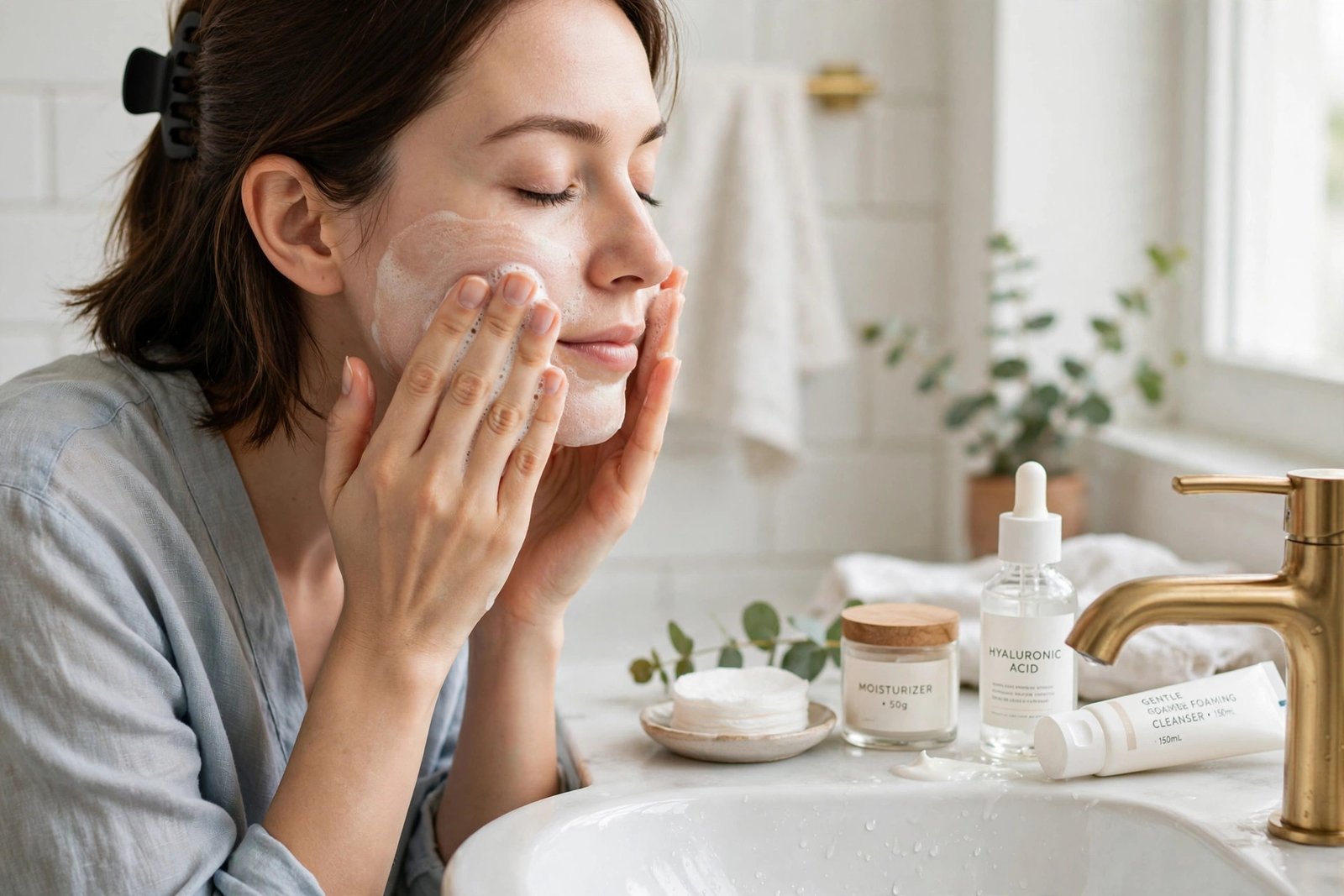
Start with damp — not dripping — skin and a nickel-sized amount of a gentle cleanser matched to your skin type. Using fingertips (never nails, never a harsh brush), massage in small circular motions: 15 seconds on the forehead and temples, 15 on each cheek and jaw, 15 on the nose, chin, and neck. Keep pressure light — you’re coaxing, not scrubbing. If your skin feels tight or squeaky afterward, your cleanser is too harsh for a 60-second contact time, not the technique’s fault.
Do this once daily, in the evening, when you’re removing the day’s sunscreen and buildup. Morning cleansing can be shorter — a 15–20 second gentle cleanse or even just water for dry skin types. Doubling the rule to twice daily with a strong cleanser is how people overdo it. And always follow with moisturizer on slightly damp skin; cleansing longer without moisturizing after is counterproductive. For daytime protection afterward, see our guide to choosing the right sunscreen for sensitive skin.
The Chicago Winter Adjustment
Here’s the local catch: Chicago winter air plus indoor heating already compromises your skin barrier, and a full 60 seconds with a foaming cleanser can tip dry or sensitive skin into irritation. Dermatologist tips for relieving dry skin consistently recommend cream or lotion cleansers over gels and foams in dry conditions. From December through March, switch to a creamy, fragrance-free cleanser for your 60-second cleanse, use lukewarm (never hot) water, and consider dropping to 30–40 seconds if your skin feels tight.
The winter version of the rule: gentler product, same mindfulness. The massage and thoroughness still help — sloppy cleansing under winter hats and scarves leaves jawline breakouts — but barrier protection comes first. If you’re embracing the shift toward sustainable, clean beauty products, winter is the ideal time to audit your routine for harsh sulfates and drying alcohols.
What to Do in the 60 Seconds After
The minute after cleansing matters as much as the minute of cleansing. Pat — don’t rub — your face with a clean towel, leaving skin slightly damp, then apply your hydrating products within 60 seconds while the skin is still moist. This “damp skin sandwich” technique dramatically improves absorption of hyaluronic acid serums and moisturizers, because humectants pull water into the skin and they need water to grab. In Chicago winter, this step is arguably more important than the cleanse itself: apply a hydrating toner or essence first, then seal everything with a richer moisturizer or a thin layer of facial oil to lock in the hydration before the dry indoor air steals it. People who do the 60-second cleanse but then wait ten minutes scrolling before moisturizing undo half the benefit. Keep your post-cleanse products lined up on the counter in application order so there’s no gap — cleanse, pat, hydrate, seal, done.
Who Should Modify or Skip It
Skip the full 60 seconds if you have active eczema flares, rosacea in an irritated phase, or a compromised barrier (stinging when products touch your skin). Anyone using prescription tretinoin or strong exfoliating acids should keep cleansing brief and gentle — the actives are already doing heavy lifting. And if you’re double-cleansing (oil cleanser followed by water-based cleanser, the K-beauty method this rule borrows from), 30 seconds per cleanse is plenty; 60 seconds twice is overkill.
Conclusion
The 60-second rule isn’t magic — it’s a correction for the rushed 10-second cleanse most of us do. A full minute of gentle, thorough cleansing gives surfactants time to work, ensures you cover the breakout-prone zones, and adds circulation-boosting massage. Do it in the evening with a cleanser suited to your skin, shorten or soften it in Chicago winter, and skip it during barrier-compromised flare-ups. The best skincare rule was never about the timer — it’s about finally giving the most basic step the attention it deserved all along.
Frequently Asked Questions
Can I do the 60-second rule with any cleanser?
Use a gentle, pH-balanced cleanser suited to your skin type. Harsh foaming or heavily fragranced cleansers become more irritating with longer contact time — if your skin feels tight after, switch products, not the technique.
Should I do 60 seconds in the morning too?
No — once daily in the evening is enough. Morning skin just needs a light refresh. Over-cleansing twice daily is the most common way people turn this helpful rule into dryness and breakouts.
Does the 60-second rule help with blackheads?
It helps prevent the buildup that contributes to clogged pores, especially around the nose where people rush. But established blackheads need targeted treatment (like salicylic acid), not just longer cleansing.
Is there any proof 60 seconds beats 20 seconds?
No clinical trial has tested exactly 60 vs. 20 seconds. The evidence supports “thorough, gentle cleansing beats rushed cleansing” — 60 seconds is a practical benchmark that ensures thoroughness, not a scientifically derived optimum.