Waterproof mascara is a marvel of chemistry and a menace at midnight. It survives tears, humidity, and Chicago’s lakefront wind — then refuses to leave, tempting you to scrub until your lashes surrender. That scrubbing is exactly how lashes break, thin out, and fall prematurely. Removing waterproof mascara safely isn’t about elbow grease; it’s about dissolving the formula before you ever wipe.
This guide covers the oil-dissolves-oil principle, the exact step-by-step method dermatologists recommend, the products worth buying, the mistakes that cost you lashes, and a Chicago-winter note on why the eye area needs extra gentleness from December through March.
Why Waterproof Mascara Is So Hard to Remove
Waterproof formulas use water-repelling polymers and waxes — often isododecane-based — that form a flexible film around each lash. Water-based removers bead right off that film, which is why splashing water and rubbing accomplishes nothing except friction damage. The fix is chemistry, not force: oil-based cleansers dissolve the waxy film the same way dish soap cuts grease. This is why the American Academy of Dermatology’s gentle cleansing guidance emphasizes choosing the right cleanser type for the job rather than scrubbing harder.
Understanding this saves your lashes. Every tug on a mascara-coated lash stresses the follicle; repeated nightly tugging leads to traction-related lash loss that takes weeks to regrow. The goal of removal is zero tugging — the mascara should slide off, not be pulled off.
The Safe Method, Step by Step
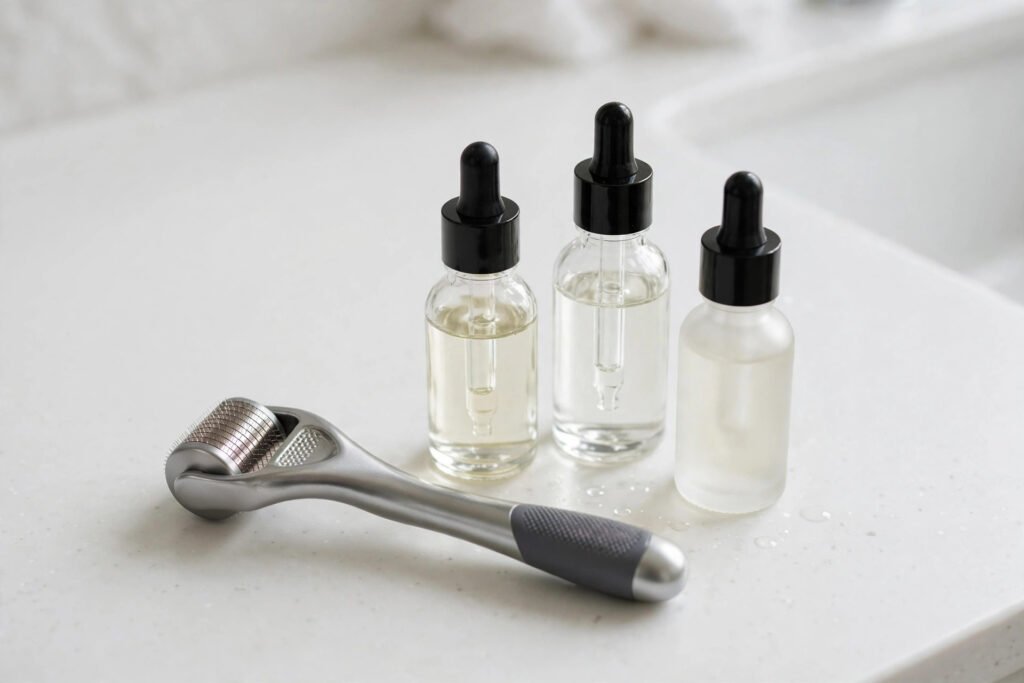
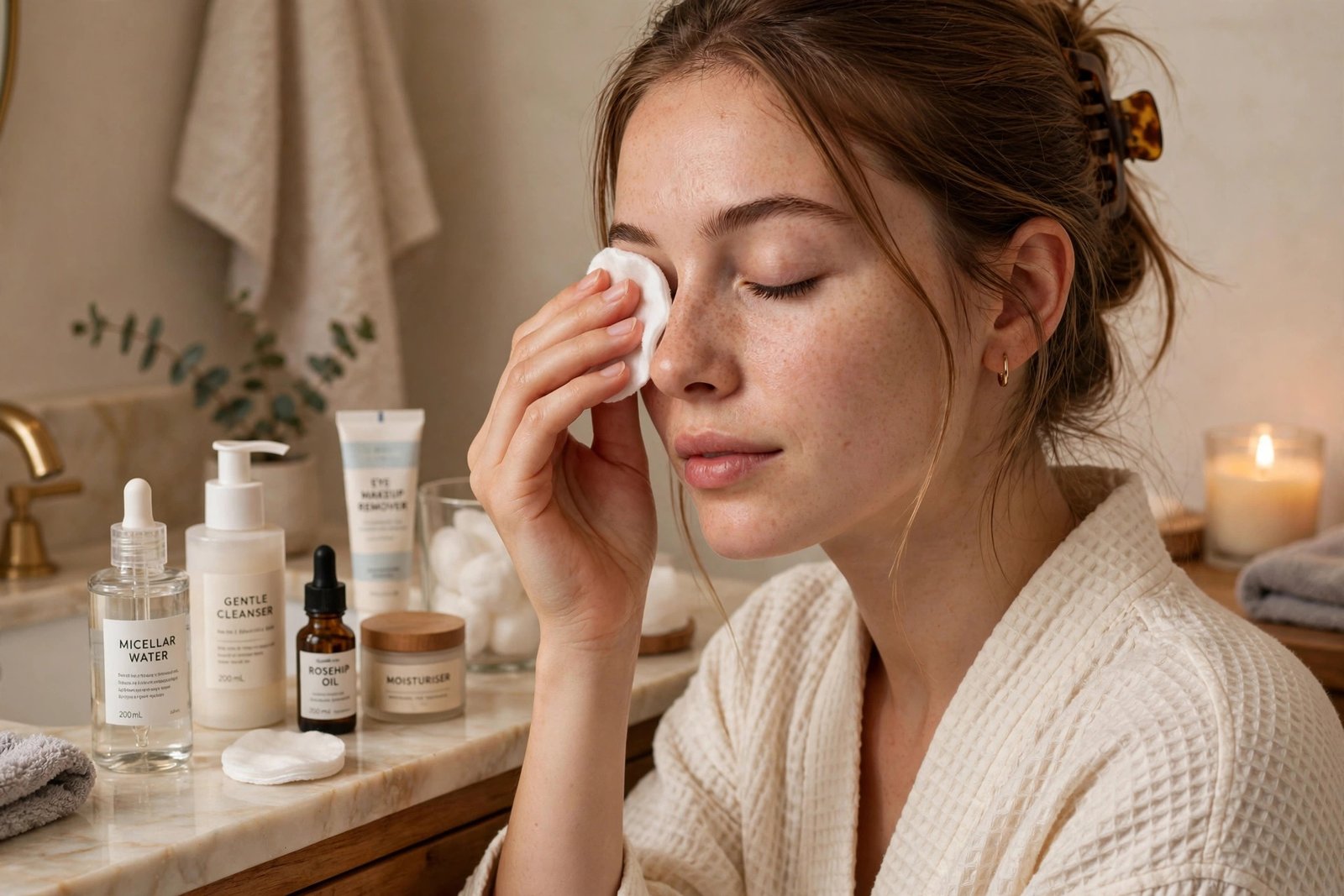
Start with an oil-based remover: a cleansing oil, cleansing balm, or dual-phase (oil-and-water) eye makeup remover. Saturate a cotton pad — not a rough cotton ball, which sheds fibers — and press it gently over your closed eye for a full 30 to 60 seconds. This patient dwell time is the entire secret of damage-free removal; it lets the oil fully dissolve the waterproof film. Then wipe downward in one gentle direction, from lid toward cheek, without scrubbing back and forth. Flip the pad and repeat once if needed.
Follow with your regular gentle facial cleanser to remove the oily residue — the double-cleanse method. If you wear contacts, remove them before you start; oil and lenses don’t mix, and the American Academy of Ophthalmology’s eye makeup safety tips warn against getting removers and old mascara near the eye surface. Finish with a tiny amount of plain moisturizer or eye cream patted (never dragged) around the orbital bone.
What About Coconut Oil and Olive Oil?
Kitchen oils do dissolve waterproof mascara, and they’re fine in a pinch — but they’re not ideal daily. Coconut oil is comedogenic and can trigger milia (tiny white bumps) around the eyes with repeated use; olive oil can irritate sensitive eyes. A formulated cleansing balm costs little more and rinses cleaner. If you’re drawn to simpler routines, the clean-beauty movement toward gentler formulations has produced excellent fragrance-free balms at drugstore prices.
Products Worth Buying (and the Dwell-Time Rule)
You don’t need luxury. Effective options exist at every price: dual-phase removers from the drugstore, cleansing balms from Korean beauty brands, and micellar waters formulated for waterproof makeup. Whatever you choose, the dwell-time rule applies — press, wait, then wipe. A $30 balm used with 10 seconds of contact underperforms a $10 oil used with 60 seconds of patience. Replace mascara itself every three months without exception; old mascara harbors bacteria and requires more aggressive removal because the formula has thickened considerably.
Matching the Remover to Your Skin and Eyes
Not every remover suits every person, and choosing wrong is why many people conclude that gentle removal “doesn’t work for them.” If you have oily or acne-prone skin, choose a lightweight cleansing oil or a gel-to-oil formula that rinses completely clean — heavy balms left on the skin can contribute to clogged pores along the lash line. Dry or mature skin does beautifully with rich cleansing balms, which remove makeup while depositing a little extra moisture. Sensitive eyes should stick to fragrance-free, ophthalmologist-tested formulas and avoid anything with denatured alcohol or strong essential oils near the eye area.
Contact lens wearers need extra caution: remove lenses before cleansing, and prefer oil-free micellar formulas if you find oils blur your vision afterward. Whatever your type, patch-test a new remover on the jawline first — the eye area is the worst place to discover an allergy. And keep a dedicated eye makeup remover even if you love your all-in-one cleansing oil; products formulated specifically for eyes are tested to a higher safety standard for the sensitive mucous-membrane-adjacent area, which matters when you’re using them inches from your eyes every single night.
Mistakes That Cost You Lashes
The big four: scrubbing back and forth, using makeup wipes as your only remover (they rely on friction and leave residue), pulling at clumps, and sleeping in mascara “just this once.” Waterproof mascara left overnight stiffens lashes so they snap against the pillow. Also avoid waterproof formulas daily if your lashes are already sparse — save them for weddings, lakefront runs, and emotional movies, and wear regular mascara (which removes with plain cleanser) on ordinary days. When choosing gentle products for the sensitive eye area, remember the skin there is the thinnest on your face and deserves the same care philosophy.
The Chicago Winter Note
Winter makes everything about the eye area harder: indoor heating dries the delicate skin, cold wind triggers watering that smudges even waterproof formulas, and static-dry air makes lashes more brittle. In winter, be extra generous with dwell time, never skip the moisturizing follow-up, and consider a lash-conditioning serum at night if your lashes feel brittle. Humidifier air at night helps the eye area as much as the rest of your face.
Conclusion
Removing waterproof mascara without damaging lashes comes down to one principle: dissolve, don’t scrub. Press an oil-based remover over closed eyes for 30–60 seconds, wipe gently downward once, double-cleanse, and moisturize. Reserve waterproof formulas for days you truly need them, replace tubes every three months, and give the eye area extra kindness in Chicago winter. Your lashes grow in cycles — treat them gently and they’ll stay full; tug at them nightly and you’ll be waiting weeks for regrowth.
Frequently Asked Questions
Can I just use my regular face wash to remove waterproof mascara?
Usually not effectively — water-based cleansers can’t dissolve the water-repelling film, so you’ll end up scrubbing. Use an oil-based first cleanse, then your regular wash as the second step.
Why do my eyes sting when I remove mascara?
Stinging usually means remover is getting into the eyes (press the pad on the lashes, not the eyeball) or the product contains fragrance or harsh solvents. Switch to a fragrance-free formula and keep eyes gently closed during removal.
How can I tell if I’m losing lashes from removal?
Finding more than a couple of lashes on the cotton pad regularly, or noticing sparser outer corners, signals too much friction. Extend dwell time, switch to a balm, and cut back on waterproof formulas.
Is tubing mascara easier to remove than waterproof?
Yes — tubing mascaras form polymer tubes around lashes that slide off with warm water alone, no oil needed. If removal is your main struggle, tubing formulas are the easiest upgrade you can make.