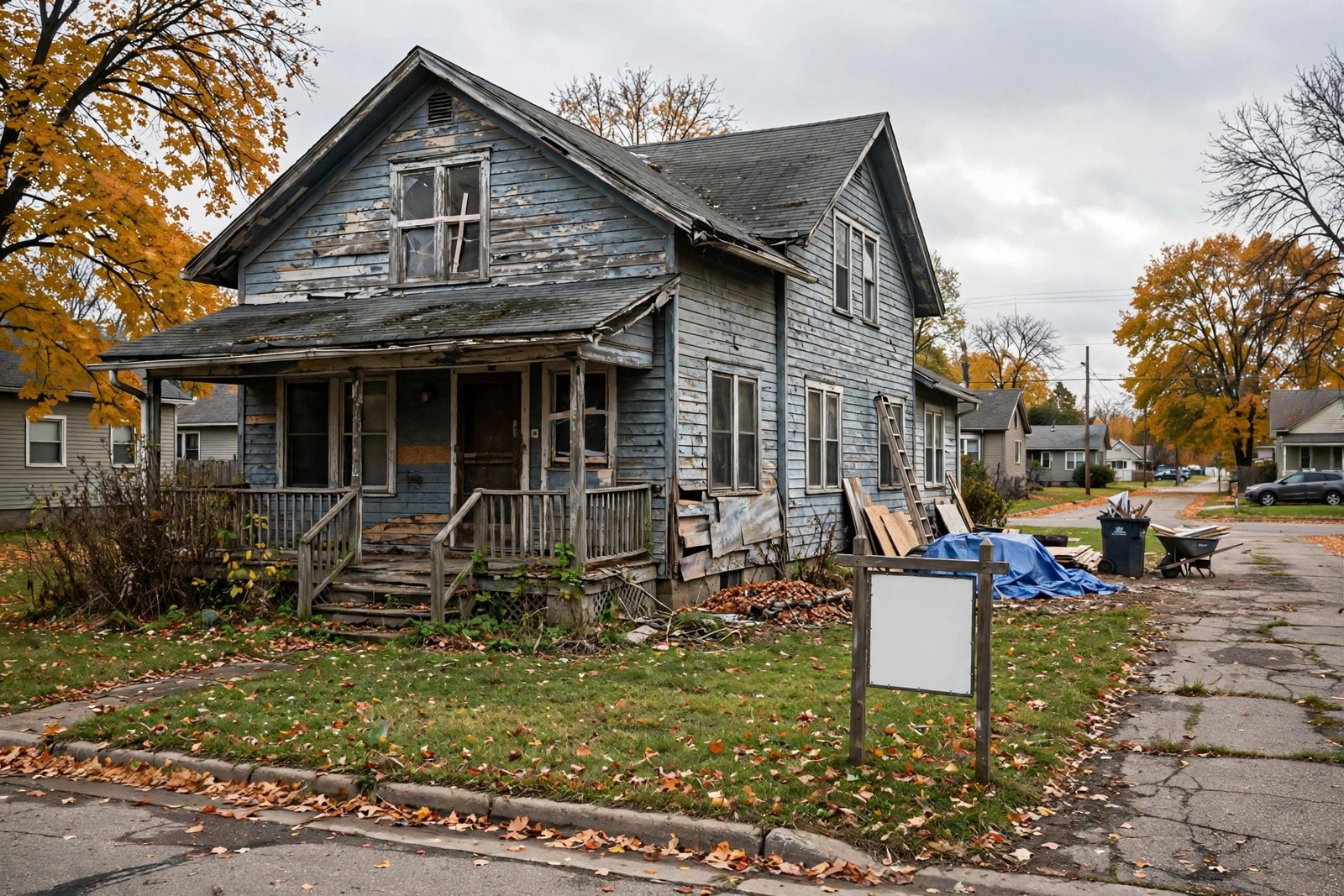
Foreclosure deals: the promise of buying a $200,000 house for $130,000 is real — foreclosures routinely sell 15–30% below market. But so are the horror stories: the “deal” with $80,000 in hidden liens, the trashed interior, the six-month legal nightmare, the auction where professionals outbid you before you blink. Ohio — with its judicial foreclosure process, rust-belt inventory, and genuinely affordable markets — offers real opportunities and real traps in equal measure.
This guide covers how foreclosures work in Ohio specifically, where to find them, how to evaluate deals safely, the financing realities, and the mistakes that turn bargains into money pits.
How Foreclosures Work in Ohio
Ohio uses judicial foreclosure — lenders must sue in court, which makes the process slower (typically 6–12+ months) but more transparent than non-judicial states. The stages: pre-foreclosure (homeowner behind on payments, lender has filed — the window for negotiating directly with the owner), sheriff’s auction (court-ordered public auction, usually at the county courthouse — cash or cashier’s check required, no inspections, no contingencies), REO/bank-owned (unsold at auction, now owned by the lender — listed on the MLS like normal sales, inspectable, financeable).
For most buyers, REO properties are the sweet spot: discounted (though less than auctions), but purchasable with normal financing, inspections, and contingencies. Sheriff’s auctions offer the deepest discounts but demand cash, expertise, and risk tolerance — they are not beginner territory. HUD’s foreclosure resources at hud.gov explain the federal programs and buyer protections that apply.
Where to Find Ohio Foreclosure Deals
MLS/REO listings: Bank-owned properties list on the regular MLS — any agent can show them; search filters for “foreclosure” or “REO.” HUD Home Store (hudhomestore.gov): Federal foreclosures listed publicly — often excellent values, with bidding preferences for owner-occupants. County sheriff sale listings: Every Ohio county publishes upcoming auctions online — research here, buy carefully. Auction.com and Hubzu: Online auction platforms with Ohio inventory — convenient but competitive. Direct mail/networking: Contacting pre-foreclosure homeowners directly (via public records) — the highest-effort, highest-margin approach, requiring sensitivity and legal care. Local investor networks: Ohio REIA chapters and meetups — wholesalers bring deals, but verify everything independently.
Evaluating Deals Safely: The Due-Diligence Checklist
Title search (non-negotiable): Foreclosures can carry junior liens, tax liens, HOA liens, or IRS liens that survive the sale — a $500 title search prevents $50,000 surprises. For auctions, run title before bidding. Property condition: Assume the worst — vacant foreclosures suffer burst pipes (Ohio winters are brutal on empty houses), mold, vandalism, and stripped fixtures. Budget 20–30% contingency above your repair estimate. Comparables: Value based on repaired comps minus repair costs minus your profit margin — never on the asking price’s apparent discount. Neighborhood: Drive it day and night; check crime stats, vacancy rates, and school trends — the cheapest house in a declining area is not a deal. Legal status: Confirm the foreclosure is final, check for redemption rights or bankruptcy stays, and verify occupancy (evicting holdover occupants costs time and money).
The 70% rule (investor version): don’t pay more than 70% of repaired value minus repair costs. For buy-and-hold, ensure the numbers work at conservative rent estimates — Ohio’s affordable prices make cash flow achievable, but only with honest math.
Financing Foreclosures (It’s Different)
Cash is king at auctions — no exceptions. REO properties can use conventional, FHA (including 203(k) renovation loans — ideal for foreclosures needing work), or VA loans. Hard-money loans serve investors for auction purchases — expensive (10–15% rates) but fast; have an exit strategy. Pre-approval means little at auctions — sellers want proof of funds, not pre-approval letters. Renovation budgeting: Get contractor estimates before offering — Ohio’s older housing stock hides knob-and-tube wiring, lead paint, and ancient plumbing that destroy naive budgets. Understanding loan mechanics first helps — how mortgages work covers the fundamentals.
Ohio-Specific Realities
Winter damage: Ohio’s freeze-thaw cycles devastate vacant homes — burst pipes, roof ice dams, foundation issues. Winterize immediately upon purchase; inspect plumbing first. Land banks: Ohio’s county land banks (notably Cuyahoga) sell distressed properties cheaply, sometimes for a few thousand dollars — incredible deals for the handy, with deed restrictions to understand. Property taxes: Delinquent taxes are common on foreclosures — verify tax status; Ohio tax liens are aggressive. Market variance: Cleveland, Toledo, and Youngstown offer the deepest discounts (and highest risks); Columbus and Cincinnati markets are tighter with thinner margins. Match your strategy to the market.
Working With the Right Team
Foreclosure investing rewards specialization — assemble your team before you buy: an investor-friendly agent who understands REO, auctions, and ARV analysis (not all agents do — interview specifically); a real-estate attorney familiar with Ohio foreclosure law (for auction purchases especially — title issues and eviction procedures need legal guidance); a reliable contractor who gives honest renovation estimates fast (your numbers live or die on repair costs); a title company experienced with distressed properties; and a lender or hard-money contact lined up before you need them. The beginners who lose money usually skipped this step and tried to figure it out mid-deal.
Beginner Mistakes That Cost Everything
Skipping the title search — the #1 catastrophic error. Underestimating repairs — double your contractor’s estimate for foreclosures; you will need it. Buying at auction as a first deal — start with REO; auctions are graduate school. Ignoring carrying costs — taxes, insurance, utilities, and loan payments during renovation add up fast. No exit strategy — know whether you’re flipping or holding before buying, with numbers that work for that plan. Emotional bidding — set your max price from the math and walk away when bidding exceeds it; there will always be another foreclosure.
Conclusion
Finding foreclosure deals safely in Ohio comes down to: understand the judicial process, focus on REO properties as a beginner (auctions are for experts with cash), run title searches without exception, budget repairs with 20–30% contingency, verify the neighborhood, secure appropriate financing, and never let auction fever override your math. The discounts are real — 15–30% below market is achievable — but they compensate for real risk, work, and expertise. Respect the process, and foreclosures become what they should be: the market’s clearance rack for buyers who do their homework.
The bottom line: Start with education, not acquisition: attend a few sheriff’s sales purely as an observer, walk REO properties with an investor-friendly agent, and run practice numbers on ten deals before bidding on one. The tuition for this education is free; the tuition for skipping it is not.
Related reading: For more on this topic, see our guide to comparing borrowing options.
Authoritative source: See the HUD Home Store for expert guidance on this topic.
Frequently Asked Questions
How much below market value are foreclosures in Ohio?
Typically 15–30% below comparable market value — deeper at sheriff’s auctions (but with higher risk and cash requirements), shallower for bank-owned REO properties (but inspectable and financeable).
Can I get a mortgage on a foreclosure?
Yes for REO/bank-owned properties — conventional, FHA (including 203(k) renovation loans), and VA loans all work. Sheriff’s auction purchases require cash or hard-money loans; traditional mortgages don’t work on auction timelines.
What is the biggest risk buying a foreclosure?
Hidden title issues (liens surviving the sale) and underestimated repair costs — particularly winter damage in Ohio’s vacant homes. A pre-purchase title search and professional inspection (where allowed) mitigate both.
Are Ohio land bank properties good deals?
Often yes — county land banks sell distressed properties very cheaply, sometimes under $5,000. They’re best for handy buyers or investors who understand renovation; read the deed restrictions carefully before purchasing.