Imagine your mortgage payment covered — or nearly covered — by someone else’s rent check every month. That is the promise of house hacking, one of the most talked-about wealth-building strategies among young Chicago buyers. The concept is simple: buy a small multi-unit property, live in one unit, and rent out the others so tenants help pay your mortgage. In a city packed with two-flats, three-flats, and courtyard buildings, Chicago is arguably the best house-hacking market in America. But the strategy has real complications — landlord duties, tricky financing, and Chicago’s tenant-friendly laws. Here is how beginners can start smart.
What House Hacking Actually Looks Like in Chicago
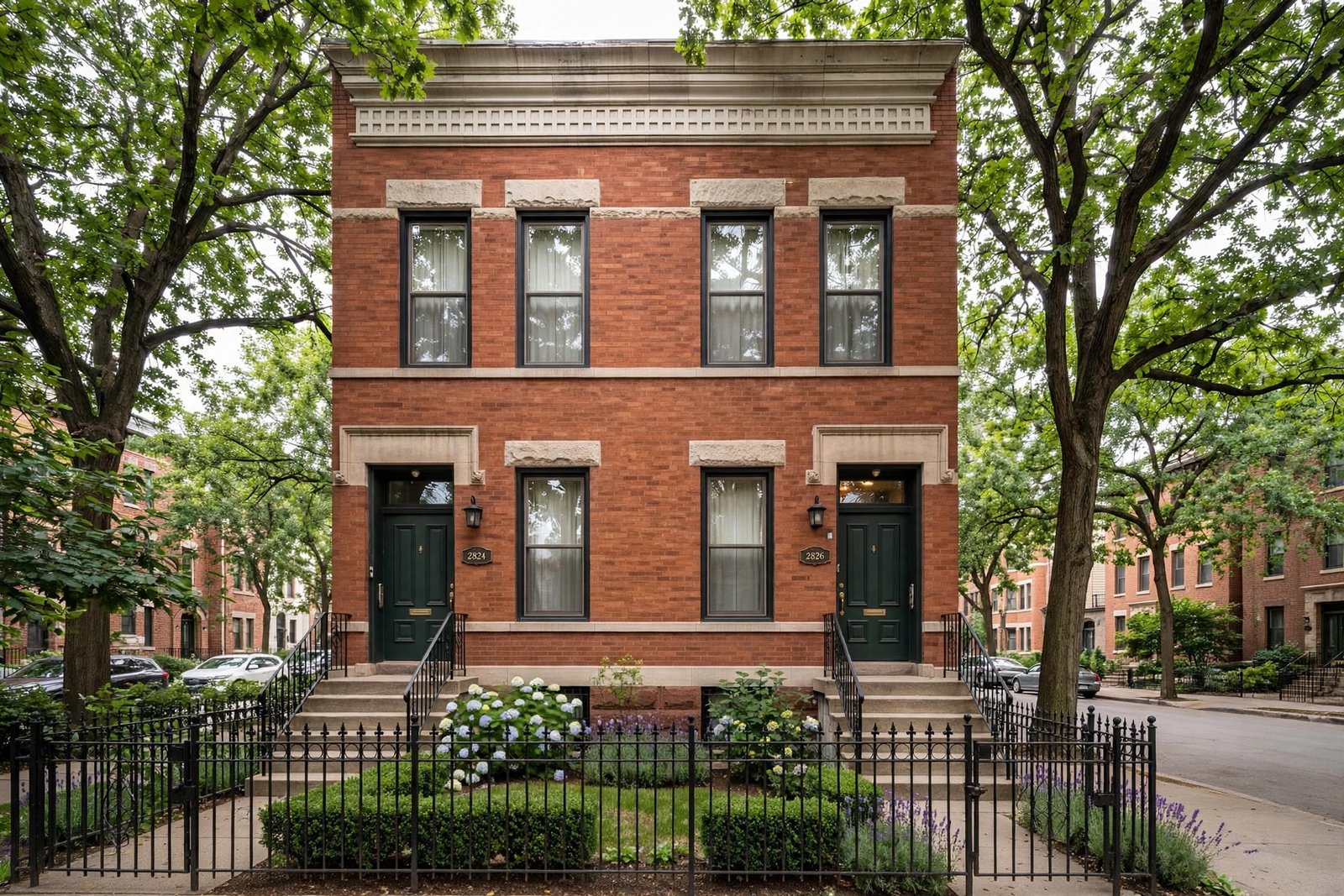
Chicago’s housing stock is practically built for this. The classic play is the two-flat or three-flat: brick buildings with one unit per floor, found by the thousands in neighborhoods like Logan Square, Pilsen, Albany Park, and South Shore. A typical scenario: you buy a $450,000 two-flat with 5 percent down, live in the garden or first-floor unit, and rent the other unit for $1,800–$2,200 per month. That rental income covers a large chunk of your roughly $3,000 monthly PITI payment, slashing your effective housing cost far below what a condo or single-family home would run.
Other Chicago variations include buying a single-family home and renting out bedrooms, purchasing a duplex where you live on one side, or — for the ambitious — buying a four-unit building, which is the maximum that still qualifies for standard residential financing. The BiggerPockets community has extensive case studies of Chicago investors who started exactly this way.
The Financing Advantage (and Its Limits)
House hacking’s superpower is owner-occupant financing. Because you live in the property, you can use FHA loans with as little as 3.5 percent down on buildings up to four units, or conventional loans with 5 percent down. An investor buying the same building as a pure rental would need 20–25 percent down. On a $450,000 three-flat, that is the difference between $15,750 down and $112,500 down.
There are strings attached. FHA requires the property to meet habitability standards and, for 3–4 unit buildings, the property must be “self-sufficient” — projected rents must cover the mortgage payment in the appraiser’s estimation. Lenders will count a portion of projected rental income (typically 75 percent, to account for vacancies) toward your qualifying income, but you still need solid credit and documented income. And house hacking only works if you genuinely live there for at least a year — it is your primary residence, not a loophole. For a refresher on how these loans work, this guide to the mortgage process for first-time buyers covers the fundamentals.
Running the Numbers: A Chicago Example
Let’s model a $425,000 two-flat in a solid Northwest Side neighborhood:
- Down payment (5%): $21,250 plus ~$10,000 in closing costs
- Monthly PITI (6.5% rate, 30-year): ~$3,100
- Rental income (one unit at $1,900): $1,900
- Your effective housing cost: ~$1,200/month
Compare that to renting a comparable one-bedroom apartment in the same neighborhood for $1,600–$1,900 — while building equity and getting tax benefits. But budget honestly: set aside 10 percent for vacancies, 5–10 percent for maintenance (older Chicago buildings need constant attention), and remember that Cook County property taxes on multi-units can be punishing. Your budget needs the same discipline as any household plan — the 50-30-20 budget rule is a good framework for keeping the building’s costs from swallowing your life.
Chicago’s Landlord Reality Check
This is where beginners get humbled. Chicago has some of the most tenant-protective laws in the country. The Chicago Residential Landlord and Tenant Ordinance (RLTO) governs security deposits, notice periods, and habitability standards in detail — mishandling a security deposit alone can cost you double the deposit plus attorney’s fees. Key realities:
- Security deposits must be held in a separate federally insured account, and you owe tenants interest annually.
- Notice requirements for lease non-renewal and rent increases are strict — currently 60 days’ notice for tenancies over three years.
- Habitability standards mean you are legally on the hook for heat, hot water, and structural soundness, on a timeline.
- Eviction in Cook County is slow and expensive; screening tenants carefully upfront is worth ten times the effort of evicting later.
Many first-time house hackers hire a property manager for 8–10 percent of rents to handle the legal and maintenance burden — which changes the math, so model it both ways. The City of Chicago’s Department of Housing publishes landlord guidance worth reading before you collect your first rent check.
Finding the Right Property
Not every multi-unit works for house hacking. Look for buildings where the numbers work at today’s rents (never bank on future rent increases), in neighborhoods with strong rental demand and reasonable taxes. Walk the building like an inspector: Chicago two-flats often hide deferred maintenance — old boilers, aging roofs, outdated electrical — that can erase years of rental profit. Budget a thorough inspection ($500–$700 for multi-units) and get contractor estimates for anything major.
Also consider livability: you will share walls, a yard, and sometimes a basement with your tenants. House hacking works best when you genuinely like the unit you will occupy — making a small apartment feel bigger on a budget has practical tricks for the garden units many hackers live in.
Common Beginner Mistakes
- Underestimating maintenance: A 100-year-old three-flat is not a passive investment. Budget 1–2 percent of the building’s value per year.
- Being a soft landlord: Late rent tolerated once becomes late rent forever. Enforce the lease kindly but firmly from day one.
- Ignoring the numbers: If the deal only works with perfect occupancy and zero repairs, it does not work.
- Skipping the lease: Even renting to a friend requires a written, RLTO-compliant lease. Especially renting to a friend.
Conclusion
House hacking in Chicago is one of the few strategies that lets an ordinary buyer with a modest down payment acquire an income-producing asset and slash their housing costs simultaneously. The city’s endless supply of two-flats and three-flats, combined with owner-occupant financing, makes the math work in a way it simply does not in most coastal markets. But go in clear-eyed: you are becoming a landlord under one of the country’s strictest tenant-protection regimes, in buildings that are often a century old. Run conservative numbers, learn the RLTO, screen tenants ruthlessly, and keep maintenance reserves. Do that, and your tenants will not just be neighbors — they will be partners in building your wealth.
Frequently Asked Questions
What is house hacking?
House hacking means buying a small multi-unit property (or a home with rentable space), living in one part, and renting out the rest so rental income offsets your mortgage payment. It is a beginner-friendly entry into real estate investing.
Can I house hack with an FHA loan in Chicago?
Yes. FHA loans allow 3.5 percent down on 1–4 unit properties as long as you live in one unit. For 3–4 unit buildings, the property must pass FHA’s self-sufficiency test, meaning projected rents cover the mortgage.
How much money do I need to start house hacking?
With 3.5–5 percent down on a $400,000–$500,000 Chicago two-flat, budget roughly $25,000–$40,000 for down payment plus closing costs, plus 3–6 months of reserves. More reserves are better — old buildings surprise you.
Is Chicago a good city for house hacking?
Excellent — the city’s huge stock of two-flats and three-flats, relatively affordable prices, and strong rental demand make it one of the best U.S. markets for the strategy. Just be prepared for strict landlord-tenant laws and high property taxes.
Do I need a property manager for my first house hack?
Not necessarily, but many beginners benefit from one while learning the ropes. Management costs 8–10 percent of rents, so factor it into your numbers. Self-managing teaches you the business faster and preserves cash flow.