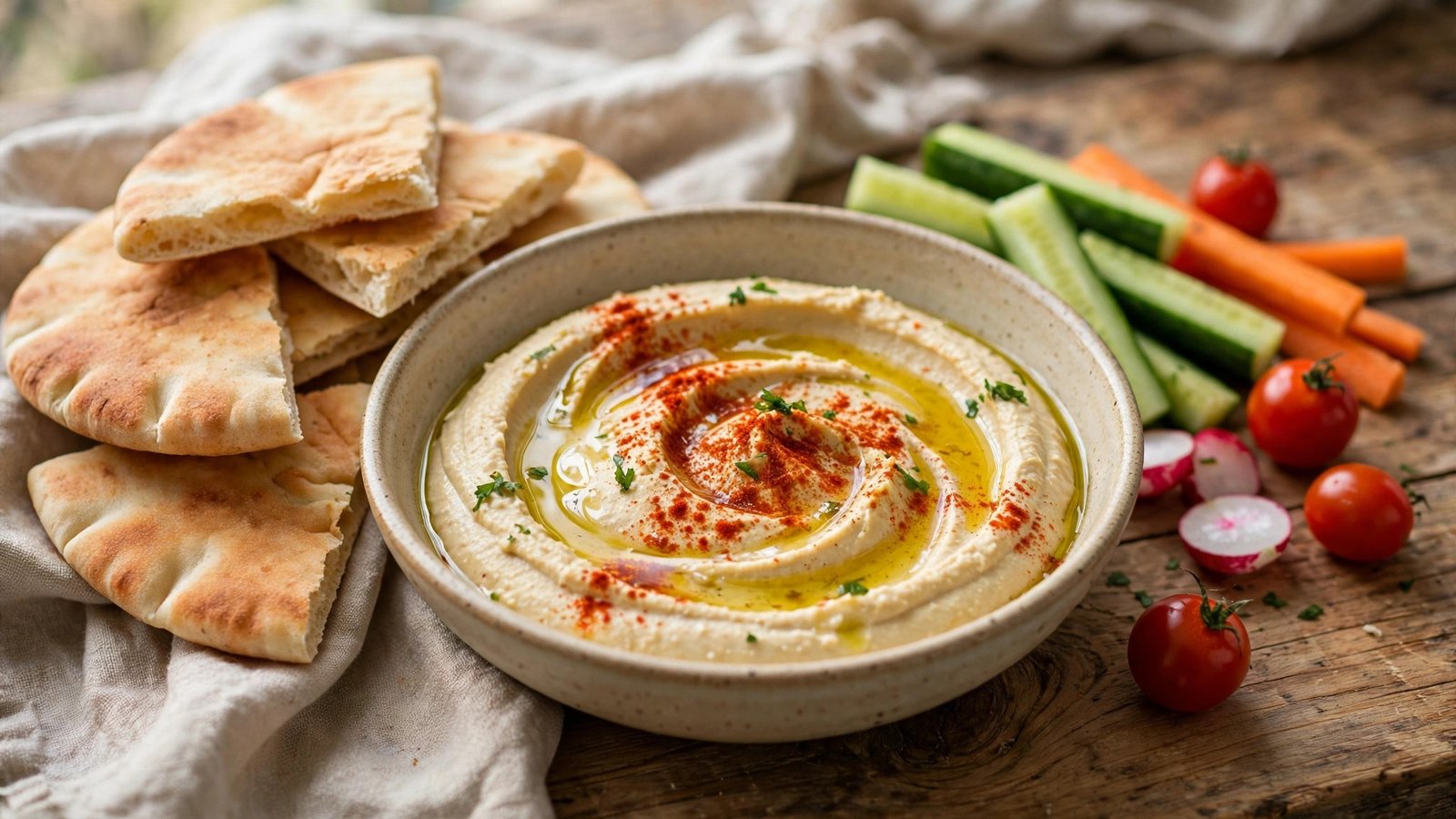
Opened hummus is good for 4 to 7 days in the refrigerator. Store-bought hummus, with its preservatives and sealed-until-opened processing, reliably hits the full week. Homemade hummus — no preservatives, more moisture — lasts 3 to 5 days. The clock starts the moment you break the seal, not the moment you first taste it, so that tub you opened “just to try” on Tuesday is on the same timeline as one you dug into properly.
Hummus sits in an awkward middle ground: it’s acidic enough (thanks to lemon juice) to resist spoilage better than, say, cooked chicken, but moist and protein-rich enough that bacteria are perfectly happy in it. The result is a shorter window than most people assume — and a dip that goes from delicious to questionable with very little warning.
Opened vs. Unopened vs. Homemade: The Timeline
- Unopened store-bought hummus: good until the printed “best by” date, often 2–3 months refrigerated
- Opened store-bought hummus: 4–7 days refrigerated
- Homemade hummus: 3–5 days refrigerated
- Hummus left at room temperature: 2 hours max (1 hour above 90°F), then discard
- Frozen hummus: 3–4 months at peak quality
The preservatives in commercial hummus — typically citric acid, potassium sorbate, or similar — are doing real work, which is why Sabra or Tribe outlasts your homemade batch by a couple of days. Homemade hummus also tends to have a looser texture with more water activity, giving bacteria an easier time. Neither version announces spoilage loudly, so the date matters more than your nose here.
How to Tell If Hummus Has Gone Bad
Hummus spoilage is sneakier than most foods. The tahini and lemon mask early off-flavors, so by the time it obviously smells bad, it’s been bad for a while. Watch for:
Sour or fermented smell. Fresh hummus smells nutty, lemony, and savory. A sharp sourness, yeasty note, or anything reminiscent of spoiled dairy means it’s done.
Excess liquid pooling. A little oil separation is normal — just stir it back in. But a watery layer that keeps reappearing after stirring, especially with a sour smell, signals bacterial activity.
Darkening or discoloration. Hummus darkens slightly with air exposure (like an avocado, though less dramatically). Significant darkening throughout, or any green, black, or fuzzy spots, means mold — discard the entire container.
Bitter or “fizzy” taste. If it tastes sharp, bitter beyond normal tahini bitterness, or has a strange carbonated sensation on your tongue, spit it out and throw the rest away. That fizz is fermentation gas.
Bloated container. A puffed-up sealed tub means gas-producing microbes are active inside. Don’t even open it — just toss it.
How to Make Opened Hummus Last the Full Week
A few habits separate the people who get 7 days from their hummus from the people who get 4:
Never double-dip, and use clean utensils. Every crumb of pita or drip of saliva introduces bacteria and food particles that accelerate spoilage. Spoon out what you’ll eat into a separate bowl instead of eating from the tub — this alone can buy you an extra day or two.
Smooth the surface and add an oil seal. After serving, smooth the top flat and drizzle a thin layer of olive oil over it before resealing. The oil creates a barrier against air, slowing oxidation and surface drying — the same trick delis use.
Reseal tightly. Press plastic wrap directly onto the surface before putting the lid back on, or transfer to a smaller airtight container as the tub empties. Less air contact, slower spoilage.
Keep it cold — really cold. Store hummus at the back of the fridge, not the door. Every degree above 40°F shortens its life. And don’t leave it out during a party for “just a couple hours” — set a timer, because the 2-hour room-temperature rule is real.
Can You Freeze Hummus?
Yes, and it freezes better than most people expect. Portion it into small containers or freezer bags (flattened for fast thawing), leaving a little headspace, and freeze for up to 3–4 months. Thaw overnight in the fridge.
The texture will be slightly grainier after thawing — that’s the tahini separating. Fix it by stirring vigorously, or better yet, blitzing it in a food processor with a drizzle of olive oil and a squeeze of lemon. It comes back remarkably close to fresh. Freeze it before adding toppings like whole chickpeas, paprika, or pine nuts; add those fresh when serving.
If you’re into meal-prepping dips and spreads generally, the storage logic here mirrors other fridge staples — our guide on how long fresh salsa lasts in the fridge covers a dip with an even shorter window, if you want to compare.
What About the “Best By” Date?
The date on an unopened tub is about quality, not safety — hummus a week past its “best by” date is usually still fine if it’s been continuously refrigerated and the seal is intact. But once opened, ignore that date entirely; the 4–7 day rule takes over. An opened tub is a completely different food-safety situation from a sealed one, no matter what the package says.
FAQs
Can you eat hummus 10 days after opening?
Don’t. Even if it looks and smells okay, 10 days is well past the safe window for opened hummus, and the tahini-lemon flavor profile hides early spoilage. Freeze leftovers by day 5 if you can’t finish them.
Why does my hummus taste sour but look fine?
Sourness without visible signs usually means lactic acid bacteria have started fermenting the chickpeas — the earliest stage of spoilage. It’s not safe to eat at this point; discard it.
Is it safe to eat hummus left out overnight?
No. Hummus left at room temperature for more than 2 hours should be thrown out, per USDA guidelines. Overnight is far beyond that — don’t taste-test it, just discard.
Does the olive oil layer on top keep hummus fresh longer?
It helps modestly by limiting air exposure and surface drying, which is why it’s worth doing. But it’s not preservation — it doesn’t change the 4–7 day timeline, it just helps you reach the far end of it.
Can you get food poisoning from old hummus?
Yes. Spoiled hummus can harbor Listeria, Salmonella (from contaminated ingredients), and various spoilage bacteria. Pregnant women and immunocompromised people should be especially strict about the timeline.