
Let me save you the hours I lost figuring out what are the best thrift store shopping tips for finding designer pieces. When I first looked into this, I found a wall of conflicting tips and a lot of sponsored nonsense. So I tested, I asked people who actually know their stuff, and I distilled it into this guide. Short version: it’s very doable, as long as you ignore the noise.
Fair warning: some of what follows will sound almost too simple. That’s intentional. In my experience, the simple stuff is what survives contact with real life — the complicated systems collapse by week two. Simple, repeated, wins.
Let’s cut through the noise and talk about what the evidence — and real experience — actually says.
What are the best thrift store shopping tips for finding designer pieces: What You Should Actually Know
One principle guides everything I recommend about thrift store shopping tips for finding designer pieces: cost per wear. A $100 piece worn 100 times is cheap; a $20 piece worn once is expensive. Once you start thinking this way, good decisions get much easier — and your closet gets much better.
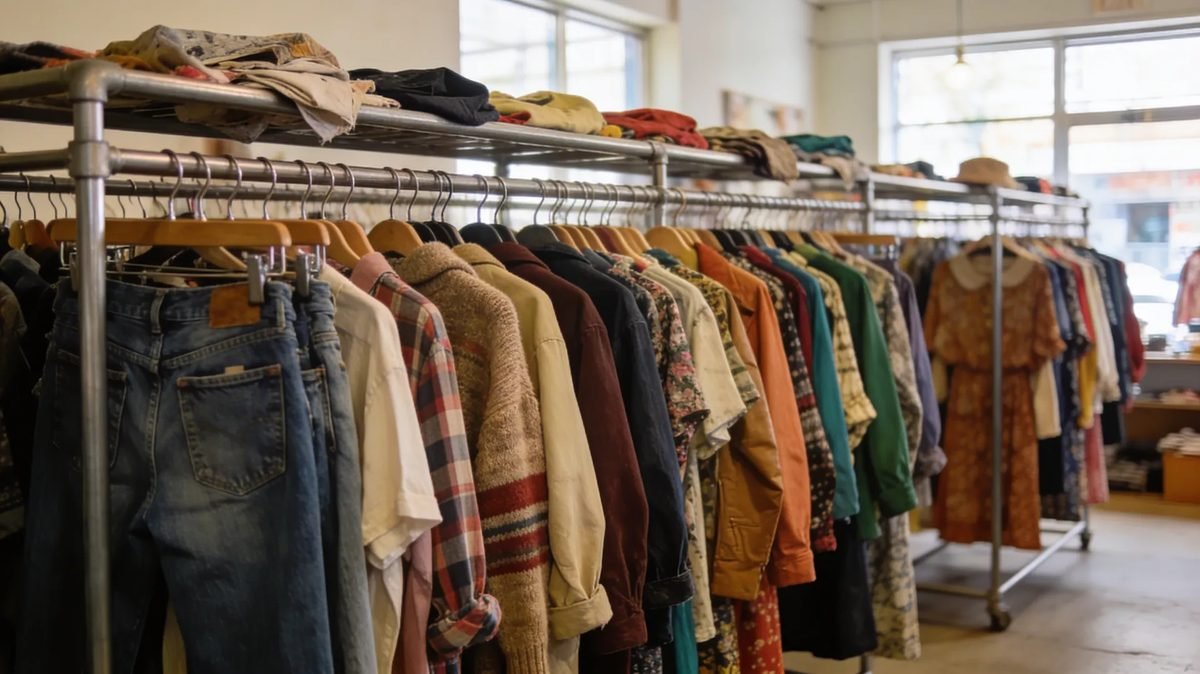
The best thrift store tips for finding designer pieces start with location and timing: stores in affluent neighborhoods get the best donations, and weekday mornings (after weekend drop-offs are processed) have the freshest inventory. I’ve found Theory, Vince, and MaxMara in suburban thrifts for under $20.
Learn to spot quality without labels: check fabric content (silk, cashmere, wool), construction (lined, finished seams), and hardware. Labels can be faked or cut out, but construction doesn’t lie — my best finds were identified by feel before I ever saw a tag.
For the bigger picture, Good On You’s brand ratings is worth a look — it backs up a lot of what I cover here.
Consignment stores are thrift’s curated cousin: higher prices, but authenticated designer and far less digging. For true designer hunting with limited time, consignment beats raw thrifting.
What Actually Moves the Needle
Theory is nice, but here’s what I’d actually do if I were starting from scratch today.
- Shop affluent-neighborhood stores on weekday mornings.
- Learn fabric and construction tells — quality reveals itself by touch.
- Check the racks systematically, section by section; don’t cherry-pick.
- Try everything on — thrift sizing is chaos across eras and brands.
- Use consignment stores for authenticated designer with less digging.
- Go often; inventory turns over constantly and luck favors regulars.
If this topic clicked for you, you’ll probably also get a lot out of our guide to What should I wear to a baby shower as a male guest, our guide to What is the difference between a blazer and a sport coat, and our guide to How do I style oversized sweaters without looking sloppy — they cover the adjacent questions people ask next.
Small Tweaks That Add Up Fast
Make friends with the staff and ask when new stock hits the floor. A friendly ‘what days do you put out new stuff?’ has gotten me first pick of fresh donations more times than I can count.
Tell a friend about your new trick. Style habits, like all habits, stick better with a little social reinforcement — and you might start a useful exchange of tips. Everyone’s figured out something worth stealing.
One more resource I trust on this: the Council of Fashion Designers of America.
Mistakes Worth Avoiding
These are the traps I see over and over. None of them are obvious until someone points them out.
- Trusting labels alone — check construction, since tags can mislead.
- Skipping the try-on and discovering fit disasters at home.
- Buying ‘designer’ fast-fashion diffusion lines thinking they’re luxury.
Your First-Week Action Plan
Reading is nice; doing is better. Here’s a dead-simple seven-day ramp built from the tips above — no overwhelm, just one layer at a time. Each step takes minutes, not hours; the whole point is that a busy person can actually finish this.
- Day 1: Shop affluent-neighborhood stores on weekday mornings. Get this handled first — it’s the foundation everything else builds on.
- Days 2–3: Learn fabric and construction tells — quality reveals itself by touch. Give yourself a couple of days to make this feel normal.
- Day 4: Check the racks systematically, section by section; don’t cherry-pick. The basics are rolling now; time to add this next layer.
- Days 5–6: Try everything on — thrift sizing is chaos across eras and brands. You’re in the groove — this is where momentum starts compounding.
- Day 7: Use consignment stores for authenticated designer with less digging. End the week by locking in this last piece, then run the whole week back.
One more thing from experience: photograph your outfits for two weeks while you work on thrift store shopping tips for finding designer pieces. The camera reveals fit issues, proportion problems, and winning combinations that the mirror hides. It’s free, takes ten seconds, and it’s the closest thing to having a stylist in your pocket.
Quick Questions, Honest Answers
How much should I budget for thrift store shopping tips for finding designer pieces?
Less than you think, if you shop strategically. Start with what you own, fill gaps secondhand, and spend real money only on high cost-per-wear pieces. Most people overspend on trends and underspend on the basics they’ll wear daily.
How do I know if something actually suits me with thrift store shopping tips for finding designer pieces?
Fit and comfort are the tell — if you’re tugging, adjusting, or can’t wait to take it off, it’s wrong regardless of how it looked on the hanger. Photograph yourself in it; the camera is more honest than the mirror.
Can I pull this off on a tight budget with thrift store shopping tips for finding designer pieces?
Absolutely — budget constraints often produce better style, because they force intention. Thrift stores, clothing swaps, and restyling what you own cover most needs. The expensive-looking part is fit and grooming, and both are cheap.
The Bottom Line
At the end of the day, thrift store shopping tips for finding designer pieces comes down to consistency, not perfection. Pick one or two changes from this guide, stick with them for a few weeks, and adjust from there. You’ve got this — and now you’ve got a roadmap too.


