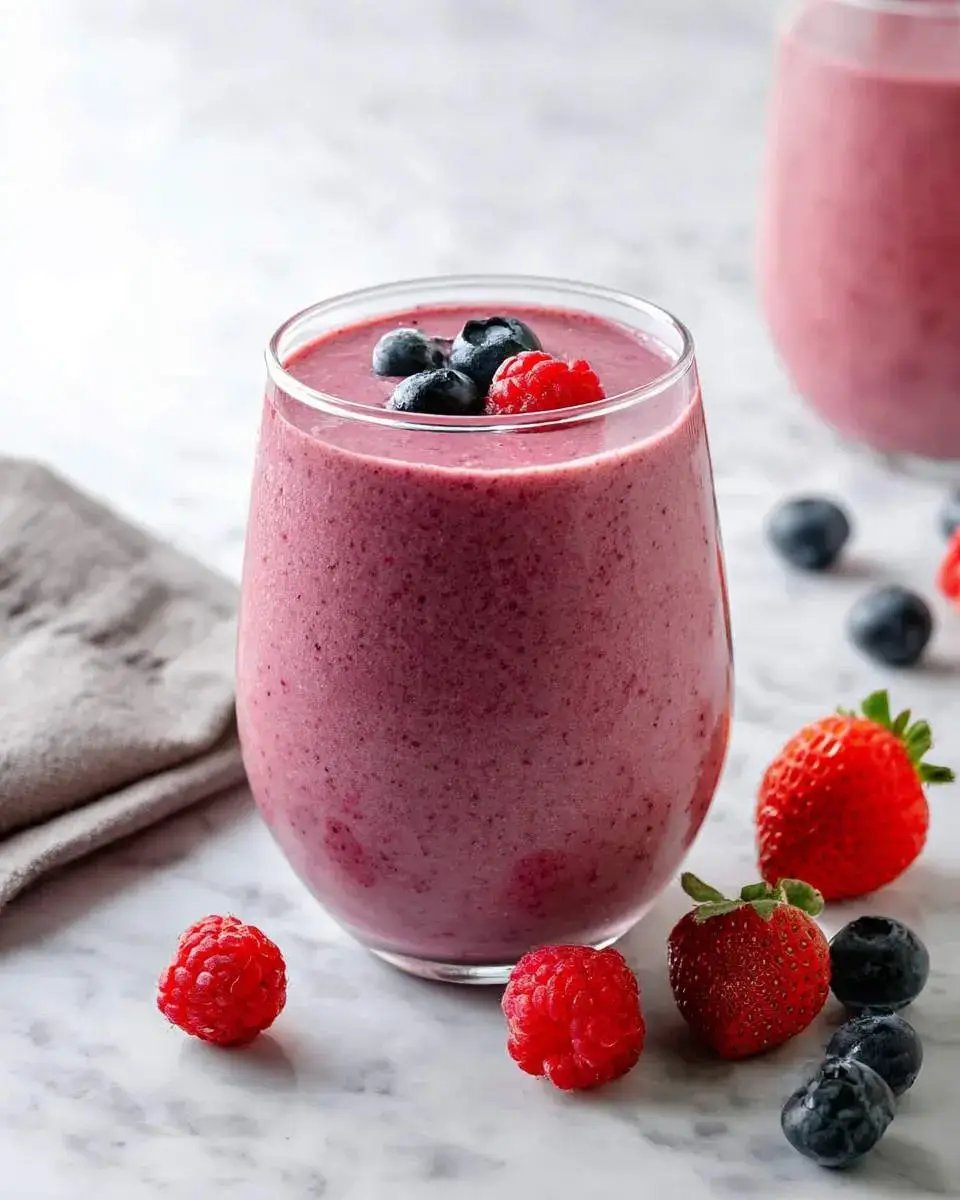
Most healthy smoothies fail for the same reason: someone throws kale, water, and half a banana in a blender and wonders why it tastes like punishment. Learning how to make healthy smoothies that actually taste good is really about ratios — get the balance of fruit, creaminess, and flavor right, and the healthy stuff disappears into something you’d happily drink every day.
I drink a smoothie most mornings, and the ones I actually look forward to all follow the same blueprint. Here’s the formula plus seven combinations my whole family drinks without complaint.
The Formula for Healthy Smoothies That Taste Good
Every great smoothie has five components: a liquid base (1 cup), fruit (1 to 1.5 cups), something creamy, something nutritious you’d never eat plain, and a flavor booster. The fruit does the sweetening work so you don’t need added sugar; the creamy element gives it that milkshake body; and the flavor booster — vanilla, cinnamon, cocoa, peanut butter — is what makes it taste like a treat instead of a chore.
My standard build: 1 cup unsweetened almond milk, 1 frozen banana, 1/2 cup frozen berries, a big handful of spinach, 1 tablespoon peanut butter, and a splash of vanilla. The spinach is completely invisible taste-wise — I promise — and the frozen fruit makes it thick without ice. The Academy of Nutrition and Dietetics notes that smoothies can be a genuinely nutritious meal when built with whole ingredients rather than juice and syrup.
- Liquid: 1 cup (almond milk, oat milk, coconut water, or regular milk)
- Fruit: 1-1.5 cups, at least half of it frozen for thickness
- Creamy: 1/2 banana, 1/4 avocado, or 1/2 cup Greek yogurt
- Nutrition boost: handful of spinach, 1 tbsp flax or chia seeds
- Flavor: vanilla extract, cinnamon, cocoa powder, or nut butter
7 Healthy Smoothie Recipes That Don’t Taste Healthy
These are my tested rotation. Each makes one large serving, roughly 300-400 calories, and every one passed the skeptical-spouse test.
- Chocolate peanut butter: frozen banana, 1 tbsp cocoa, 1 tbsp peanut butter, milk, handful of spinach — tastes like a milkshake.
- Berry vanilla: mixed frozen berries, Greek yogurt, vanilla, almond milk, 1 tbsp honey if needed.
- Tropical green: frozen mango, pineapple, coconut water, spinach, squeeze of lime — the lime makes it sing.
- Coffee breakfast: cold brew, frozen banana, 1 tbsp almond butter, cocoa, milk — morning coffee and breakfast in one.
- Apple pie: apple chunks, oats, cinnamon, vanilla yogurt, milk — tastes like dessert.
- Strawberry banana classic: the combo that never fails, plus a handful of kale you’ll never detect.
- Cherry chocolate: frozen cherries, cocoa, Greek yogurt — like a Black Forest cake you can drink for breakfast.
Mistakes That Ruin Healthy Smoothies
Using all fresh fruit and ice instead of frozen fruit gives you a watery, diluted drink — frozen fruit is the whole texture secret. Buy it frozen or freeze your own ripe bananas and berries; it’s cheaper and nothing goes to waste. Another mistake: too much liquid. Start with less than you think; you can always thin it out, but you can’t un-water a smoothie.
Watch the sugar creep, too. Fruit juice as a base, plus honey, plus sweetened yogurt can push a ‘healthy’ smoothie past 50 grams of sugar. Use whole fruit and unsweetened bases, and let the fruit do the sweetening. And add greens gradually if you’re new to them — start with mild spinach before graduating to kale, which has a stronger flavor that needs more fruit to mask.
Meal-Prep Smoothies for Busy Mornings
Freezer smoothie packs are the ultimate morning hack: portion the fruit, greens, and dry add-ins into individual bags or jars, freeze, and in the morning just dump one in the blender with your liquid. Two minutes, zero decisions. They keep for 2 to 3 months frozen.
This pairs perfectly with a freezer-stocking habit — the same flash-freeze method I use to freeze fresh vegetables works for smoothie fruit. And if you’re avoiding dairy, my dairy-free ice cream method uses the same frozen-banana trick for creaminess without milk.
Protein-Packed Healthy Smoothies That Actually Taste Good
If your smoothie needs to keep you full until lunch, protein is the missing piece — and there are ways to add it without ruining the taste. Greek yogurt (15-20g protein per cup) is the easiest: it also adds creaminess, so it improves texture while it fortifies. A scoop of vanilla or unflavored protein powder disappears into chocolate or peanut butter smoothies completely; in fruit-only smoothies, use vanilla-flavored powder to avoid a chalky aftertaste.
Whole-food options work too: 2 tablespoons of peanut or almond butter (8g protein), a quarter cup of silken tofu (blends invisibly creamy — I promise you won’t taste it), or a handful of hemp seeds. Avoid adding too many boosters at once, though — protein powder plus nut butter plus seeds can push a smoothie past 600 calories, turning a light breakfast into a meal replacement. That’s fine if it’s replacing a meal, but not if it’s a snack alongside one. The goal is a smoothie that satisfies, not one that requires a nap afterward — the same balanced thinking behind my budget-friendly dinner formulas, where protein does the heavy lifting.
Green Smoothies That Don’t Taste Green
The secret to green smoothies that taste like fruit: the right greens-to-fruit ratio and one strong flavor masker. Use one big handful of spinach (mild, disappears completely) or half that of kale (stronger — needs more fruit), paired with at least a cup of sweet fruit like mango, pineapple, or banana. The masker — peanut butter, cocoa, vanilla, or cinnamon — is what your tongue registers first, so the greens never get a vote.
Freeze the greens: blend spinach with a little water, freeze in ice cube trays, and toss a cube into any smoothie. It keeps greens from wilting in the fridge and makes the smoothie colder and thicker. Start with spinach-only for two weeks before trying kale or chard; your palate adapts, and soon the green color just means ‘healthy’ rather than ‘suspicious.’ Kids who reject visible vegetables will drink a green smoothie that tastes like a milkshake — the color becomes a novelty rather than a warning.
The Bottom Line
Follow the five-part formula — liquid, fruit (half frozen), something creamy, a hidden nutrition boost, and a real flavor — and you’ll make healthy smoothies that actually taste good enough to crave. The spinach disappears; the delicious doesn’t.