Nobody talks about how can i organize a small closet to fit more clothes in a way that feels real — it’s either dry expert-speak or influencer hype. I’m going for neither. This is the practical middle ground: honest answers, concrete examples, and the stuff I wish someone had told me before I started. Let’s get into it.
Think of this as the conversation we’d have if you asked me about this over coffee — direct, specific, and skipping the parts that don’t matter. I’ve cut everything I couldn’t defend with either evidence or experience.
Let’s start with the fundamentals, because getting these right makes everything else easier.
How can I organize a small closet to fit more clothes: What You Should Actually Know
Quick reality check: nobody notices your clothes as much as you think they do — but everyone registers the overall impression. That’s liberating. It means organize a small closet to fit more clothes isn’t about impressing anyone; it’s about feeling put-together yourself. Dress for that feeling and you can’t go far wrong.
Organizing a small closet to fit more clothes starts with ruthless editing — most closets are 30 percent clothes you never wear eating 50 percent of the space. I cleared a third of my closet in one afternoon and suddenly had ‘more closet’ without spending a dime.
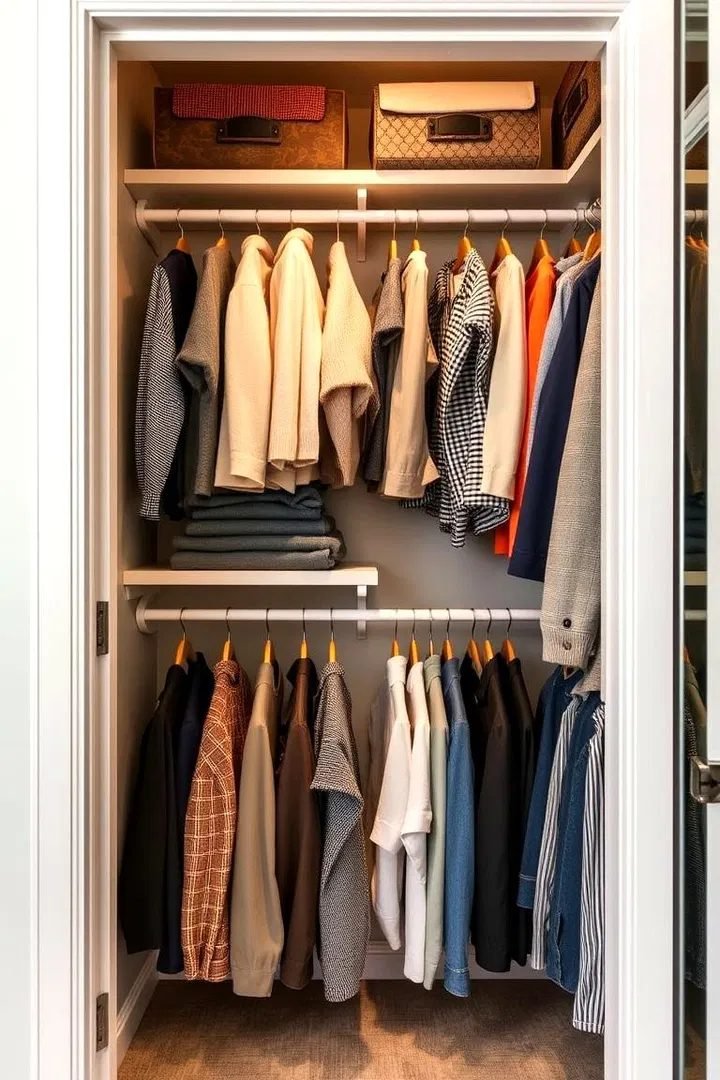
Vertical space is the key in small closets: double-hang rods (one high, one low), shelf dividers, over-door hooks, and slim velvet hangers that take half the width of plastic ones. Switching hangers alone reclaimed about six inches of rod for me.
For the bigger picture, Good On You’s brand ratings is worth a look — it backs up a lot of what I cover here.
Store by category and frequency, not by color rainbow — daily wear at eye level, occasional pieces up high, off-season elsewhere entirely. The rainbow looks pretty on Instagram and wastes prime real estate on your cocktail dress.
What Actually Moves the Needle
Now for the practical side — the specific things you can do this week that will make a noticeable difference.
- Declutter first — organizing clothes you don’t wear is rearranging deck chairs.
- Switch to slim velvet hangers to double your rod capacity.
- Add a second hanging rod below the first for shirts and folded pants.
- Use shelf dividers, bins, and over-door organizers for vertical space.
- Move off-season clothes to under-bed storage or top shelves.
- Keep daily items at eye level; formal and occasional pieces higher or lower.
If this topic clicked for you, you’ll probably also get a lot out of our guide to How do I layer clothes for winter without looking bulky, our guide to How do I know if a handbag is worth the investment, and our guide to What is the best way to remove wrinkles without an iron — they cover the adjacent questions people ask next.
Small Tweaks That Add Up Fast
Do the hanger trick: turn all hangers backward, and flip each one when you wear the item. In three months, the still-backward hangers are your donation pile — data-driven decluttering with zero agonizing.
And the meta-lesson: the best style trick is the one you’ll actually use. Don’t adopt my specific habit if it clashes with your life — steal the principle. Remove friction from good choices, and looking put-together stops requiring effort.
One more resource I trust on this: Consumer Reports.
Mistakes Worth Avoiding
Honest mistakes, all of them — but each one costs you time, money, or results. Here’s what to watch for.
- Buying organizers before decluttering — containers don’t create space, editing does.
- Keeping ‘someday’ clothes in prime real estate.
- Folding everything; hanging what wrinkles saves ironing time later.
Your First-Week Action Plan
Reading is nice; doing is better. Here’s a dead-simple seven-day ramp built from the tips above — no overwhelm, just one layer at a time. Each step takes minutes, not hours; the whole point is that a busy person can actually finish this.
- Day 1: Declutter first — organizing clothes you don’t wear is rearranging deck chairs. Get this handled first — it’s the foundation everything else builds on.
- Days 2–3: Switch to slim velvet hangers to double your rod capacity. Give yourself a couple of days to make this feel normal.
- Day 4: Add a second hanging rod below the first for shirts and folded pants. The basics are rolling now; time to add this next layer.
- Days 5–6: Use shelf dividers, bins, and over-door organizers for vertical space. You’re in the groove — this is where momentum starts compounding.
- Day 7: Move off-season clothes to under-bed storage or top shelves. End the week by locking in this last piece, then run the whole week back.
If I had to name one underrated lever, it’s the tailor. A $15–$25 alteration transforms off-the-rack into made-for-you, and it costs less than most impulse purchases. Find a good local tailor once, and every future purchase gets better.
Quick Questions, Honest Answers
How much should I budget for organize a small closet to fit more clothes?
Less than you think, if you shop strategically. Start with what you own, fill gaps secondhand, and spend real money only on high cost-per-wear pieces. Most people overspend on trends and underspend on the basics they’ll wear daily.
How do I know if something actually suits me with organize a small closet to fit more clothes?
Fit and comfort are the tell — if you’re tugging, adjusting, or can’t wait to take it off, it’s wrong regardless of how it looked on the hanger. Photograph yourself in it; the camera is more honest than the mirror.
Can I pull this off on a tight budget with organize a small closet to fit more clothes?
Absolutely — budget constraints often produce better style, because they force intention. Thrift stores, clothing swaps, and restyling what you own cover most needs. The expensive-looking part is fit and grooming, and both are cheap.
The Bottom Line
If you take one thing from this guide, let it be this: organize a small closet to fit more clothes is simpler than it looks once you ignore the hype. Focus on the fundamentals, avoid the common traps, and trust the process. It works — I’ve seen it work too many times to doubt it.