To get a driver’s license in the U.S., you generally: study your state’s driver’s manual, pass a written knowledge test to earn a learner’s permit, complete supervised practice hours (and driver’s ed if you’re under 18), then pass a behind-the-wheel road test at the DMV. Most states also require proof of identity, residency, and legal presence, plus fees totaling roughly $30–$90.
The exact path varies more than people expect — a 16-year-old in Texas and a 30-year-old new resident in New York follow different rules. But the skeleton is the same everywhere. Here’s how it works in 2026.
Step 1: Check Your State’s Age and Eligibility Rules
Most states let you get a learner’s permit at 15 or 16 and a full license at 16–18, often through a graduated licensing system. Adults (18+) usually skip the graduated steps and go straight to testing. You’ll need to be a resident of the state where you apply, and you’ll need documents proving identity, Social Security number, residency (two proofs, like a utility bill and lease), and legal presence in the U.S. Under the REAL ID Act, licenses that meet federal ID standards require stricter documentation — worth getting, since you’ll need one to fly domestically.
Step 2: Study the Driver’s Manual
Every state publishes a free driver’s manual (usually a PDF on the DMV website). Read it — don’t just skim. The written test covers road signs, right-of-way rules, speed limits, and state-specific quirks like roundabout laws. Free practice tests on your state’s DMV site or reputable third-party sites are the single best predictor of passing on the first try.
Step 3: Pass the Written Test and Get Your Learner’s Permit
Head to the DMV with your documents, pass a vision screening and the knowledge test (typically 20–50 multiple choice questions, with a passing score around 80%), pay the permit fee, and walk out with a learner’s permit. The permit lets you drive only with a licensed adult (usually 21+) in the passenger seat, and many states restrict nighttime driving for permit holders.
Step 4: Log Your Practice Hours
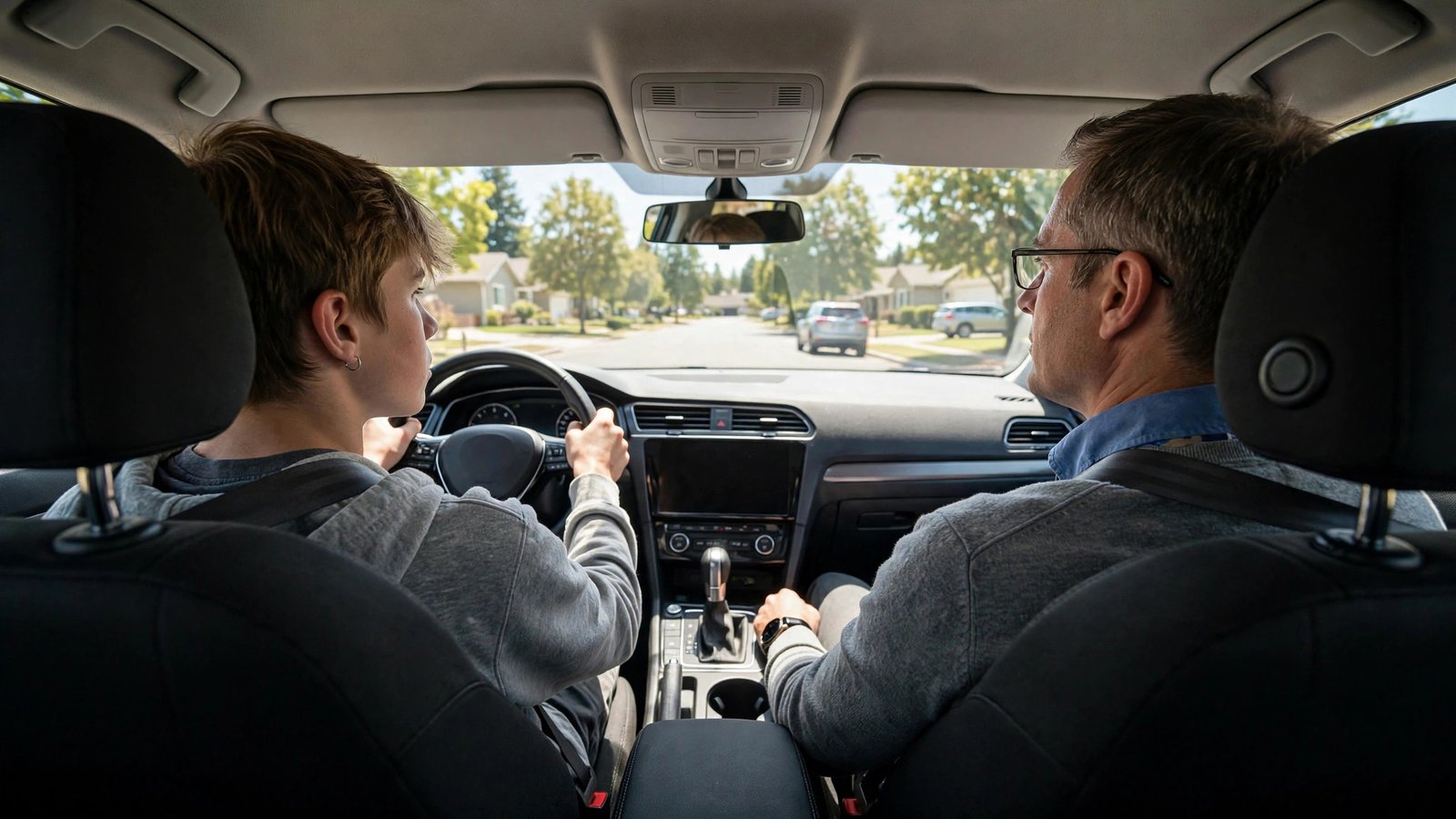
Teen drivers in nearly every state must complete 30–50 hours of supervised driving, including 10+ hours at night, over a minimum holding period (often 6 months). Adults aren’t always subject to hour minimums, but skipping practice is the fastest route to failing the road test. Take a professional lesson or two even if it’s not required — instructors spot bad habits you’d never notice.
Step 5: Complete Driver’s Education (If Required)
Drivers under 18 must complete driver’s ed in most states — typically 30 hours of classroom (or online) instruction plus 6 hours behind the wheel with an instructor. Costs range from $200–$600 depending on the state and provider. Some insurers offer meaningful discounts for driver’s ed graduates, so keep the certificate.
Step 6: Pass the Road Test
Schedule your road test at the DMV (appointments can book out weeks in advance — don’t wait). You’ll need a registered, insured vehicle in safe working order. The examiner scores you on basics: smooth stops and starts, lane discipline, turns, parking (parallel parking still trips up more test-takers than anything else), and observation habits like mirror checks and blind-spot glances. Exaggerate your head movements when checking mirrors — examiners can’t score what they can’t see.
Step 7: Get Your License and Know the Restrictions
Pass, pay the license fee, get your photo taken, and you’re licensed. New drivers under 18 typically get a provisional license with restrictions: no driving late at night, limits on teen passengers, and zero tolerance for phone use. Violations during the provisional period can extend the restrictions or suspend the license.
Costs at a Glance
- Permit + license fees: $30–$90 total, varies by state
- Driver’s ed (teens): $200–$600
- Professional lessons: $50–$150 per hour
- Retest fees: $10–$30 per attempt if you fail
Moving to a New State?
Most states give new residents 30–90 days to transfer their license. You’ll typically surrender your old license, show residency documents, pass a vision test, and pay a transfer fee — no road test required if your license is valid. Let it expire first, though, and you may be starting from scratch.
Licensing processes share a common DNA across categories. For a look at how federal licensing compares, see how to get an FFL license, and for another common state permit, how to get a fishing license.
FAQs
How long does it take to get a driver’s license?
For teens, expect 6–12 months due to mandatory permit holding periods and practice hours. Adults with no graduated-licensing requirements can theoretically go from permit to license in a matter of weeks — the limiting factor is usually DMV appointment availability for the road test.
Can I get a driver’s license without a Social Security number?
It depends on the state. About 19 states plus D.C. now allow licenses for residents regardless of immigration status, each with its own documentation requirements. Check your state DMV’s website — the rules changed recently in several states. The USA.gov driver’s license page links to every state’s DMV.
What happens if I fail the road test?
Nothing dramatic. Most states let you retake it after a short waiting period (a few days to two weeks) for a small retest fee. Ask the examiner what you were marked down on — that feedback is the most valuable study guide for your next attempt.
Do I need car insurance before I get my license?
You don’t need your own policy to get licensed, but you can’t legally drive uninsured. Teens are usually added to a parent’s policy; new adult drivers need their own. Either way, sort out insurance before your first solo drive — driving uninsured can mean fines, impoundment, and license suspension.
Is driver’s ed required for adults?
Usually not, but a few states require a short adult driver education course for first-time licensees over 18. Even where it’s optional, one or two professional lessons dramatically improve road-test pass rates for adults who learned informally.