
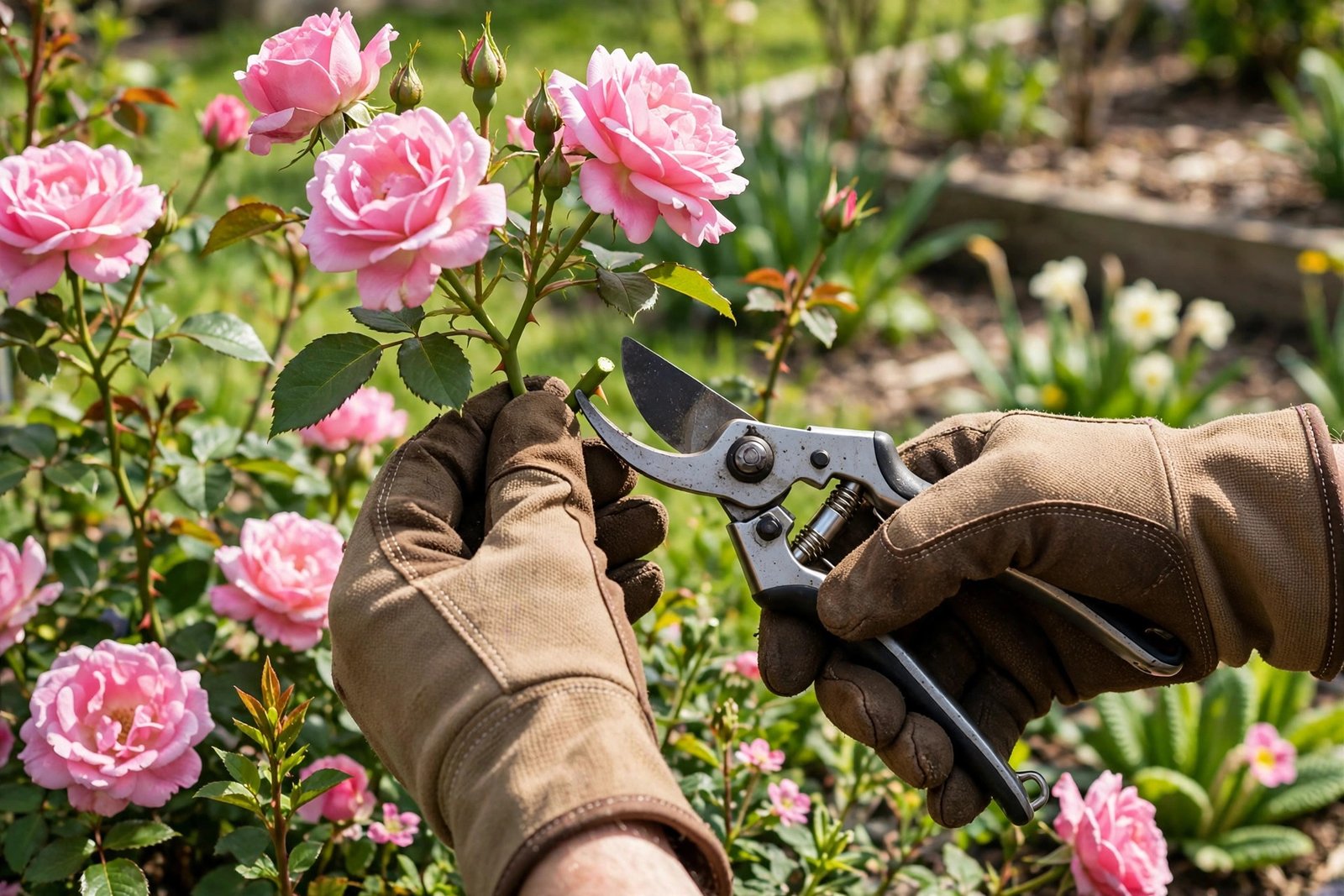
Rose bushes inspire a special terror in pruners: one wrong cut and you’ve murdered the plant, or so the anxiety goes. The truth is kinder — roses are far tougher than their reputation, and most “killed” roses were actually killed by neglect, not pruning. Pruning correctly doesn’t just avoid damage; it’s the single highest-impact thing you can do for blooms. Chicago’s climate adds specific timing and winter-protection wrinkles, but the core technique is the same everywhere.
Here’s everything: when to prune in Chicago, the tools and cuts, the step-by-step method for bush roses, what to do with climbers and old garden roses, and winter protection that actually matters.
When to Prune in Chicago (Timing Is Everything)
Prune hybrid teas, floribundas, and grandifloras in early spring — in Chicago, that’s typically late March to mid-April, when the forsythia blooms. The forsythia rule is folk wisdom backed by phenology: it blooms when soil temperatures signal the same conditions roses need. Pruning earlier risks stimulating growth that a late frost kills; pruning much later wastes the plant’s spring energy on wood you’re about to remove. University of Illinois Extension publishes Illinois-specific rose guidance worth bookmarking.
Deadheading (removing spent blooms) happens all season — it’s light pruning that encourages rebloom. Major structural pruning happens once, in spring. Never do heavy pruning in fall: it stimulates tender growth heading into Chicago winter and removes the hips and canes that provide some cold protection. The American Rose Society confirms the principle across zones: spring for structure, summer for deadheading, fall for leaving alone.
Tools and the Anatomy of a Proper Cut
You need sharp bypass pruners (not anvil pruners, which crush stems), loppers for thick canes, and thick gauntlet-style gloves — rose thorns are not a suggestion. Disinfect blades between plants with rubbing alcohol; dirty tools spread disease faster than any pruning mistake. A proper cut: 45-degree angle, about a quarter inch above an outward-facing bud eye, sloping away from the bud so water drains off. The outward-facing bud is key — it directs new growth away from the plant’s center, keeping the bush open for air circulation that prevents fungal disease.
The cut should show healthy tissue: greenish-white pith in the center. If you see brown or black pith, the cane is dead or diseased — cut lower until you find healthy tissue. This “cut to green” rule is how you assess winter damage in spring, which in Chicago is a real annual task. Keep a small sharp pruning saw handy too — some older canes are too thick for loppers, and a clean saw cut beats a ragged crushed one.
The Step-by-Step Spring Prune
First, remove the 3 D’s: dead, damaged, and diseased wood — cut back to healthy tissue. Second, remove crossing canes that rub each other (rubbing wounds invite disease) and any canes growing toward the center. Third, remove spindly growth thinner than a pencil — it never produces good blooms. Fourth, shape: for hybrid teas, cut remaining canes back to 12–18 inches, leaving 3–5 strong canes in an open vase shape. For floribundas, prune lighter — 18–24 inches. Seal nothing; modern practice says pruning sealants trap moisture and do more harm than good. Step back frequently to check the shape — pruning is sculpture, and the vase shape you’re building determines airflow all season.
The 5-Leaflet Rule for Deadheading
Here’s the deadheading detail that separates abundant rebloomers from one-flush wonders: cut the spent bloom back to the first 5-leaflet leaf below it. Rose leaves come in 3-leaflet and 5-leaflet forms, and the buds at 5-leaflet leaf axils are the strong ones that produce vigorous new flowering shoots. Cutting to a 3-leaflet leaf gives weak, blind shoots. Make the cut at the same 45-degree angle above an outward-facing bud. This one rule, applied consistently all summer, can double your bloom count — it’s the highest-leverage habit in rose care after spring pruning itself.
Chicago Winter: Assessment and Protection
Chicago winters kill rose canes regularly — expect dieback and plan for it. In late fall, after hard frosts, mound 8–12 inches of soil or mulch over the graft union (the knobby bump at the base); this is the single most important winter protection, because the graft is the plant’s lifeline. For tender hybrid teas, add a rose cone or wrap with burlap stuffed with straw — but ventilate on warm winter days to prevent cooking. In spring, wait until growth starts before judging winter damage; canes that look dead in March often leaf out by May. Cut to green wood only after you’re sure what’s alive.
Choose varieties with Chicago in mind if you’re planting new: Canadian Explorer series, Knock Out roses, and rugosas laugh at zone 5 winters that devastate tender teas. The best pruning is the pruning you barely need because the variety suits the climate. And site new roses well — morning sun, good air circulation, and rich well-drained soil prevent half the disease problems pruning gets blamed for.
Climbers and Old Garden Roses: Different Rules
Climbing roses bloom on old wood — heavy spring pruning removes the flowering wood. Instead, prune climbers lightly in spring (dead wood only) and do structural pruning right after their first bloom flush, training new canes horizontally (horizontal canes produce more flowering laterals — the pro trick). Once-blooming old garden roses and ramblers: prune only after flowering, never in spring, or you’ll cut off the entire season’s blooms. When in doubt about a rose’s type, observe for one season before making major cuts — a year of watching beats a confident wrong cut.
Feed your pruned roses well — they put enormous energy into the regrowth you’re asking for. A balanced rose fertilizer in spring and again in early summer fuels the bloom cycle your pruning set in motion. And if rose success gives you the gardening bug, starting a small vegetable garden on your apartment balcony is the natural next project, or bring the green indoors with the best indoor plants for forgetful waterers.
Conclusion
Pruning rose bushes without killing them is straightforward: prune in early Chicago spring when forsythia blooms, use sharp clean bypass pruners, cut at 45 degrees above outward-facing buds, remove the 3 D’s first, deadhead to 5-leaflet leaves all summer, cut to green healthy tissue, and protect the graft union through winter. Roses want to grow — your job is just directing that energy with well-timed cuts. Be bold in spring, gentle in summer, hands-off in fall, and your roses will reward you with the blooms that make the whole ritual worthwhile.
Frequently Asked Questions
How far back can I cut a rose bush?
Hybrid teas handle hard pruning to 12–18 inches in spring; established healthy bushes can even be cut to 6–8 inches for rejuvenation. Floribundas prefer lighter pruning. Never remove more than a third of a climber’s structure at once.
My rose looks dead after winter — is it?
Probably not. Wait until late May, then scratch the bark with your thumbnail — green underneath means alive. Cut canes back to green tissue; roses often regrow vigorously from the graft even after severe dieback.
Should I seal pruning cuts?
No — modern rosarians advise against sealants, which trap moisture and can promote rot. Clean cuts at the proper angle heal naturally. The exception is cane borers in some regions; Chicago gardeners rarely need to worry.
Can I prune roses in summer?
Light pruning — deadheading spent blooms and removing diseased foliage — is good all summer. Save structural, heavy pruning for spring; summer hard-pruning stresses the plant during heat.