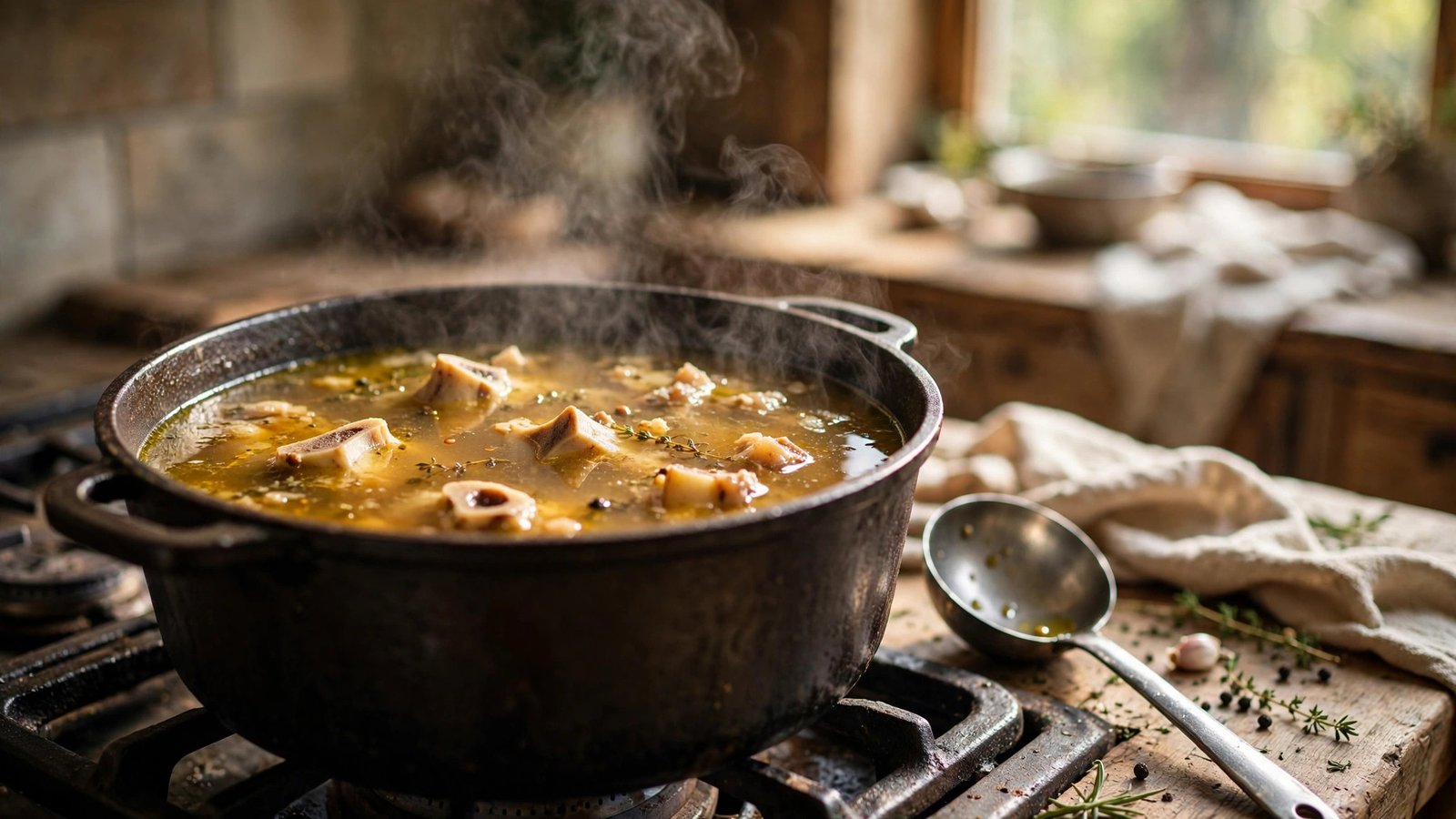
Homemade or opened bone broth lasts 4 to 5 days in the refrigerator, stored at 40°F or below in a sealed container. That’s the short answer. If you want to play it strictly by the book, the USDA recommends using refrigerated soups and broths within 3 to 4 days — so day four is your “use it or freeze it” deadline. Either way, bone broth is one of the more perishable things in your fridge, thanks to all that protein and gelatin bacteria love.
The tricky part with broth is that it often looks and smells fine right up until it isn’t. Because it’s simmered for hours, people assume it’s somehow “preserved.” It isn’t. Once it cools, the clock starts, and proper storage is what stands between you and a batch of very expensive regret.
How Long Bone Broth Lasts: The Full Breakdown
- Homemade bone broth (refrigerated): 4–5 days at 40°F or below
- Opened shelf-stable boxed broth: 7–10 days refrigerated (check the brand’s label — most say about a week)
- Unopened shelf-stable broth: good until the printed date, stored in the pantry
- Frozen bone broth: 6 months at peak quality, safe indefinitely if kept at 0°F
Why the difference between homemade and boxed? Commercial shelf-stable broth is sterilized and sealed in an oxygen-free environment. The moment you open it, that advantage disappears — but it still tends to last a bit longer than homemade because of the processing. Homemade broth, rich with gelatin and meat particles, is basically a bacterial playground the second it drops below 140°F.
How to Tell If Bone Broth Has Gone Bad
Broth gives you a few honest signals when it’s past its prime. Trust your senses, and when in doubt, throw it out — broth is cheap to remake and expensive to get sick from.
Sour or “off” smell. Fresh bone broth smells rich and savory, like roast meat. Spoiled broth smells sour, yeasty, or just wrong — sometimes faintly like vomit, thanks to lactic acid bacteria. If the smell makes you hesitate, it’s done.
Slimy or unusually thick texture. Good broth gels in the fridge — that’s the gelatin, and it’s a sign of quality. But if it feels slimy or has a slick, filmy coating on the surface that wasn’t there before, bacteria have moved in.
Mold or discoloration. Any fuzzy spots, green or white patches, or dark discoloration on the surface mean the whole container is compromised. Don’t scoop around it — mold in liquid spreads invisibly.
Bloated container. If you stored broth in a jar and the lid is bulging or the container looks pressurized, gas-producing bacteria have been at work. Discard it without tasting.
One thing that is not a sign of spoilage: a layer of fat solidifying on top. That’s completely normal — just skim it or stir it back in when you reheat.
How to Store Bone Broth So It Lasts
How you handle broth in the first two hours matters more than anything else. Bacteria multiply fastest between 40°F and 140°F — the USDA’s “danger zone” — so your job is to get the broth out of that range fast.
Cool it quickly. Don’t put a giant steaming stockpot straight into the fridge — it’ll warm everything around it and take hours to cool through. Divide the broth into shallow containers so it cools fast, or set the pot in an ice bath in the sink for 20–30 minutes first. The goal: below 40°F within 2 hours.
Use airtight containers. Mason jars, glass containers with snap lids, or even zip-top bags all work. Leave about an inch of headspace if you’re freezing, since liquid expands. Label with the date — you will not remember, I promise.
Keep it at the back of the fridge. The door is the warmest spot and fluctuates every time you open it. The back of a middle or lower shelf holds the steadiest temperature. Your fridge should be at or below 40°F; if you’re not sure, a $5 fridge thermometer is worth it.
Freezing Bone Broth: Your Best Insurance Policy
If you made a big batch — and let’s be honest, nobody makes a small batch of bone broth — freezing is the move. Properly frozen broth keeps its quality for about 6 months and stays safe indefinitely at 0°F.
The smartest method is freezing in portions you’ll actually use: ice cube trays for small amounts (perfect for deglazing pans or enriching sauces), silicone muffin molds for roughly half-cup portions, and quart containers for soup bases. Once frozen solid, pop the cubes into labeled freezer bags and squeeze out the air. When you need some, you can grab exactly the right amount instead of thawing a whole quart.
Thaw overnight in the fridge, or drop frozen cubes straight into a hot pan or pot — no thawing needed. And always bring thawed broth to a rolling boil (165°F) before serving, especially if it’s been in the fridge a few days. For more on keeping leftovers safe in general, our guide on how long chili is good in the fridge covers the same USDA rules applied to another slow-cooked favorite.
Reheating Bone Broth Safely
When you’re ready to use refrigerated broth, bring it to a full boil — not just a simmer — and hold it there for at least a minute. This kills most bacteria that may have grown during storage. Only reheat the portion you plan to use; repeatedly heating and cooling the whole batch gives bacteria multiple chances to thrive. If you’re meal-prepping several dishes at once, our guide on how long pasta lasts in the fridge lays out the same USDA storage rules for another weekly staple.
FAQs
Can you eat bone broth after 7 days in the fridge?
No — don’t risk it. Even if it smells okay, bacterial growth at day 7 is well past safe limits for homemade broth. Freeze anything you won’t use by day 4 or 5.
Why did my bone broth turn sour in the fridge?
It was likely cooled too slowly, stored above 40°F, or contaminated by a dirty ladle or container. Sour smell means lactic acid bacteria have taken over — discard the batch.
Is it safe to leave bone broth out overnight?
No. Broth left at room temperature for more than 2 hours (1 hour if it’s above 90°F) should be thrown out, per USDA guidelines. The long simmer doesn’t protect it once it cools.
Can you freeze bone broth in mason jars?
Yes, but use wide-mouth jars, leave at least an inch of headspace, and let the broth cool completely before freezing. Straight-sided jars handle expansion better than shouldered ones.
Does bone broth go bad if it doesn’t gel?
Not gelling isn’t a safety issue — it just means less gelatin was extracted (shorter simmer, more water, or bones with less collagen). It still spoils on the same 4–5 day timeline.