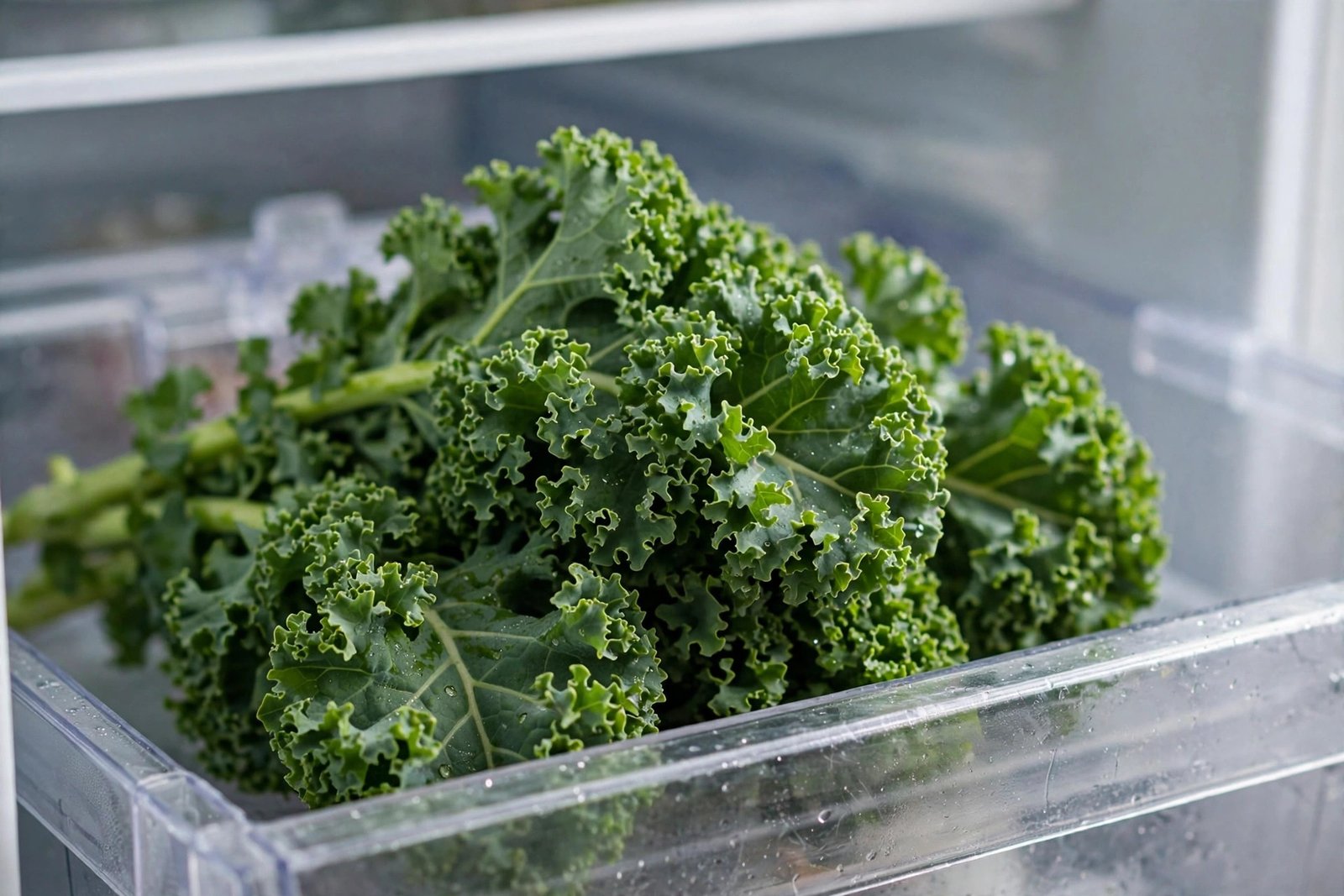
Fresh kale lasts 5 to 7 days in the fridge when stored properly. If you bought a fresh bunch and tossed it straight into the crisper drawer unwashed and loosely wrapped, you can realistically expect about a week of good eating. Bagged, pre-washed kale from the grocery store usually holds up a bit less — around 3 to 5 days after opening — because it’s already been cut and handled.
The honest truth? Kale is one of the hardier greens you’ll bring home. Unlike delicate spring mix that turns to slime overnight, kale’s thick, sturdy leaves buy you real time. But “lasts” and “tastes great” aren’t quite the same thing — kale is at its best in those first 3 to 4 days, when the leaves are still crisp and the flavor is sweet and mild. After that it starts losing moisture, the edges yellow, and the taste gets a little more bitter.
How to Tell If Kale Has Gone Bad
Your eyes and nose will tell you everything you need to know. Here’s what to watch for:
Signs it’s still good
- Leaves are firm, crisp, and hold their shape when you pick them up
- Deep green color throughout (some varieties are naturally purple-tinged — that’s fine)
- Smells fresh and slightly earthy, like a garden
Signs it’s time to toss it
- Yellowing leaves: A few yellow spots are okay to trim around, but widespread yellowing means it’s past its prime
- Slimy texture: If the leaves feel slick or slimy, that’s bacterial breakdown — throw it out
- Wilting that won’t bounce back: Slightly limp kale can be revived in ice water, but if it stays floppy, it’s done
- Sour or off smell: Fresh kale smells like nothing much. If it smells funky, trust your nose
- Dark mushy spots: Especially near the stems — cut away small spots, discard if widespread
A little wilting alone isn’t a dealbreaker. I’ve revived plenty of sad-looking kale with a 10-minute soak in ice water. But slime and sour smells are hard stops — no amount of rinsing fixes that.
The Best Way to Store Kale in the Fridge
How you store kale matters more than most people realize. Do it right and you’ll easily get the full week. Do it wrong and you’ll be composting half the bunch by day three.
For fresh bunches
Don’t wash it first. This is the number one mistake. Extra moisture is the enemy — it speeds up decay dramatically. Instead, wrap the unwashed bunch loosely in a dry paper towel or a clean kitchen towel, then slide it into a loosely closed plastic bag or a produce storage container. The towel absorbs excess moisture while the bag keeps humidity in. Store it in the crisper drawer, which is designed to maintain the right humidity for leafy greens.
Wash your kale right before you use it, not before you store it. A quick rinse under cold water, a spin in a salad spinner (or a good shake in a clean towel), and you’re good to go.
For bagged, pre-washed kale
That bagged kale from the store is convenient, but it’s already been cut, which means more surface area exposed to air and a shorter clock. Once opened, transfer it to an airtight container lined with a paper towel, or reseal the bag with as much air pressed out as possible. Use it within 3 to 5 days for the best quality. If the bag is still sealed and unopened, it’ll usually keep until the “best by” date printed on the package — sometimes a day or two beyond, if it still looks and smells fine.
What about the stems?
Kale stems are thicker and tougher than the leaves, and they actually keep a bit longer. If your leaves are fading but the stems still look solid, you can strip the remaining good leaves and use the stems separately — they’re great finely chopped in soups and stir-fries where they’ll soften up nicely. For more on keeping hearty greens fresh, check out our guide on how long asparagus lasts in the refrigerator.
Can You Freeze Kale to Make It Last Longer?
Absolutely — and it’s one of the best things you can do if you bought too much. Frozen kale keeps for 8 to 12 months in the freezer and works perfectly in smoothies, soups, stews, and sautés. It won’t be salad-worthy after thawing (the texture goes soft), but for cooked dishes you’d never know the difference.
Here’s the simple method:
- Wash the kale thoroughly and strip the leaves from the tough stems
- Blanch in boiling water for 2 minutes, then immediately plunge into ice water
- Drain well and squeeze out as much water as possible
- Spread on a baking sheet, freeze until solid (about 1-2 hours), then transfer to freezer bags
- Squeeze out excess air, label with the date, and freeze
Blanching before freezing is worth the extra few minutes — it stops the enzymes that cause flavor and color loss, so your kale tastes noticeably better months later. The FoodSafety.gov cold storage charts are a handy reference for freezer timelines across all kinds of produce.
Does the Type of Kale Matter?
A little, yes. The main varieties you’ll find in US stores:
- Curly kale: The most common type. Thick, ruffled leaves that store well — typically the full 5 to 7 days.
- Lacinato (dinosaur/Tuscan) kale: Dark blue-green, bumpy leaves. Slightly more delicate; aim to use within 4 to 6 days.
- Red Russian kale: Tender, oak-leaf shaped with purple stems. The most perishable of the bunch — best within 3 to 5 days.
- Baby kale: Sold in clamshells like salad mix. Treat it like salad greens: 3 to 5 days max after opening.
Smart Ways to Use Kale Before It Goes Bad
Got kale approaching day five and no dinner plan? Here are some quick saves:
- Kale chips: Toss torn leaves with olive oil and salt, bake at 350°F for 10-12 minutes. Even slightly wilted kale makes excellent chips.
- Smoothies: Freeze the leaves in portions — they blend right from frozen and you won’t taste any texture issues.
- Massaged kale salad: Wilting leaves perk right up when massaged with olive oil, lemon juice, and salt for a couple of minutes.
- Soup or stew: Kale holds its texture beautifully in soups. Add it in the last 10 minutes of cooking.
- Sautéed greens: Garlic, olive oil, a pinch of red pepper flakes — done in 5 minutes.
If you’re into meal prepping greens, our article on how long hummus lasts after opening pairs well — kale and hummus make a solid lunch combo all week.
FAQs
Can you eat kale after 7 days in the fridge?
Maybe — it depends on condition, not the calendar. If the leaves are still crisp, green, and smell fresh at day 7 or 8, it’s fine to eat. But if you see yellowing, sliminess, or smell anything off, toss it. When in doubt, throw it out.
Should kale be stored in water like herbs?
You can, and some people swear by it. Trim the stems and stand the bunch upright in a jar with an inch of water, loosely cover the leaves with a bag, and refrigerate. This can extend freshness to 7-10 days. Just change the water every couple of days.
Why does my kale get slimy so fast?
Almost always excess moisture. If you’re washing before storing, or sealing it in a bag while wet, you’re creating the perfect environment for bacteria. Store it dry, wash before use, and make sure your fridge is at or below 40°F — the FDA recommends this temperature to slow spoilage.
Is yellow kale safe to eat?
A few yellow leaves on an otherwise fresh bunch are safe — just trim them off. The yellowing means chlorophyll is breaking down, which also means declining nutrition and bitterer flavor. Widespread yellowing across the whole bunch means it’s past its prime and belongs in the compost.
How long does cooked kale last in the fridge?
Cooked kale keeps 3 to 4 days in an airtight container in the fridge. Let it cool to room temperature before refrigerating (but don’t leave it out more than 2 hours), and reheat to steaming before serving leftovers.