
A land survey costs $300 to $800 for a typical residential job in the US, with most homeowners paying around $500. That’s for a standard boundary survey on a normal suburban lot. Prices climb fast with complexity: a simple mortgage location survey can be $200–$400, while an ALTA/NSPS survey for commercial property runs $1,000–$2,500 or more. Large acreage, difficult terrain, and murky property records all push the number up. Here’s what each survey type costs and when you actually need one.
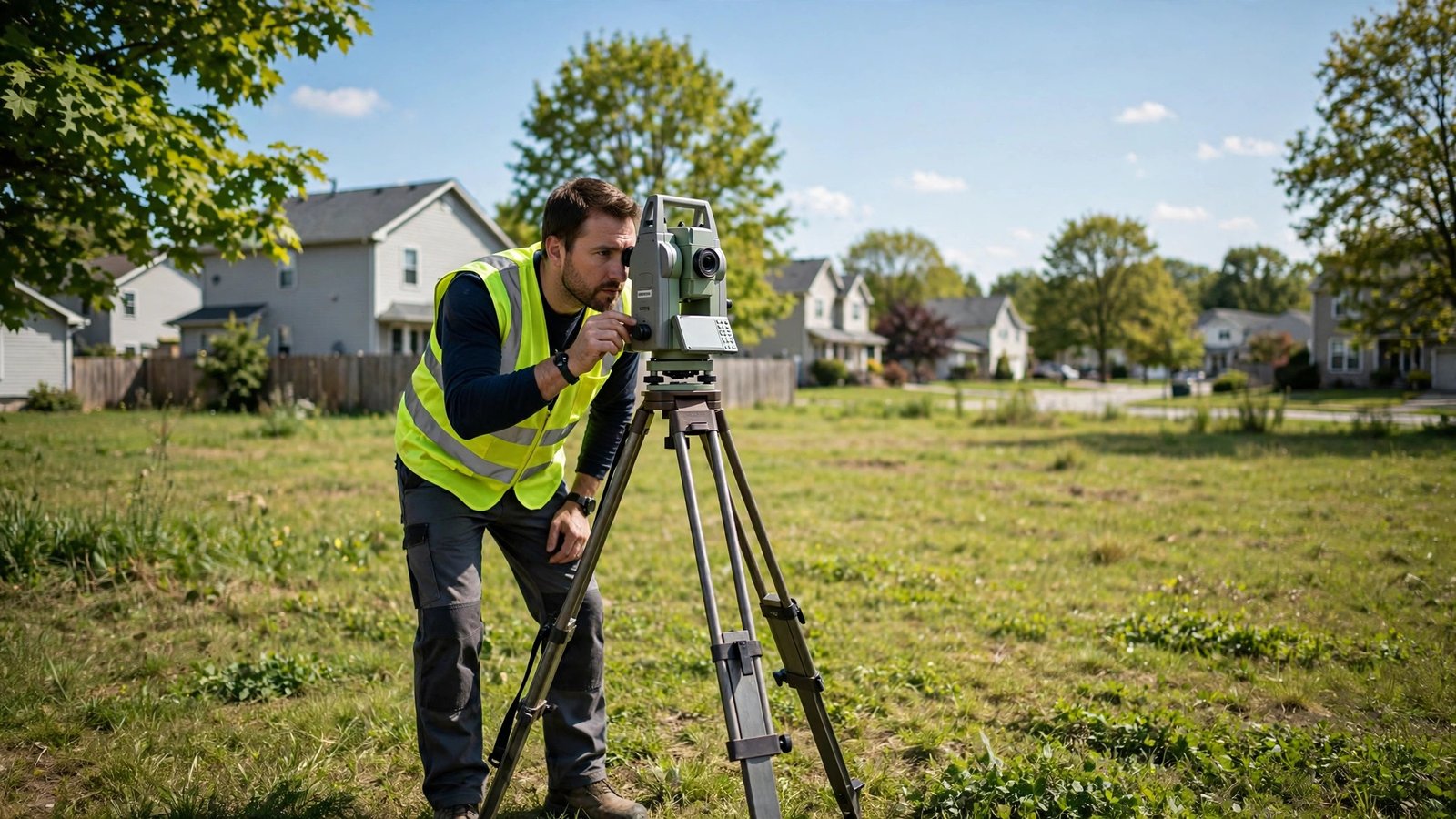
Land Survey Cost by Type
- Boundary survey: $200–$700. Establishes or re-establishes your property lines and marks corners. The most common residential survey.
- Mortgage / location survey: $200–$500. A lighter-weight survey many lenders require at closing — shows structures relative to property lines but doesn’t set new markers.
- Topographic survey: $500–$1,500+. Maps elevations, slopes, and features — needed for construction, drainage work, or building on a slope.
- ALTA/NSPS survey: $1,000–$2,500+. The gold standard for commercial transactions, with detailed title, zoning, and encroachment research.
- Subdivision / platting: $1,500–$5,000+. Splitting land into lots, with filings and approvals.
- Construction stakeout: $500–$2,000 depending on project size — marks where the building, driveway, or utilities go.
What Affects the Price
Lot size and shape. A rectangular quarter-acre is quick; a 5-acre wooded parcel with an irregular boundary takes far longer. Terrain. Steep slopes, dense woods, and wetlands slow fieldwork considerably. Record research. If deeds are old, conflicting, or the last survey was decades ago, the surveyor spends expensive office hours untangling history before ever visiting. Location. Surveyors in high-cost metros charge more, and some states have thinner competition. Existing markers. If previous survey pins are intact and findable, the job is faster and cheaper.
When You Actually Need a Survey
The classic triggers: buying property (your lender or title insurer may require it, and it’s cheap insurance against boundary disputes), building a fence or addition near the property line, a dispute with a neighbor over where the line is, refinancing (some lenders want an updated survey), and selling — a fresh survey can prevent closing-day surprises. For fences especially, the $400 survey is nothing compared to the cost of tearing out a fence built six inches onto your neighbor’s land.
How to Hire a Surveyor
Only a licensed Professional Land Surveyor (PLS) can legally perform a boundary survey — requirements vary by state, but the license is non-negotiable. Get two or three quotes, and make sure each one specifies the survey type, what’s included (markers set? plat drawing? digital file?), and turnaround time. Ask how recent their local records research goes and whether the quote includes filing with the county if that’s customary in your area. Turnaround is typically 1–3 weeks for residential work; rush jobs cost more.
Be wary of quotes dramatically below the pack — corners get cut in record research, and a sloppy survey that misses an easement can cost you far more than you saved. HomeAdvisor’s cost data is a decent sanity check for your market, but local quotes are what matter.
Surveys usually show up in the context of bigger property moves. If you’re buying, our down payment guide covers the other major upfront cost, and home insurance pricing is the next number to lock down. If the survey is part of estate planning, see what a trust costs.
If your property was surveyed in the past, dig up the old plat before calling anyone — a surveyor who can work from recent records may charge less than one starting from scratch, and some will do a cheaper “survey update” rather than a full new survey. Neighbors splitting a boundary survey is another legitimate saver when the line in question is shared; get the cost-sharing agreement in writing first. And schedule outside the spring rush if you can — surveyors, like everyone in the trades, are busiest March through June, and off-season scheduling sometimes earns you a better slot and a sharper quote.
FAQs
How long does a land survey take?
A standard residential boundary survey takes 1–3 weeks from engagement to delivered plat, with a few hours of actual fieldwork. Complex commercial or large-acreage surveys can take a month or more.
Who pays for a land survey — buyer or seller?
It’s negotiable. Buyers typically pay when their lender requires it; sellers sometimes provide one to smooth the sale. In neighbor disputes, the party who wants the line established pays — though costs are occasionally split by agreement.
Can I survey my own land?
You can measure your own land with a tape and a phone GPS app, but it has zero legal standing. Only a licensed surveyor’s work counts for transactions, disputes, permits, and court. DIY measurements are fine for planning a garden; useless for proving a boundary.
How often should you get a survey?
There’s no expiration date on a good survey, but get a new one if markers are missing, if neighboring properties have changed hands or been developed, or if you’re planning construction near the boundary. A 20-year-old survey with lost pins is a starting point, not an answer.


