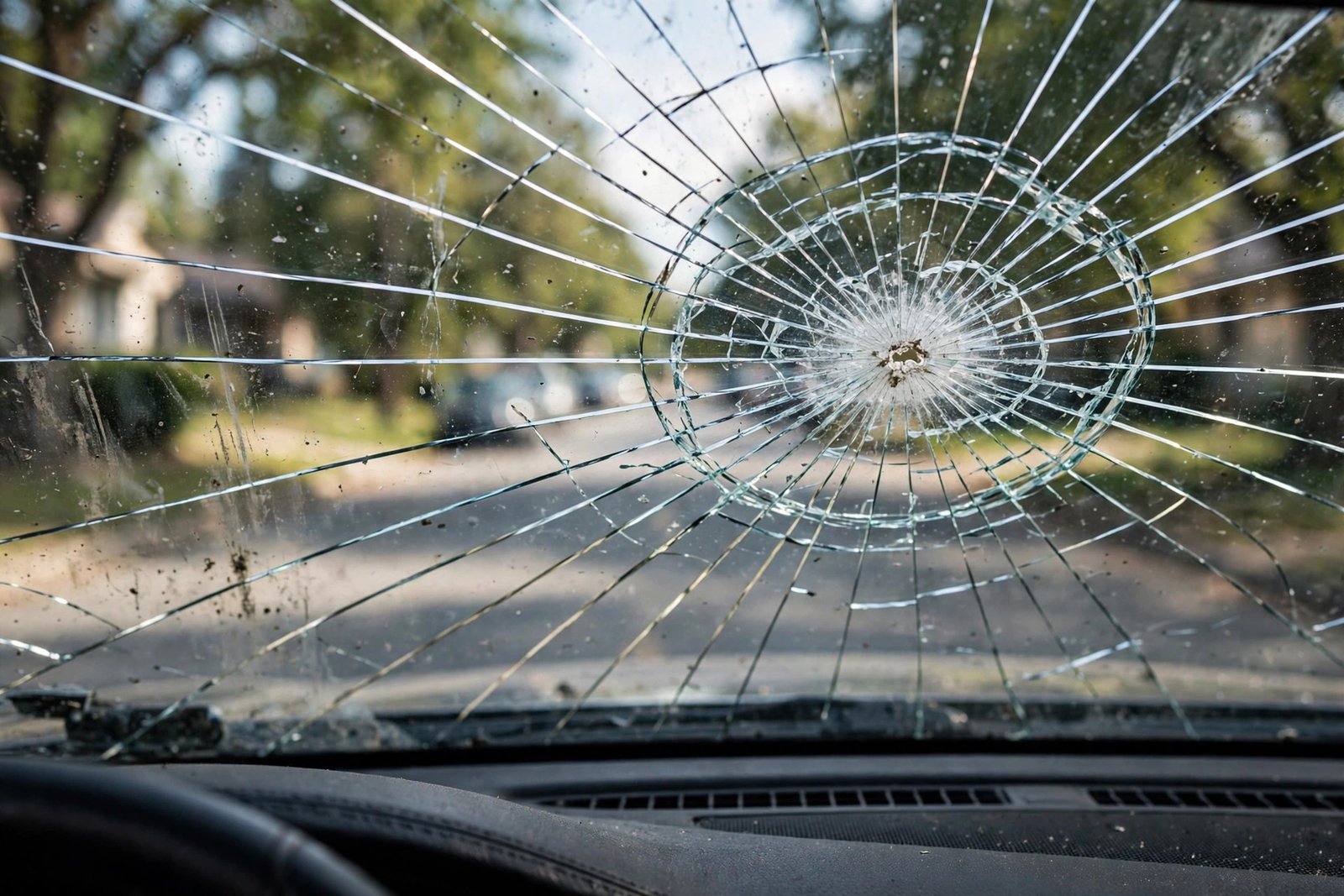
A truck kicked up a stone on the Kennedy, and now there’s a star-shaped crack spreading across your windshield. It’s not in your direct line of sight — yet. Can you keep driving? For how long? Will it get worse? Cracked windshields are Chicago’s most common car injury — between highway debris, construction zones, and winter’s freeze-thaw cycles, almost every driver faces this eventually. Here’s how to assess the damage, what Illinois law says, whether to repair or replace, and what it really costs.
Assessing the Damage: The Three Questions
1. What type of crack is it?
- Chip (bullseye/star): Small impact point under 1 inch. Repairable if addressed quickly.
- Crack: A line extending from an impact. Under 6 inches may be repairable; longer usually means replacement.
- Combination break: Chip with radiating cracks. Repairability depends on total size and location.
- Edge crack: Starting within 2 inches of the windshield edge. These spread fast and compromise structural integrity — replacement is almost always required.
- Stress crack: No impact point, caused by temperature extremes or body flex. Indicates potential installation issues.
2. Where is it?
Location matters more than size for safety. Damage in the driver’s direct line of sight (the “critical vision area”) often can’t be repaired to optical clarity — even a perfect repair leaves slight distortion. Damage at the edges threatens the windshield’s structural role. Damage on the passenger side, away from critical vision, is the most repairable.
3. How old is it?
Fresh damage repairs cleanly; old damage accumulates dirt and moisture in the crack, preventing resin from bonding. A chip repaired within days has a 90%+ success rate; the same chip after three months of Chicago winter often can’t be saved. Time is the variable you control — act fast.
Is It Safe to Drive? The Honest Answer
A small chip outside your line of sight: yes, drive normally, but schedule repair within days — temperature swings and road vibration grow cracks unpredictably. A crack in the driver’s vision area: legally and practically problematic — get it addressed immediately. A long crack, edge crack, or anything obstructing vision: minimize driving; the windshield is structural.
That last point surprises people: the windshield provides up to 45 percent of the cabin’s structural integrity in a front-end collision and up to 60 percent in a rollover. It also supports proper airbag deployment — passenger airbags bounce off the windshield. A compromised windshield isn’t just a visibility issue; it’s a safety-system issue. The NHTSA treats windshield integrity as part of the vehicle’s crash protection — because it is.
Illinois Law: What You Must Know
Illinois law (625 ILCS 5/12-503) prohibits driving with windshield damage that obstructs the driver’s clear view. Police can ticket you for cracked windshields that impair vision — and “impair” is the officer’s judgment call. Additionally, Illinois requires insurance companies to offer windshield coverage; many Chicago drivers carry full glass coverage with zero deductible without realizing it — check your policy before paying out of pocket. If a vehicle inspection or emissions test flags the damage, you’ll be fixing it regardless.
Repair vs. Replace: The Decision
Repair ($60–$150, often free with glass coverage, 30 minutes): viable for chips under ~1 inch and cracks under ~6 inches, outside the driver’s critical vision area, addressed promptly. Modern resin injection restores structural integrity and ~90 percent of optical clarity. Many insurers waive the deductible for repairs — they’d rather pay $80 now than $400 later.
Replace ($250–$600 for standard vehicles; $800–$1,500+ for cars with ADAS cameras/sensors in the windshield): required for long cracks, edge cracks, damage in critical vision areas, multiple cracks, or deep damage affecting the inner glass layer. Replacement takes 1–2 hours plus adhesive curing time (don’t drive for at least an hour; avoid car washes and slamming doors for 24–48 hours).
The ADAS complication: If your car has lane-keeping, adaptive cruise, or automatic braking cameras mounted at the windshield, replacement requires camera recalibration ($200–$400 additional). Skipping recalibration means your safety systems may malfunction — non-negotiable on equipped vehicles. Budget for it in your car expense planning — it’s the hidden cost of modern windshields.
Preventing the Next One (Chicago Edition)
- Following distance: The #1 prevention. Stones come from vehicles ahead — 4+ seconds of gap on highways and construction zones.
- Avoid sudden temperature shocks: Don’t blast max defroster on an ice-cold windshield or pour hot water on ice — thermal shock cracks glass. This is Chicago’s special contribution to windshield mortality.
- Fix chips immediately: A $10 DIY repair kit from the auto parts store stabilizes a chip in 15 minutes until professional repair. Keep one in the glove box.
- Park thoughtfully: Under trees (falling branches) and near construction are higher-risk. Garages protect from hail — a usable garage is windshield insurance.
OEM vs. Aftermarket Glass: Does It Matter?
When replacement is needed, you’ll be offered OEM (original equipment manufacturer) glass or aftermarket — typically a $100–$200 price difference. For most vehicles, quality aftermarket glass from reputable manufacturers (Pilkington, PGW, Saint-Gobain) performs identically: same safety laminations, same optical standards, same fit. The exception is vehicles with ADAS cameras or heads-up displays — OEM glass guarantees the precise optical properties those systems were calibrated for, and some manufacturers warn that aftermarket glass can affect camera accuracy. Consumer Reports’ auto glass guidance notes that installer quality matters more than the glass brand: proper adhesive, correct cure time, and precise placement determine safety far more than whose logo is etched in the corner. Choose a reputable installer (AGSC-certified shops follow the Auto Glass Replacement Safety Standard), verify ADAS recalibration is included for equipped vehicles, and don’t overpay for a logo on standard cars.
Conclusion
A small chip outside your sightline is safe to drive on briefly — but repair it within days before Chicago’s temperature swings turn it into a replacement. Cracks in your vision area, edge cracks, or long cracks mean prompt professional attention: they’re legal liabilities and structural compromises, not cosmetic issues. Check your insurance for glass coverage (you may already have zero-deductible repair), choose repair for small fresh damage and replacement for the rest, and never skip ADAS recalibration on equipped cars. The stone already did its damage; what happens next is up to how fast you act.
Frequently Asked Questions
Can I drive with a cracked windshield in Illinois?
Small damage outside your line of sight is generally tolerated, but Illinois law prohibits windshield damage obstructing the driver’s clear view — officers can ticket at their discretion. Get significant cracks addressed promptly.
How much does windshield replacement cost in Chicago?
$250–$600 for standard vehicles; $800–$1,500+ for vehicles with ADAS cameras requiring recalibration. Repairs run $60–$150, often with waived deductibles under glass coverage.
Will my insurance cover a cracked windshield?
Comprehensive coverage typically covers it; many policies include full glass coverage with zero deductible. Check your policy — you may be covered better than you think. Claims for glass repair usually don’t raise rates.
How long can I wait to fix a windshield chip?
Days, not weeks. Fresh chips repair reliably; contamination from dirt and moisture makes older damage unrepairable. Temperature swings and vibration grow cracks unpredictably — a $80 repair today prevents a $400 replacement next month.
Does a cracked windshield affect airbag deployment?
Yes — the passenger airbag deploys upward and bounces off the windshield into position. A weakened windshield can fail during deployment, compromising the airbag’s effectiveness. It’s a genuine safety-system concern, not just visibility.