Your car drifts right on Lake Shore Drive. The steering wheel sits crooked even when you’re going straight. And the front tires are wearing bald on the inside edges after just 20,000 miles. These are classic signs of misalignment — and in Chicago, where potholes the size of bathtubs appear every spring, wheel alignment isn’t a luxury service; it’s routine survival. But shops also oversell alignments, so knowing the real symptoms saves you from paying $100–$200 for adjustments you don’t need. Here’s how to tell.
What Wheel Alignment Actually Is
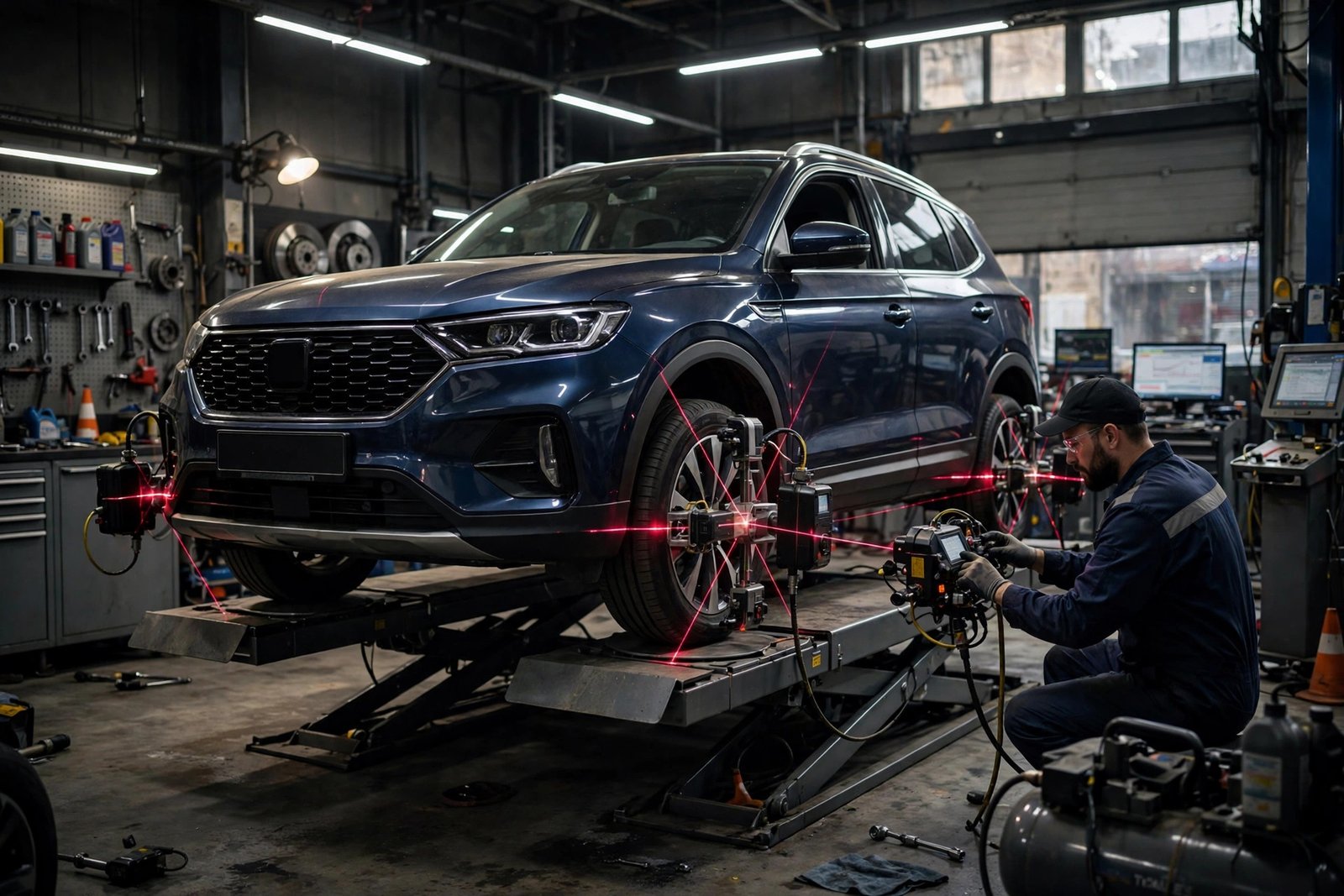
Alignment refers to the angles of your wheels relative to each other and the road — camber (tilt in/out), toe (pointed in/out), and caster (steering axis angle). Potholes, curb strikes, and worn suspension components knock these angles out of spec. Misalignment doesn’t just feel bad; it destroys tires (a $600–$1,000 set can wear out in half its life), hurts fuel economy, and compromises handling in emergencies.
The Five Telltale Symptoms
1. The car pulls to one side
On a flat, straight road with no crown, briefly loosen your grip — if the car drifts left or right, something’s off. Caveat: roads are crowned for drainage, so a slight rightward drift on some roads is normal. Test on a flat parking lot to be sure. Note that pulling can also come from uneven tire pressure or a sticking brake caliper — check pressure first (it’s free).
2. Crooked steering wheel
Driving straight but the wheel sits at 11 o’clock? That’s alignment — specifically toe misalignment. It’s the single most reliable DIY diagnostic because nothing else commonly causes it.
3. Uneven tire wear
Run your hand across each tire’s tread. Feathering (sharp edges one way, smooth the other) indicates toe problems; inside- or outside-edge wear indicates camber issues; cupping/scalloping suggests worn shocks rather than alignment. Uneven wear is alignment’s smoking gun — it proves the problem has existed long enough to cost you tire life. Catching it early is exactly like deciding whether a roof needs replacement or just repair: early diagnosis means a cheap fix instead of a full replacement.
4. Vibration or loose steering
Misalignment can cause steering wheel vibration (though wheel balancing is the more common cause) and a vague, wandering feeling at highway speeds. If the car feels “darty” or requires constant correction on the Kennedy, get it checked.
5. Squealing tires on turns
Tires squealing during normal, gentle turns suggest excessive toe misalignment scrubbing rubber sideways. Some squeal on polished concrete parking garages is normal; squeal on asphalt at moderate speeds is not.
When You Definitely Need an Alignment
- After any significant pothole or curb strike. In Chicago, this means most springs. If you hit one hard enough to feel it in your spine, get checked.
- After suspension work. New struts, control arms, tie rods, or ball joints change geometry — alignment is mandatory afterward, and reputable shops include or bundle it.
- When installing new tires. Putting $800 tires on misaligned wheels is burning money. Align first (or simultaneously).
- After an accident, even minor. Frame/suspension shifts invisible to the eye show up on the alignment rack.
- Annually in Chicago, honestly. Between potholes, frost heaves, and construction zones, yearly checks are cheap insurance.
When You Probably Don’t
Shops love selling alignments with every oil change. Skip it if: the car tracks straight, the wheel is centered, tire wear is even, and you haven’t hit anything or changed suspension parts. An alignment on a car that’s already in spec is $100–$200 for nothing — the machine will confirm what your hands already told you. Be equally skeptical of “free alignment checks” that invariably find problems; get a second opinion if the printout shows marginal out-of-spec readings on an otherwise fine-driving car.
What It Costs and What to Ask For
In Chicago, a standard two-wheel (front-end) alignment runs $75–$125; a four-wheel alignment runs $100–$200. Always get four-wheel on modern cars — rear alignment affects handling and tire wear too. Ask for the before-and-after printout: it shows every angle’s spec range and your car’s readings. A good shop explains which angles were out and what they adjusted. Lifetime alignment packages ($180–$250) make sense in Chicago if you keep cars 5+ years and drive pothole-heavy routes — two paid alignments and it pays for itself.
One more thing: alignment can’t fix worn parts. If tie rod ends or ball joints are shot, aligning is pointless until they’re replaced — a reputable shop checks components first. Keep your maintenance space ready for these jobs with a well-organized garage, and budget for the real cost of suspension work alongside your overall car budget.
Chicago Pothole Season: A Survival Guide
Every March, Chicago’s freeze-thaw cycles birth potholes that swallow tires whole — and they’re the #1 alignment killer in the city. The city fills hundreds of thousands annually, but the damage happens faster than repairs. Defensive driving: scan far ahead, never swerve violently (brake firmly before the pothole, then release — a rolling tire absorbs impact better than a locked one), and keep tires properly inflated (soft tires transfer more shock to wheels and suspension). If you crater one hard enough to feel it in your teeth, inspect immediately: check for bulges in the tire sidewall, vibration at speed, and pulling. Report major potholes through the city’s 311 system — Chicago’s 311 service tracks them, and documented reports support damage claims against the city in some cases. And consider pothole reality in your tire choices: higher-profile tires (more sidewall) survive impacts that destroy low-profile performance rubber. The AAA estimates pothole damage costs American drivers billions annually — Chicago contributes its share. An alignment check every spring isn’t paranoia; it’s maintenance. Pair it with a tire inspection, since potholes that knock alignment out often bruise sidewalls too.
Conclusion
You need a wheel alignment when the car pulls, the wheel sits crooked, tires wear unevenly, or you’ve hit a major pothole, replaced suspension parts, or mounted new tires. You don’t need one just because a shop suggests it with your oil change — trust the symptoms. In Chicago’s pothole season, an annual check plus post-impact inspections will save you far more in tire life than alignments ever cost. Your tires are trying to tell you something; learn to read them.
Frequently Asked Questions
How much does a wheel alignment cost in Chicago?
$75–$125 for front-end, $100–$200 for four-wheel alignment. Lifetime packages ($180–$250) pay off within two visits for Chicago drivers dealing with annual pothole damage.
How often should I get a wheel alignment?
Annually in Chicago given pothole exposure, plus after any hard impact, suspension work, new tires, or accident. Otherwise, let symptoms — pulling, crooked wheel, uneven wear — guide you.
Can I drive with bad alignment?
Short-term, yes, but it accelerates tire wear dramatically, worsens fuel economy, and degrades emergency handling. Severe misalignment is a safety issue, not just a tire-life issue.
Does misalignment cause vibration?
Sometimes, but vibration at speed is more commonly wheel imbalance. If balancing doesn’t fix vibration, alignment and suspension inspection are the next steps.
What’s the difference between alignment and balancing?
Alignment adjusts wheel angles; balancing corrects weight distribution around the tire. They’re different services addressing different problems — a shop selling you both should explain which symptom each addresses.