
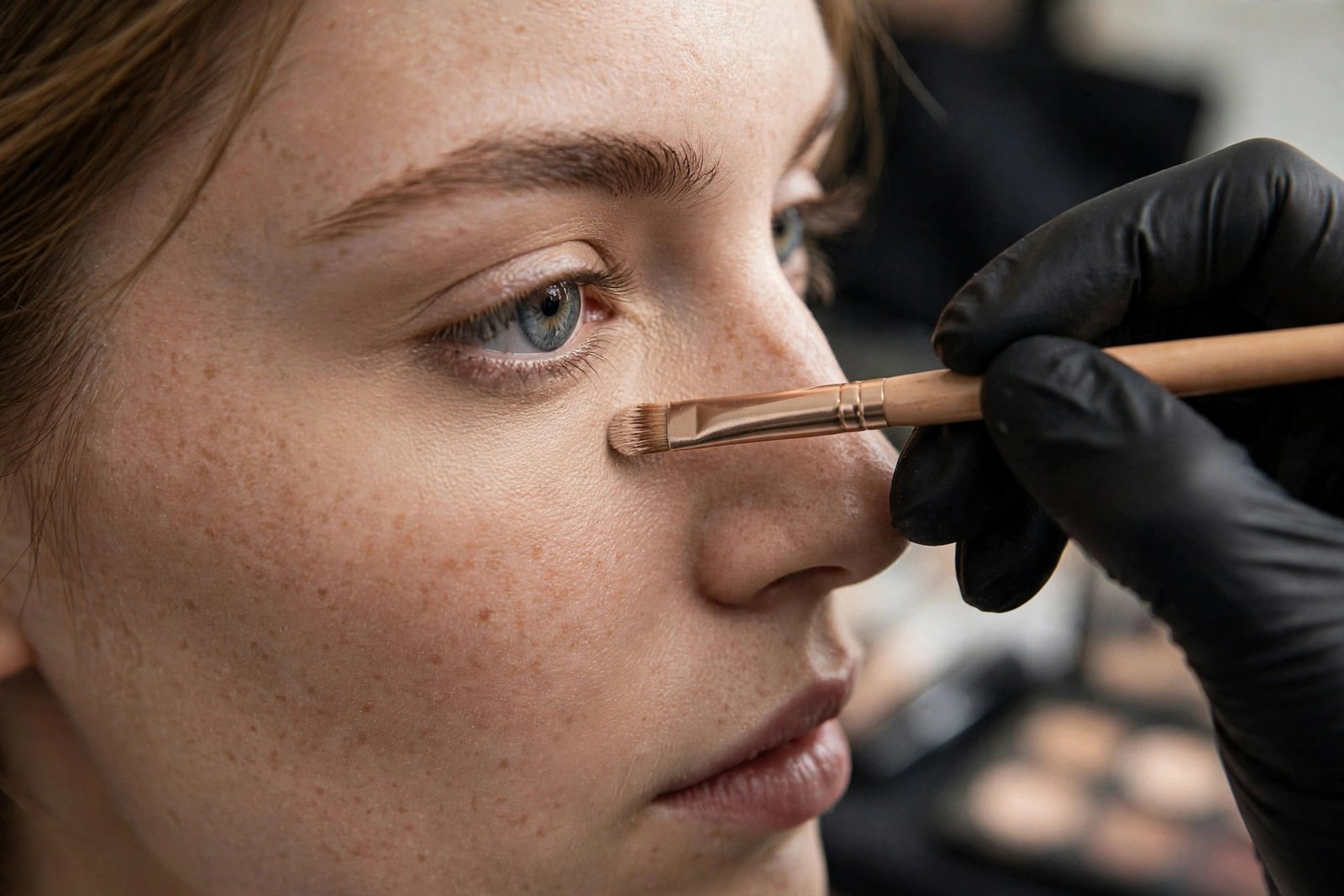
You set your under-eye concealer perfectly at 8 a.m. By 2 p.m. it’s settled into every fine line, creating tiny cracks that somehow make you look more tired than no makeup at all. Under-eye creasing is a physics problem — thin skin, constant movement (you blink ~15,000 times a day), plus product migrating into lines. It’s not a sign of bad makeup; it’s the default outcome unless you engineer against it. Here’s the engineering.
Why the Under-Eye Creases: The Mechanics
Three factors conspire. First, the skin under your eyes is the thinnest on your face and moves constantly with blinking and expression — any product sitting on top gets worked into the lines mechanically. Second, most people apply too much product: thick layers of concealer have nowhere to go but into creases. Third, the under-eye area produces less oil than the rest of the face but still gets moisturizer, eye cream, and SPF layered underneath — that emollient base keeps the makeup mobile all day.
Chicago’s climate adds a seasonal twist: summer humidity makes everything slide faster, while winter’s dry indoor heating dehydrates the under-eye area, making lines deeper and creasing more visible. The same routine needs seasonal tuning.
Prep: Less Is More (But Don’t Skip)
Counterintuitively, the fix starts with less prep, not more. Apply eye cream 10 minutes before makeup and blot off any excess — a slick, heavy eye-cream base is the number-one creasing accelerator. The eye area should feel hydrated but not slippery. If your eye cream is rich, use it only at night and switch to a lightweight gel formula for mornings.
Hydration still matters — dehydrated under-eyes crease worse because the lines are deeper. The sweet spot: a light hydrating eye gel, fully absorbed, no residue. Pat (don’t rub) with the ring finger. Then wait. Makeup applied over still-tacky eye cream will migrate by lunch no matter what you do on top.
Sun protection for the eye area deserves mention: the thin under-eye skin is highly UV-vulnerable, and sun damage deepens the lines that creasing exploits. Choosing sunscreen for sensitive skin includes eye-safe mineral options that don’t sting — apply carefully, avoiding direct lash-line contact, and let it set before makeup.
Application: The Thin-Layer Method
Use less concealer than you think. Most creasing comes from over-application. Start with half your normal amount — you can always add a second thin layer where needed. Dot concealer only where there’s actual discoloration (usually the inner corner and the darkest part of the trough), not in a big triangle across the whole under-eye. Less product means less to crease.
Choose the right formula. Thick, full-coverage concealers crease most; lightweight, flexible formulas with a natural finish crease least. For crease-prone eyes, a hydrating medium-coverage concealer beats a dry full-coverage one every time — counterintuitive, but the flexible film moves with the skin instead of cracking. Avoid matte concealers under the eyes unless your skin is very oily; matte formulas are the worst creasers on normal to dry under-eyes.
Blend upward, set immediately. Blend with a damp sponge using pressing motions (dragging pulls product into lines). Then set right away — don’t wait. The setting window is the 60 seconds after application, before the product starts migrating on its own.
Setting: The Step That Actually Locks It
Setting powder is what separates all-day wear from afternoon creasing, but technique is everything. Use a small, fluffy brush (not the sponge — too much product) with a finely-milled translucent powder. The “baking” method (heavy powder left for minutes) works for photography but looks cakey in real life and can worsen creasing on dry or mature skin. Instead: press a light veil of powder over the set concealer, focusing on where creasing starts for you personally.
For very dry under-eyes, skip powder entirely and use a setting spray — dampen a sponge with spray and press over the concealer. This sets without the drying effect of powder. The American Academy of Dermatology’s cosmetic guidance notes that powder-heavy routines can emphasize texture on aging skin — a relevant caution for anyone whose creasing worsened after 35.
Concealer Strategy for Mature Under-Eyes
After 40, the creasing equation changes: skin is thinner, drier, and lines are deeper — the exact conditions that defeat heavy concealers. Mature under-eyes do best with hydrating, lightweight formulas applied sparingly, often just a brightening corrector rather than full-coverage concealer. Skip powder setting in favor of setting spray, and consider that the most flattering option is sometimes less coverage: a sheer brightening layer that lets skin look like skin beats a thick mask that cracks by noon. Mayo Clinic’s skin care resources for aging skin cover the hydration and sun-protection foundations that make any under-eye makeup behave better — makeup sits best on well-cared-for skin at every age.
The Midday Rescue (Without Starting Over)
Already creased at 2 p.m.? Don’t pile on more concealer — that deepens the cracks. Instead: gently press (don’t rub) the creased area with a clean fingertip or damp sponge to smooth the settled product back out, then lightly re-set with the tiniest amount of powder or a press of blotting paper. The whole rescue takes 30 seconds and looks freshly applied. Carry blotting papers, not powder compacts — papers remove the oil causing the migration without adding product buildup.
Long-term, the biggest crease-reducer isn’t makeup at all: it’s sleep. Tired eyes are puffier, darker (needing more product), and the skin is duller — a triple creasing accelerator. Better sleep quality visibly reduces next-day under-eye creasing for most people, because you simply need less product to begin with.
When Creasing Signals a Skincare Issue
If creasing suddenly worsened, check the skincare underneath: a new heavy eye cream, too-rich moisturizer migrating downward, or dehydrated skin from over-exfoliation all manifest as “my makeup stopped working.” Fix the base and the makeup behavior follows. And be realistic about anatomy — deep-set eyes and prominent tear troughs crease more regardless of technique; the goal is minimizing, not eliminating, and the thin-layer method gets most people 80% of the way there.
Conclusion
Under-eye creasing is physics: thin mobile skin plus too much product plus a slippery base. Beat it with the system — light eye gel fully absorbed, half the concealer you think you need in a flexible formula, immediate light setting, and midday pressing instead of re-powdering. Seasonal tweaks for Chicago’s humidity and heating, sleep for the underlying darkness, and honest expectations for anatomy. Your concealer should stay where you put it until you take it off. Now it will.
Frequently Asked Questions
How do I keep concealer from creasing under my eyes?
Use half the product in a lightweight flexible formula, apply to a fully-absorbed (not tacky) eye cream base, blend with pressing motions, and set immediately with a light veil of finely-milled powder. Less product is the single biggest factor.
Should I use powder to set under-eye concealer?
Yes for most skin types — a light press of finely-milled translucent powder with a small fluffy brush. Skip powder if your under-eyes are very dry or mature (it can emphasize texture); use setting spray pressed in with a damp sponge instead.
Why does my under-eye makeup crease more in winter?
Dry indoor heating dehydrates the thin under-eye skin, deepening fine lines that product settles into. Switch to a more hydrating eye cream at night, ensure morning eye gel is fully absorbed, and consider skipping powder for setting spray in winter.
Can eye cream cause makeup to crease?
Yes — heavy or unabsorbed eye cream is the top creasing accelerator. Apply eye cream 10 minutes before makeup, blot excess, and use lightweight gel formulas in the morning. Rich creams belong in the nighttime routine.


