
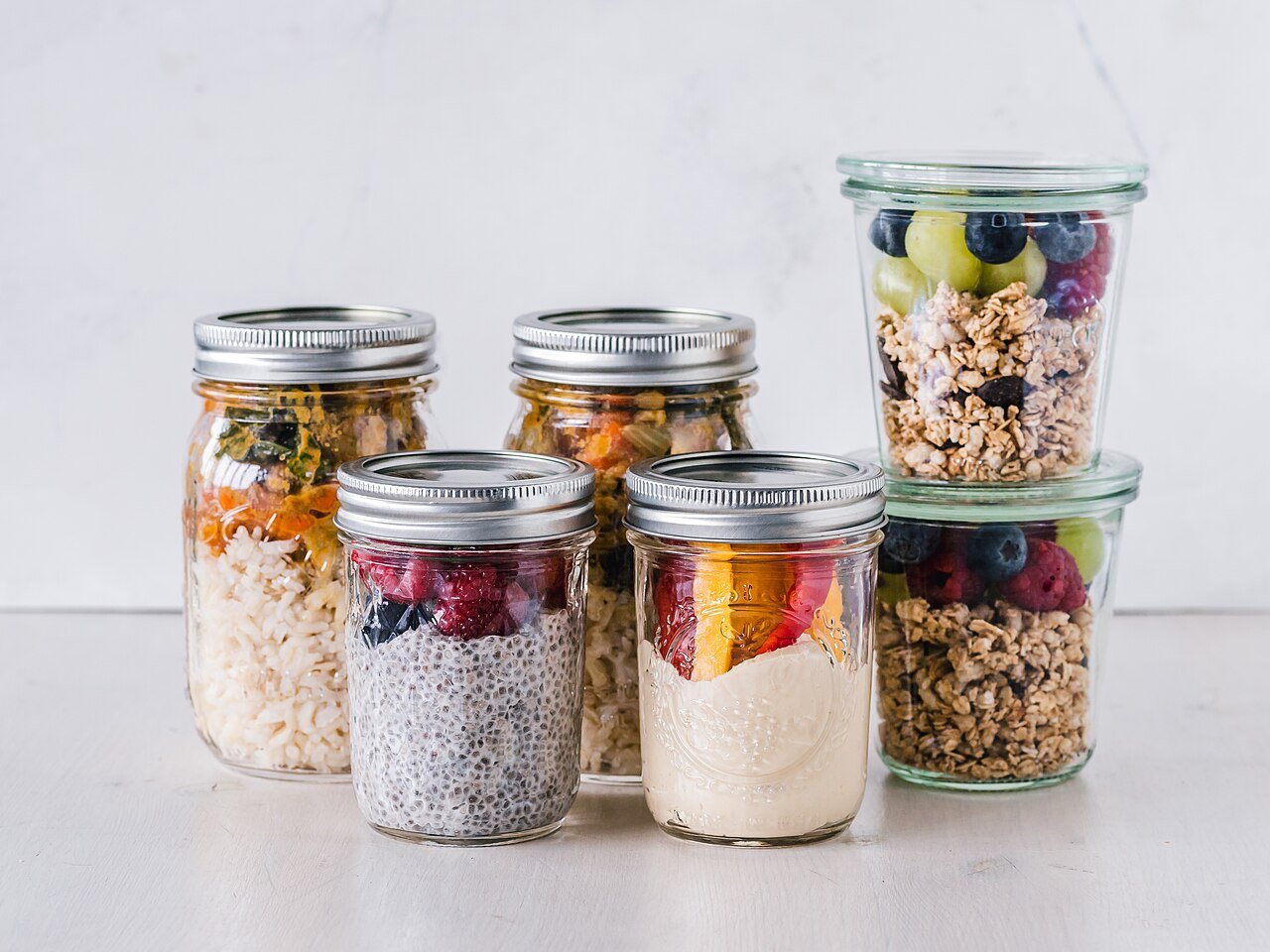
The easiest way to meal prep for the whole week isn’t cooking seven different meals on Sunday — that’s how you spend four hours cooking and hate your life by Wednesday. The easy way is component prepping: cook a few versatile building blocks in one 2-hour session, then mix and match them into different meals all week. Same effort as making one big meal, wildly more variety, zero sad identical containers.
The 2-hour Sunday system
Here’s the actual session, in order (start the longest-cooking items first):
- 0:00 — Start grains. A big pot of rice, quinoa, or farro. Set a timer, ignore it. (Rice cooker if you have one — even easier.)
- 0:05 — Protein in the oven. A sheet pan of chicken thighs, or tofu/tempeh for plant-based. Season simply — salt, pepper, garlic, oil. While it roasts:
- 0:10 — A second protein. Hard-boil a half-dozen eggs, or brown ground turkey/beef in a skillet, or roast chickpeas. Two proteins = variety all week.
- 0:15 — Roast vegetables. Two sheet pans of whatever’s cheap: broccoli, sweet potatoes, carrots, cauliflower, bell peppers. Oil, salt, high heat. Done.
- 0:20 — Prep fresh components. Wash and chop lettuce, slice cucumbers, make a quick slaw, portion hummus. While everything cooks:
- 0:30 — Make one sauce. This is the secret weapon. A good sauce makes the same components taste like different meals: peanut sauce, tahini dressing, salsa verde, or a simple vinaigrette. Five minutes, transformative.
- 0:40 — Portion and store. Everything into containers as it finishes. Label with day if you’re organized; don’t bother if you’re not.
Total active time: under an hour. Total elapsed: about two. You’re done before the Sunday scaries set in.
The mix-and-match matrix
With prepped components, a week’s meals assemble in minutes:
- Bowls: grain + protein + roasted veg + sauce. Different sauce = different meal.
- Wraps/tacos: protein + slaw + fresh veg in tortillas.
- Salads: greens + protein + roasted veg + eggs.
- Stir-fry: prepped veg + protein, quick pan sauce, over reheated grain.
- Soup upgrade: broth + prepped components = 10-minute soup.
Five formulas, endless combinations. Wednesday’s peanut-sauce chicken bowl has nothing in common with Monday’s salsa-verde chicken tacos, even though they came from the same Sunday session. That’s the magic — variety without extra cooking.
What to prep (and what not to)
Prep these: grains, roasted vegetables, cooked proteins, hard-boiled eggs, washed greens, chopped raw veg, sauces and dressings, cooked beans/lentils.
Don’t prep these: avocado (browns), delicate herbs as garnish (wilt), crispy things (soggy), full assembled salads with dressing (sad by Tuesday — dress at serving time), seafood beyond 2 days.
The 4-day rule: cooked proteins and grains keep 4 days refrigerated. Plan Sunday prep for Sunday–Wednesday, then a tiny 20-minute Wednesday refresh (or just plan Thursday–Friday as simpler meals — eggs, sandwiches, leftovers). Fighting food-safety timelines is how meal prep goes wrong.
Containers and gear (keep it simple)
- Glass containers with locking lids. They reheat better, don’t stain, and last years. A set of 10 runs $30–40.
- Mason jars for salads and overnight oats. Layer dressing at the bottom, greens on top — stays fresh for days.
- A sheet pan or two. Half of meal prep is sheet-pan roasting. Parchment paper for zero cleanup.
- That’s it. You don’t need the 47-piece meal-prep system from the ads. Containers, sheet pans, a big pot.
Make it stick
- Start with 3 days, not 7. Prep Sunday for Mon–Wed. Master that, then expand. All-or-nothing is how people quit.
- Prep foods you actually like. Revolutionary concept. If you hate quinoa, prep rice. The healthiest meal prep is the one you eat.
- Build the grocery list from the prep plan. This connects directly to How can I save money on groceries without couponing — plan around sales, shop once, prep once.
- Keep a “prep playlist” or podcast. Two hours of cooking is pleasant with the right audio (What are the best podcasts for personal growth and motivation for podcast picks) and miserable in silence.
- Forgive the off weeks. Travel, chaos, burnout — some weeks you won’t prep. That’s fine. The system works when you use it; it doesn’t punish you when you don’t.
BBC Good Food’s meal prep section has excellent component-style recipes if you want specific formulas to start with.
Meal prep for special diets (without cooking twice)
Vegetarian in a house of omnivores? Gluten-free partner? The component system handles this beautifully — it is actually easier than traditional meal prep for mixed diets. Prep the shared bases (grains, roasted vegetables, sauces) and cook proteins separately: chicken thighs on one sheet pan, tofu or tempeh on another, seasoned the same way. Everyone assembles from the same components with their own protein. No separate meals, no short-order cooking.
For gluten-free: swap grains (rice, quinoa, and corn tortillas are naturally GF — just check labels for cross-contamination if celiac). For dairy-free: the sauce is the only thing to watch (tahini, peanut, and vinaigrette dressings are naturally dairy-free and delicious). The principle: prep components, not meals, and dietary differences become assembly choices rather than cooking burdens. One session, everybody fed, nobody compromised.
The Wednesday refresh (15 minutes): if you are prepping for a full seven days, plan a tiny midweek restock — wash more greens, hard-boil a few more eggs, maybe roast one more tray of vegetables. Fifteen minutes on Wednesday night keeps Thursday and Friday feeling as fresh as Monday, and it is the difference between a system that lasts all week and one that fizzles by Thursday. Think of Sunday as the big shop and Wednesday as the pit stop.
Further reading: meal prep recipes from BBC Good Food.
Takeaway: The easiest weekly meal prep is component prepping: one 2-hour Sunday session producing grains, two proteins, roasted vegetables, fresh components, and one great sauce — then mix-and-match into bowls, wraps, salads, and stir-fries all week. Respect the 4-day rule, don’t prep things that don’t keep, and start with three days before attempting seven. It’s the highest-ROI two hours in your week: cheaper groceries, healthier eating, and no more 6 p.m. “what’s for dinner” panic.


