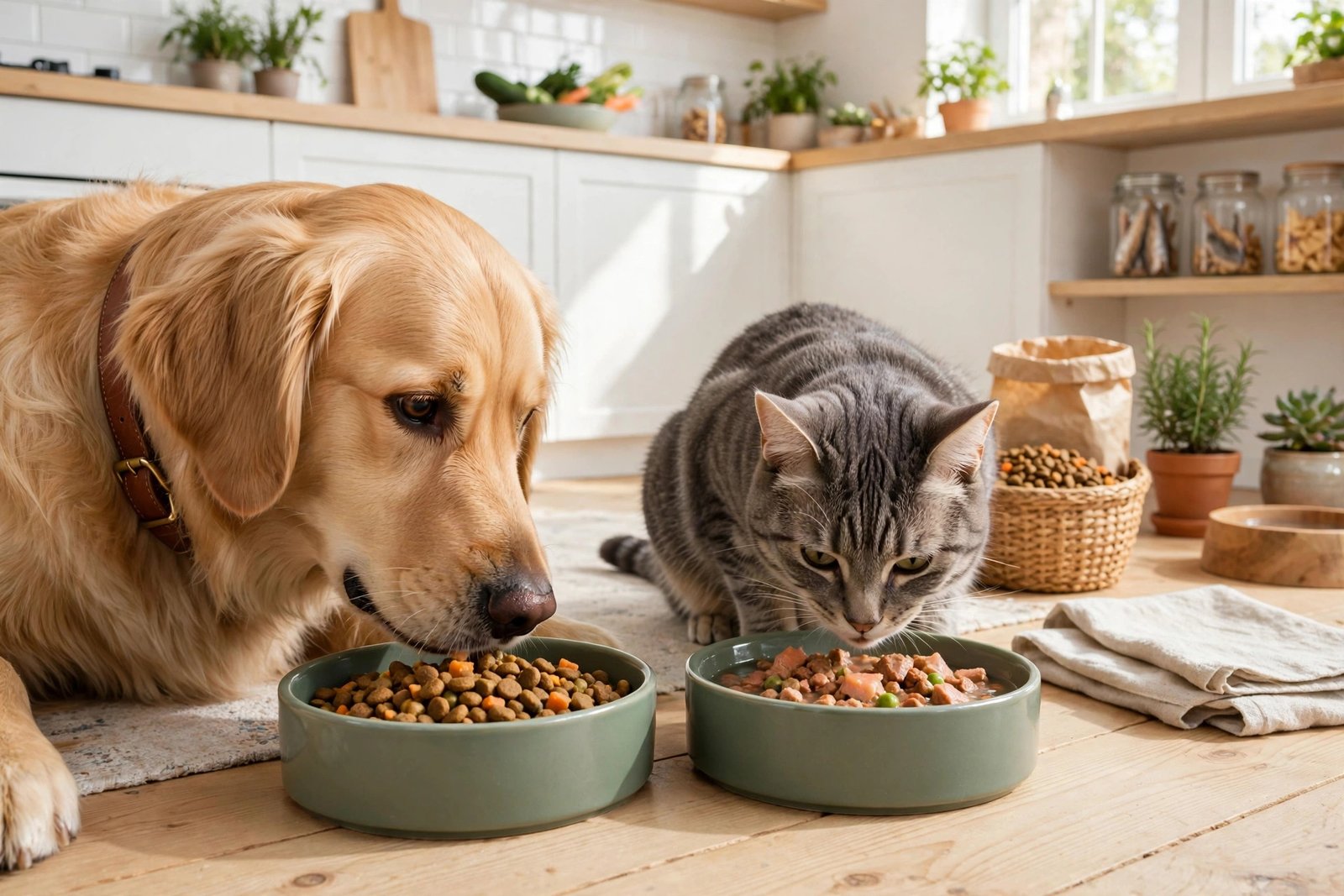
You found a better food for your pet — maybe the vet recommended it, maybe the old brand was discontinued, maybe you’re upgrading from grocery-store kibble. So you fill the bowl with the new stuff, and by morning there’s vomiting, diarrhea, and a very guilty look. The food wasn’t the problem. The switch was.
Pets’ digestive systems adapt to their current diet — the gut flora, enzyme production, everything calibrates over weeks. A sudden swap shocks the system. The fix is simple, free, and vet-universally recommended: the gradual transition. Here’s exactly how to do it for dogs and cats.
The 7–10 Day Transition (Dogs)
Mix old and new food on this schedule: Days 1–2: 25% new, 75% old. Days 3–4: 50/50. Days 5–6: 75% new, 25% old. Day 7+: 100% new. For dogs with known sensitive stomachs, stretch it to 10–14 days with smaller steps. If stools loosen at any stage, hold at that ratio for 2–3 extra days before advancing — the gut needs time to adjust its flora to the new ingredients.
Keep everything else constant during the switch: same treats, same feeding schedule, no new chews or table scraps. If symptoms appear, you need to know the food caused them — changing multiple variables makes diagnosis impossible. The AVMA’s pet-owner resources reinforce this gradual approach as standard veterinary guidance.
Cats: Slower and Trickier
Cats are neophobic (suspicious of new foods) and prone to serious complications from not eating — hepatic lipidosis (fatty liver disease) can develop in overweight cats after just 2–3 days without food. So the cat transition runs longer: 10–14 days minimum, starting with just a spoonful of new food mixed in.
Cat-specific tactics: warm the new food slightly to release aroma, try the new food as a “topper” on the old before mixing, and never let a cat go 24+ hours without eating during a transition — if they refuse the mix entirely, back up a step rather than pushing forward. For multi-cat homes, transition everyone simultaneously to avoid food theft sabotaging the ratios. Our guide to introducing a new cat to your home covers the broader adjustment period if the food switch accompanies a new arrival.
Supportive Measures During the Switch
Plain canned pumpkin (not pie filling) — a tablespoon for dogs, a teaspoon for cats — adds soluble fiber that firms stools remarkably well during transitions. Probiotic supplements formulated for pets can ease the gut-flora adjustment; plain unflavored yogurt in small amounts works for dogs that tolerate dairy. Smaller, more frequent meals during the transition reduce the digestive load per meal.
What not to do: don’t fast your pet “to reset” the stomach (unnecessary and risky for cats), don’t add multiple new foods at once, and don’t switch foods again immediately if the first transition is rocky — give the gut 3–4 weeks on the new food before judging. If you’re switching because of chronic digestive issues, our guide to keeping a small dog happy in an apartment includes diet-stability tips that complement the transition protocol. The FDA’s pet food resources help you evaluate the new food’s nutritional adequacy before you commit to the switch.
When to Call the Vet Instead
Normal transition symptoms: slightly soft stools, mild gas, temporary appetite hesitation — resolving within a few days at each stage. Call the vet for: vomiting more than once, diarrhea lasting over 48 hours, blood in stool or vomit, complete appetite loss beyond 24 hours (especially cats), lethargy, or abdominal pain. These signal something beyond transition upset — possibly a true food intolerance, allergy, or unrelated illness the diet change unmasked.
Also consult your vet before switching if your pet has a medical condition (kidney disease, diabetes, pancreatitis) — prescription diets exist for reasons, and well-meaning upgrades can interfere with medical management.
Switching Foods Multiple Times: Finding the Right One
Sometimes the first new food isn’t the right one either — and that’s okay, as long as each switch follows the gradual protocol. If you’ve completed a proper 3–4 week trial and symptoms persist (chronic soft stools, ongoing gas, dull coat), it’s reasonable to try another formula. Change one variable at a time: if the first switch was chicken-based to salmon-based, the next trial might be a limited-ingredient or hydrolyzed-protein formula, not another random swap.
Keep a simple food diary during trials: food name, transition dates, stool quality (a 1–5 scale works), energy, and coat condition. Patterns emerge that memory misses — “every chicken-based food causes gas” is a diagnosis you can act on. After two failed trials of quality foods, stop guessing and see your vet about a proper elimination diet trial with prescription hydrolyzed protein food — it’s the gold standard for diagnosing food allergies and often reveals that the issue was a specific protein all along. And remember the big picture: the goal isn’t finding the “perfect” food, it’s finding one your pet thrives on consistently. Nutritional consistency over months matters more than the brand name on the bag.
Transitioning Treats and Toppers, Too
The main food gets all the attention, but treats, toppers, and chews need transitions too — a new rich treat introduced alongside a new food can cause the exact upset you’re trying to avoid. Rule: during the 7–14 day food transition, change nothing else. Once the new food is established and stools are normal for a week, then introduce new treats one at a time, watching for reactions over 2–3 days each.
The same gradual principle applies to any dietary change: new supplements, different-flavored dental chews, even switching treat brands. Pets with sensitive stomachs do best on boring consistency — find treats that work and stick with them. And remember that treats should stay under 10% of daily calories; during transitions, keep them minimal so the gut has the fewest variables to handle. Boring is beautiful in pet nutrition.
Conclusion
Switching your pet’s food without stomach upset is a 7–14 day exercise in patience: mix old and new on a gradual schedule (slower for cats and sensitive stomachs), hold at any stage where stools loosen, keep everything else constant, support with pumpkin and routine, and call the vet for anything beyond mild, brief symptoms. The bowl swap takes ten seconds; the transition takes ten days. Respect the gut’s timeline and your pet will never know the difference — except feeling better on the new food.
Frequently Asked Questions
How do I switch my pet to a new food without stomach upset?
Transition gradually over 7–10 days (dogs) or 10–14 days (cats): start 25% new/75% old, increase the new proportion every 2 days, and hold at any stage where stools loosen.
Why does my dog have diarrhea after switching food?
Usually the transition was too fast — gut flora needs time to adjust to new ingredients. Slow down the schedule, add plain canned pumpkin for fiber, and hold at the current ratio until stools firm up.
How long does it take a cat to adjust to new food?
10–14 days minimum for the transition, plus 3–4 weeks for full digestive adjustment. Cats are neophobic — never let a cat go 24+ hours without eating during a switch.
Can I switch my pet’s food cold turkey?
Not recommended — sudden switches commonly cause vomiting and diarrhea. The only exception is a vet-directed immediate change for medical reasons (e.g., prescription diets).
What if my pet refuses the new food?
Slow the transition, warm the food to release aroma, try it as a topper first, and ensure the new food’s texture/flavor profile is similar to the old. Persistent refusal after 2 weeks may mean trying a different formula.