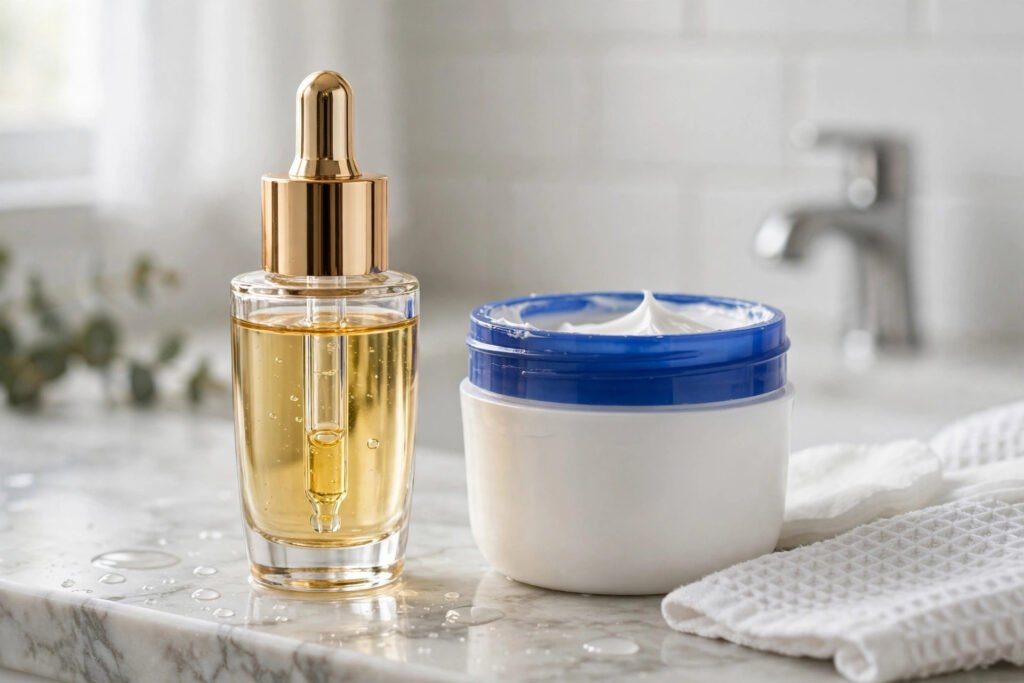
Slugging — coating your face in a thick layer of petrolatum-based ointment overnight and waking up looking like a glazed donut — sounds like a joke. It’s actually one of the oldest dermatologist tricks in the book, repackaged by social media with a funny name. But does it work for dry skin, or is it just occlusive overkill? The answer is a qualified yes — with important caveats about who should slug, what to slug with, and the mistakes that turn a good technique into a breakout.
What Slugging Actually Does (The Science)
Your skin loses water constantly through transepidermal water loss (TEWL) — evaporation through the skin barrier. In dry conditions (Chicago winter, heated indoor air, arid climates), TEWL spikes and the barrier struggles. Petrolatum (Vaseline, Aquaphor, CeraVe Healing Ointment) is the most effective occlusive known to dermatology: it reduces TEWL by up to 98%, essentially sealing existing moisture into the skin overnight. No other moisturizer ingredient comes close — not oils, not waxes, not silicones.
Crucially, petrolatum doesn’t add moisture — it traps it. Slugging over dry, unmoisturized skin seals in nothing. The correct sequence: hydrating products first (serum, moisturizer on damp skin), then the occlusive layer on top to lock it all in. Think of it as putting a lid on a pot — the lid doesn’t cook the food, but without it everything evaporates.
Who Benefits Most
Dry and very dry skin types: the core audience. If your skin feels tight by midday no matter what you use, slugging is likely transformative — many dry-skinned people report the biggest single improvement of any technique they’ve tried.
Compromised barriers: over-exfoliation recovery, retinoid adjustment periods, winter barrier damage. Dermatologists have recommended petrolatum occlusion for damaged barriers for decades — slugging is just the catchy name. During tretinoin initiation, slugging on non-tretinoin nights dramatically reduces peeling and irritation.
Mature skin: TEWL increases with age as barrier function declines. The overnight occlusion compensates for what the aging barrier can’t do alone.
Chicago winter sufferers: when indoor heating drops humidity below 30%, even normal skin becomes dry skin. Seasonal slugging (November through March) is one of the most effective winter interventions available — cheaper and more effective than most luxury winter creams.
Who Should Skip It (or Modify)
Oily and acne-prone skin: the main caution group. Petrolatum itself is non-comedogenic (it doesn’t clog pores — this is well-established), but trapping everything underneath it — including excess sebum, and any comedogenic products in your routine — can worsen congestion in acne-prone skin. If you’re breakout-prone, slug only on dry areas (cheeks) or skip it, and never slug over active breakouts or comedogenic products.
Fungal acne (Malassezia folliculitis): occlusives can worsen it by creating the warm, trapped environment the yeast loves. If your “acne” is itchy, uniform bumps on the forehead and chest, get a diagnosis before slugging.
The modification for combination skin: slug the dry zones only. There’s no rule requiring whole-face application — targeted slugging on cheeks while leaving the T-zone free gives dry areas the benefit without congesting oily zones.
How to Slug Correctly
Step 1: Do your full evening routine — cleanse, hydrating toner or serum, moisturizer — on damp skin.
Step 2: Wait a few minutes for products to absorb slightly (not fully dry).
Step 3: Apply a thin layer of petrolatum-based ointment over everything. Thin is key — a pea-sized amount for the whole face. You’re sealing, not frosting a cake. Thick layers don’t work better; they just end up on your pillow.
Step 4: Sleep on it. Use an old pillowcase or a silk one you don’t mind — some transfer is inevitable.
Step 5: Morning: cleanse normally. Your skin should feel plump and supple, not greasy — if it’s greasy, you used too much.
Frequency: nightly in deep winter for dry skin; 2–3 times weekly as maintenance; on non-active nights if you’re adjusting to retinoids. Daytime sun protection remains essential — slugging is a nighttime technique, and the repaired barrier still needs SPF defense every morning.
What to Slug With (and What to Avoid)
Best: plain petrolatum (Vaseline), Aquaphor, or CeraVe Healing Ointment — all dermatologist staples, all under $15. The fancier “slugging balms” are repackaged petrolatum at 5x the price.
Avoid slugging over: strong actives (retinoids, high-concentration acids, benzoyl peroxide) — occlusion dramatically increases their penetration, turning a tolerable active into a chemical burn risk. Slug on rest nights, not active nights. Also avoid slugging over comedogenic products if you’re breakout-prone, and skip fragranced ointments on sensitive skin.
Support the barrier from inside too: winterizing against dry indoor heating with a humidifier does for the air what slugging does for the skin — and the American Academy of Dermatology’s dry skin guidance lists humidifiers alongside occlusives as the two highest-impact winter interventions.
Slugging Mistakes That Cause Breakouts
Most slugging-gone-wrong stories trace to the same errors. Slugging over actives: applying petrolatum over retinoids or strong acids multiplies their penetration — the resulting irritation gets blamed on slugging instead of the interaction. Always slug on rest nights. Too thick: a heavy coat doesn’t seal better than a thin one; it just migrates into eyes (causing milia — tiny white bumps — around the eye area) and onto pillows. Pea-sized, pressed in gently. Slugging dirty skin: inadequate cleansing before sealing traps the day’s SPF, makeup residue, and pollution underneath — the occlusion then drives it deeper. Double-cleanse properly on slug nights. Wrong product: fragranced “sleeping masks” marketed for slugging often contain irritants and comedogenic butters; plain petrolatum outperforms them at a tenth the price. And slugging through breakouts: pause during active acne flares — resume when skin calms. Mayo Clinic’s skin care resources cover occlusive basics and when heavier moisturization helps versus harms.
Conclusion
Slugging works for dry skin because the science is unimpeachable: petrolatum reduces water loss by up to 98%, and dry skin’s core problem is water loss. It works best for dry, mature, barrier-damaged, and winter-stressed skin; it’s risky for acne-prone and oily types. Do it right — hydrating layers first, thin occlusive layer on top, rest nights only, never over strong actives — and it’s the cheapest transformative technique in skincare. The glazed-donut look is temporary. The barrier repair is real.
Frequently Asked Questions
What is slugging and does it work?
Slugging is applying a petrolatum-based occlusive as the final nighttime step to seal in moisture. Yes, it works for dry skin — petrolatum reduces transepidermal water loss by up to 98%, the most effective occlusion in dermatology. It traps existing moisture rather than adding it, so hydrating layers go underneath.
Can slugging cause breakouts?
Petrolatum itself is non-comedogenic, but slugging can worsen congestion in acne-prone skin by trapping sebum and comedogenic products underneath. Oily/acne-prone types should slug only dry zones or skip it, and never slug over active breakouts.
How often should you slug?
Nightly in winter for dry skin, 2–3 times weekly for maintenance, and on rest nights (not active nights) when adjusting to retinoids. Always over hydrating products, never over strong actives like retinoids or high-concentration acids.
What should I use for slugging?
Plain petrolatum (Vaseline), Aquaphor, or CeraVe Healing Ointment — all under $15 and dermatologist-recommended. Expensive “slugging balms” are repackaged petrolatum. Apply a thin pea-sized layer, not a thick coat.