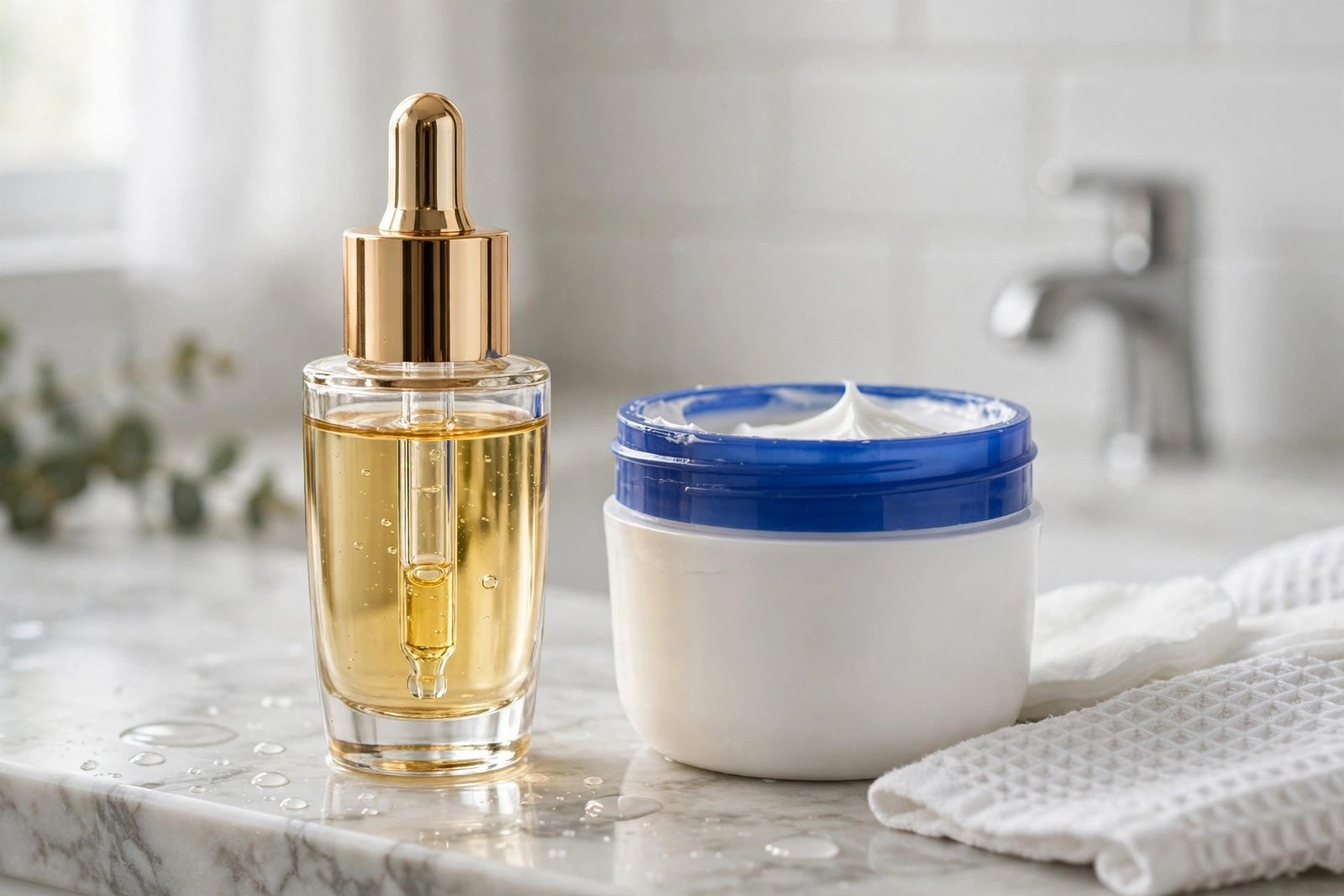
The $180 serum promises “clinical results.” The $14 drugstore serum lists the same active ingredient at the same percentage. One of them is lying — or neither is, and you’re paying for something else entirely. The expensive-versus-drugstore skincare debate generates more heat than light, mostly because both sides cherry-pick. Dermatologists, who have no stake in either, give a surprisingly clear answer: sometimes the expensive one wins, often it doesn’t, and the difference is never where marketing says it is. Here’s the real breakdown.
What You’re Actually Paying For
A skincare product’s price reflects at least six cost centers: the active ingredients (often a small fraction), the formulation base and delivery system, packaging (airless pumps cost more than jars for a reason), clinical testing, marketing and influencer budgets, and brand margin. When you pay $180, you’re mostly paying for the last three. When you pay $14, you’re mostly paying for the first two — which are the parts that touch your face.
This is why the price-quality correlation is weak in skincare. Unlike, say, winter coats — where spending logic for quality outerwear follows materials you can feel — skincare’s expensive components (elegant texture, beautiful packaging, brand story) are largely experiential, not functional. The molecule doesn’t know what the bottle cost.
Where Drugstore Wins (Most Categories)
Cleansers. A cleanser sits on your face for 60 seconds and rinses off. Expensive actives in cleansers are marketing — they don’t stay on long enough to work. A gentle, pH-balanced drugstore cleanser cleans identically to a $60 one. Dermatologists are unanimous here: never splurge on cleanser.
Moisturizers. The core moisturizing ingredients — glycerin, hyaluronic acid, ceramides, petrolatum — are commodities. CeraVe Moisturizing Cream and Vanicream are formulated by dermatologists, contain ceramides, cost under $20, and outperform many luxury creams in barrier-repair studies. You’re paying luxury prices for texture elegance and scent, not better moisturization.
Sunscreen. This is the big one. Sunscreen efficacy is regulated — SPF 50 from a drugstore brand protects identically to SPF 50 from a luxury brand, because the testing standard is the same. The entire point of sunscreen is consistent daily use, and the sunscreen you’ll actually apply generously every day (because it’s affordable) beats the precious $60 bottle you use sparingly. Choosing the right sunscreen is about formula fit, not price tier.
Basic actives. Niacinamide, hyaluronic acid, azelaic acid (in some markets), and benzoyl peroxide are well-understood molecules available cheaply in effective formulations. The Ordinary built an empire proving this.
Where Expensive Can Justify Itself
Vitamin C (L-ascorbic acid). The gold-standard form is notoriously unstable — it oxidizes, turns orange, and stops working. Premium brands invest in stabilization systems, airless opaque packaging, and optimal pH formulation. A $20 vitamin C serum that’s oxidized is worth $0. This is the category where formulation science genuinely separates tiers — though excellent mid-priced options exist from brands that specialize in it.
Retinoids. Prescription tretinoin (often $20–$75 with insurance or discount programs) outperforms every cosmetic retinol regardless of price — it’s the actual drug, not a weaker precursor. Among OTC retinols, encapsulation technology (which reduces irritation while maintaining efficacy) does cost more to manufacture. But the price king remains the prescription, not the luxury cream.
Complex formulations. Products combining multiple actives at effective percentages with proper pH and stability require real R&D. Some luxury serums genuinely contain ingredient combinations drugstore lines don’t attempt. Whether your skin needs that complexity is a separate question — most don’t.
Elegant vehicles for compliance. The unsexy truth: the best product is the one you use consistently. If a luxurious texture makes you actually apply your retinoid nightly instead of skipping it, that compliance is worth paying for. Dermatologists quietly acknowledge this — a $100 product used daily beats a $15 product abandoned in a drawer.
The Marketing Tricks That Inflate Prices
“Clinical results” without published data. Real clinical testing means peer-reviewed, controlled studies — vanishingly rare in cosmetics. Most “clinically proven” claims rest on small, company-funded consumer perception surveys (“87% agreed skin looked better” — of 30 people, over 2 weeks). Treat these as advertising, not science.
Exotic ingredient stories. Rare botanicals, precious minerals, “ancient remedies” — compelling narratives, usually present at concentrations too low to matter, with no evidence superior to proven actives. The story is the product.
Dermatologist “created” vs. “recommended.” A celebrity dermatologist’s name on the bottle is a licensing deal. Dermatologist-formulated basics (CeraVe, La Roche-Posay’s affordable lines) are the ones actual dermatologists use themselves — and they’re drugstore-priced. The American Academy of Dermatology’s product guidance consistently emphasizes ingredients and formulation over brand prestige.
What Dermatologists Actually Buy Themselves
Ask dermatologists what they use and the answer is remarkably consistent — and remarkably cheap. The typical derm routine: gentle drugstore cleanser, prescription tretinoin (often cheaper than luxury retinol), basic ceramide moisturizer, and whatever sunscreen they’ll actually wear daily. Total cost often under $100 for months of supply. They splurge selectively: a well-formulated vitamin C serum from a brand with real stabilization science, or a specific treatment for a specific concern. The pattern is instructive — experts with unlimited professional samples choose boring, cheap, evidence-based basics plus one or two targeted investments. Mayo Clinic’s dermatology resources echo this hierarchy: sun protection and retinoids deliver the vast majority of anti-aging benefit, and both are available affordably.
The takeaway for your wallet: build the $60 foundation routine first (cleanser, moisturizer, SPF — all drugstore), add prescription tretinoin through your doctor or dermatologist, and only then consider whether a luxury serum solves a problem the basics don’t. Most of the time, it doesn’t — and the money is better spent on the dermatologist visit itself, which delivers more skin benefit per dollar than any product at any price.
The Smart Splurge-Save Strategy
Dermatologists’ actual advice, distilled: save on cleanser, basic moisturizer, and sunscreen (drugstore wins all three). Consider spending on vitamin C (stability matters) and specialized treatments where formulation science is real. Get prescription tretinoin instead of expensive retinol creams — it’s cheaper and stronger. And invest the savings in consistency: the routine you maintain for years beats the luxury haul you abandon in a month. Price is a feature of the shopping experience, not the skincare outcome.
Conclusion
Expensive skincare isn’t a scam — but it’s not better by default either. Drugstore wins cleansers, moisturizers, sunscreens, and basic actives outright; the actives are commodities and the regulations (especially for SPF) are identical. Expensive earns its price in stabilization science (vitamin C), delivery technology, and the compliance that elegant textures buy. The smart money: drugstore foundation routine, strategic splurges on finicky actives, prescription tretinoin over luxury retinol, and skepticism toward every “clinical” claim without published data. Your skin responds to molecules, not price tags.
Frequently Asked Questions
Is expensive skincare really better than drugstore?
Usually not — for cleansers, moisturizers, sunscreens, and basic actives, drugstore formulations with the same key ingredients perform identically. Expensive products can justify prices in categories requiring stabilization science (vitamin C), advanced delivery systems, or where elegant texture drives consistent use.
What skincare products are worth splurging on?
Vitamin C serums (stability and packaging matter enormously), and specialized multi-active treatments with real formulation R&D. Get prescription tretinoin instead of expensive retinol creams — it’s both cheaper and more effective.
Why is CeraVe recommended by dermatologists?
It was developed with dermatologists, contains ceramides and hyaluronic acid at effective levels, is fragrance-free and non-comedogenic, and costs under $20. It proves the point: formulation quality and price are largely uncorrelated in basic skincare.
Do “clinical results” claims mean anything?
Rarely what they imply. Most rest on small company-funded perception surveys, not peer-reviewed controlled studies. Treat “87% agreed” claims as advertising; the ingredient list and formulation basics are far more informative.