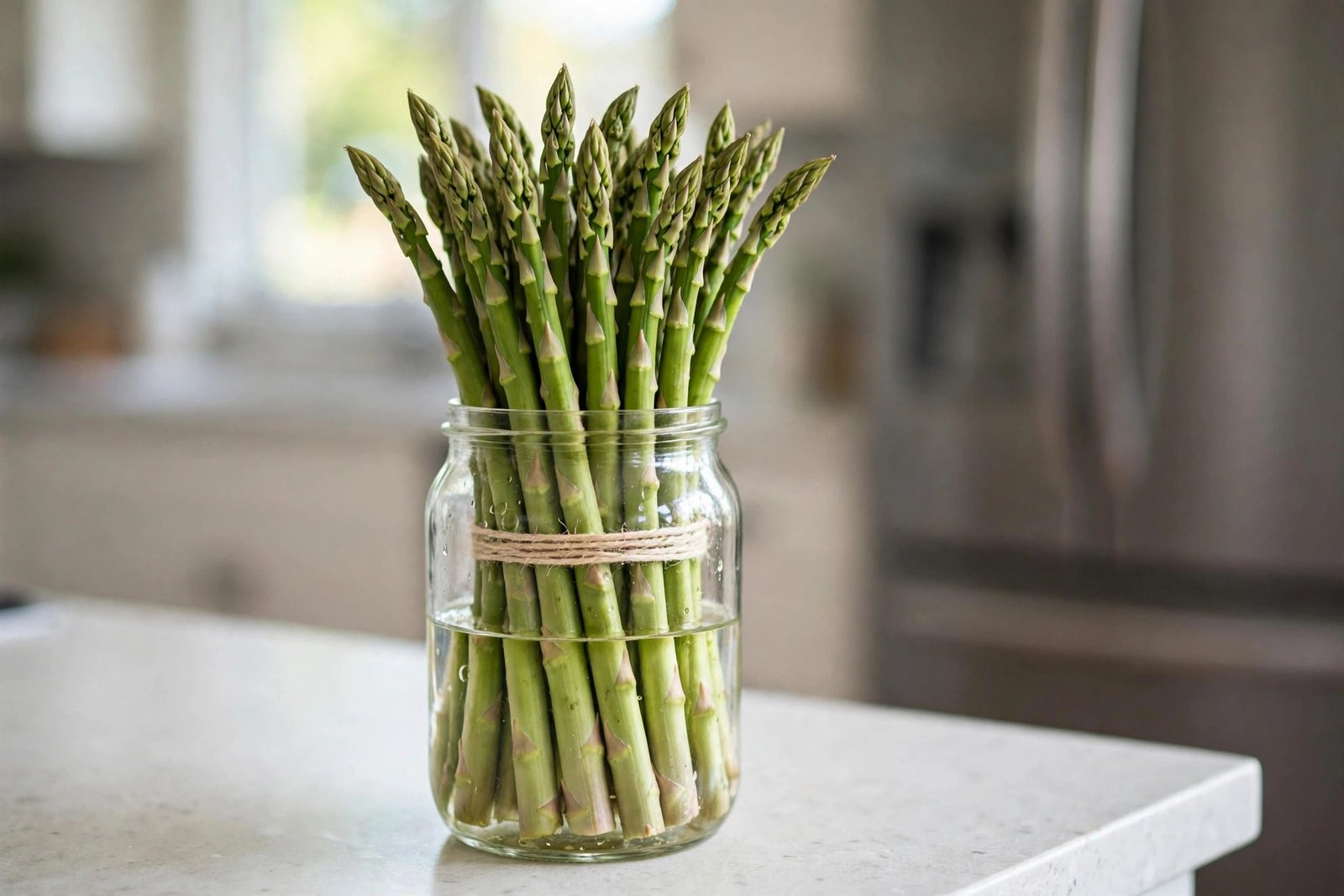
Fresh asparagus is good in the refrigerator for 3 to 5 days with basic storage — but store it properly, standing upright in a jar of water like a bouquet of flowers, and it stays crisp for up to 7 to 10 days. That water-jar method isn’t a fussy chef trick; it’s the single biggest difference between snappy spears and limp, sad ones by Thursday.
Asparagus is essentially a cut flower that you eat. The moment it’s harvested, it starts losing moisture through the cut end, and the spears keep respiring — burning through their own sugars. Everything about storing it comes down to slowing those two processes: water loss and respiration. Cold plus humidity wins; dry cold air loses.
The Best Way to Store Asparagus (The Water Jar Method)
This is how restaurants do it, and it takes thirty seconds:
Trim the ends. Cut about half an inch off the bottom of the spears, just like you’d trim flower stems. The cut ends dry out and seal over during transport; a fresh cut reopens them to absorb water.
Stand them in water. Place the bundle upright in a jar or glass with an inch or two of cold water — enough to cover the cut ends. A mason jar works perfectly for a standard bunch.
Cover loosely and refrigerate. Drape a plastic produce bag or damp paper towel loosely over the tips (don’t seal it tight — they need a little airflow) and set the whole jar in the fridge. Change the water every 2 to 3 days, the same as you would for flowers.
Stored this way, asparagus routinely lasts 7 to 10 days, and I’ve had bunches stay crisp for nearly two weeks. Compare that to the standard approach — tossed in the crisper drawer in its rubber band — where 3 to 5 days is optimistic.
The Good-Enough Method (If You Won’t Do the Jar)
No jar? No problem. Wrap the bunch in a damp paper towel, slide it into an unsealed plastic bag or the crisper drawer, and you’ll get 4 to 6 days of decent quality. The damp towel provides the humidity; the loose bag keeps it from drying out without trapping ethylene gas.
What not to do: leave it in the tight rubber band in open fridge air (dries out in 2 days), seal it in an airtight container while wet (invites rot), or store it near ethylene-producing fruits like apples and bananas, which accelerate aging.
How to Tell If Asparagus Has Gone Bad
Asparagus telegraphs its decline pretty clearly:
Limp, bendy spears. Fresh asparagus snaps cleanly when bent. If the spears flop over without breaking, they’ve lost too much moisture. Slightly limp asparagus is still safe to eat — it’s just lost texture — and it perks up fine in a sauté or soup where crispness doesn’t matter.
Slimy or mushy texture. A slimy film on the spears, especially near the tips, means bacterial breakdown. Rinse won’t fix this — discard spears that feel slick or mushy.
Dark, mushy tips. The delicate tips go first. If they’re dark, wet, and falling apart, trim generously — but if the rot has traveled down the spear, the whole thing goes.
Sour or rotten smell. Fresh asparagus smells green and faintly grassy. Anything sour or sulfurous means it’s done.
Wrinkled, woody stalks. Severe wrinkling means extreme moisture loss. It’s technically still safe if there’s no slime or smell, but the eating quality is gone — compost it.
Can You Freeze Asparagus?
Yes — but blanch it first. Raw asparagus frozen directly turns mushy and dull. The process: trim, blanch in boiling water for 2 to 3 minutes (thicker spears need the full 3), plunge into ice water to stop the cooking, pat completely dry, then freeze in a single layer on a sheet pan before transferring to freezer bags. Blanched asparagus keeps 8 to 12 months frozen.
Frozen asparagus will never have the snap of fresh — plan to use it in cooked dishes: stir-fries, pastas, quiches, soups. Cook from frozen; thawing first just makes it soggy. For more freezer timelines on proteins, our guide on how long beef is good in the freezer covers the other end of the freezer.
Should You Wash Asparagus Before Storing?
No — wash right before cooking, not before storing. Surface moisture encourages mold and slime during storage, which is the opposite of what you want. The one exception is the water-jar method, where the cut ends sit in water by design (the spears themselves stay dry above the waterline). Give the spears a good rinse just before they hit the pan.
FAQs
How long does cooked asparagus last in the fridge?
Three to 4 days in an airtight container, per USDA leftovers guidance. Reheat to 165°F or serve cold in salads — cooked asparagus is excellent cold.
Why is my asparagus slimy after 2 days?
Usually excess moisture trapped against the spears — sealed in plastic while damp, or stored in a wet bag. Next time, keep spears dry (damp towel around the bunch is fine; puddles are not) and give them airflow.
Can you eat asparagus that’s gone a little limp?
Yes, if there’s no slime, smell, or discoloration. Limp asparagus has just lost water — it’s safe but texturally compromised. Use it in cooked dishes where crispness doesn’t matter, not raw in salads.
Do you need to peel asparagus?
Thin spears, no. Thick spears benefit from peeling the lower half — the outer layer gets woody. Snap off the woody bottoms regardless; they’ll break naturally where the tender part begins.
What’s the white/purple stuff on asparagus tips?
Those are the tender buds and natural coloration — purple-tinged tips are normal on many varieties and often the sweetest part. Only worry if they’re dark, wet, and mushy, which signals decay.