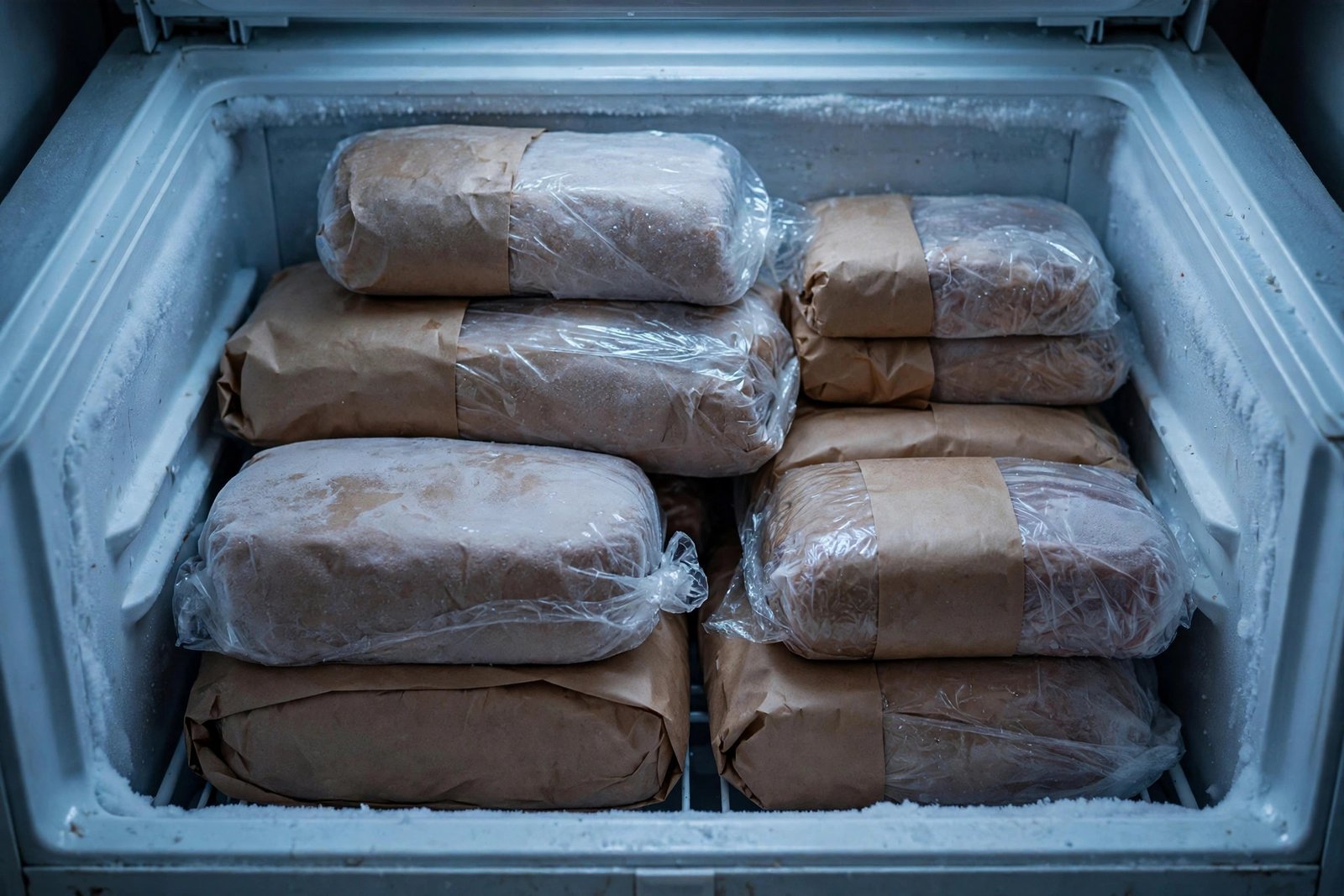
Beef is good in the freezer for 3 to 12 months depending on the cut. Here’s the breakdown straight from USDA guidance: steaks and roasts keep 4 to 12 months, while ground beef and stew meat last 3 to 4 months. Frozen beef stays safe indefinitely at 0°F — the timelines are about quality, not safety. A steak frozen for 18 months won’t make you sick; it’ll just taste like the inside of your freezer.
The cut matters because fat and surface area are the enemies. Ground beef has enormous surface area exposed to air, so it picks up off-flavors and freezer burn fast. A thick, well-marbled roast with minimal exposed surface? That thing is a freezer marathon runner.
Freezer Life by Cut
- Steaks (ribeye, strip, filet, sirloin): 4–12 months at peak quality
- Roasts (chuck, brisket, round): 4–12 months
- Ground beef and stew meat: 3–4 months
- Cooked beef (leftover roast, cooked ground beef): 2–3 months
- Beef jerky (homemade): 1–2 months for best quality
These ranges assume proper wrapping and a freezer that actually holds 0°F or below. A frost-free freezer that cycles, a freezer you open ten times a day, or beef tossed in unwrapped will all land at the short end. The USDA’s freezing and food safety page is the authoritative reference if you want the full chart.
Why Ground Beef Gets the Short Straw
It’s pure geometry. Grinding exposes vastly more surface area to oxygen, and oxidation is what creates those stale, cardboard-like freezer flavors. The fat in ground beef also goes rancid faster than the fat within an intact muscle cut. This is why a bag of ground beef from six months ago tastes “freezer-y” while a roast from the same shopping trip tastes fine.
Practical upshot: freeze ground beef in thin, flat portions (a gallon bag pressed to half an inch thick). It freezes faster, thaws faster, and you can break off what you need. Use it within 3 to 4 months — mark the date, because ground beef is the cut everyone forgets about until it’s too late.
How to Wrap Beef for the Freezer (This Is the Whole Game)
Freezer burn isn’t dangerous — it’s dehydration. Air pulls moisture from the meat’s surface, leaving grayish-brown leathery patches that taste like nothing and feel like jerky gone wrong. The entire battle is keeping air away from meat.
The gold standard: double wrap. First a tight layer of plastic wrap pressed directly against every surface of the meat — no air pockets. Then a layer of heavy-duty aluminum foil or a freezer-grade zip-top bag with the air squeezed out. Label with the cut and date.
Even better: vacuum seal. A basic vacuum sealer pays for itself if you buy beef in bulk. Vacuum-sealed steaks routinely hit the full 12 months tasting nearly fresh, because you’ve removed essentially all the oxygen.
What doesn’t work: the thin plastic wrap from the grocery store (it’s designed for the fridge, not the freezer), or tossing the styrofoam tray straight in (that tray is mostly air). Rewrap everything you buy unless it’s already vacuum-sealed.
How to Tell If Frozen Beef Has Gone Bad
First, the reassuring part: beef kept continuously frozen at 0°F cannot grow the bacteria that cause foodborne illness. Freezing pauses bacterial growth entirely. What you’re judging is quality, not safety.
Heavy freezer burn. Large grayish-brown patches that are dry and leathery. Small spots can be trimmed away; if most of the surface is affected, the texture and flavor are shot. Safe, but not worth eating.
Off smell after thawing. Properly frozen beef smells like… basically nothing, maybe faintly meaty. A sour, rancid, or ammonia-like smell after thawing means the meat was compromised before freezing, or the freezer failed at some point. Discard it.
Slimy texture after thawing. Fresh-thawed beef should feel moist but not slick. Sliminess indicates bacterial growth — usually from thawing mishandled meat or a freezer that lost power.
Ice crystals inside the packaging. A snowstorm inside the bag means the meat partially thawed and refroze — quality takes a real hit, though it’s still safe if it stayed cold. Cook it soon and don’t refreeze.
Thawing Beef Safely
How you thaw matters as much as how you froze. Three safe methods, per USDA:
In the fridge (best). Plan ahead — a pound of ground beef needs about 24 hours; a large roast can take 2 to 3 days. Thawed-in-fridge beef keeps 3 to 5 days before cooking (1 to 2 days for ground beef).
In cold water (faster). Submerge the sealed package in cold water, changing the water every 30 minutes. A pound thaws in about an hour. Cook immediately after — don’t put it back in the fridge raw.
In the microwave (fastest). Use the defrost setting, then cook immediately. Microwaves thaw unevenly, creating warm spots where bacteria wake up.
Never thaw on the counter. The outside of the meat sits in the danger zone for hours while the inside is still frozen — it’s the most common thawing mistake and completely avoidable. For related fridge timelines once thawed, our guide on how long bone broth lasts in the fridge covers the same 3–4 day cooked-food rule that applies to leftover beef dishes.
FAQs
Can you eat beef frozen for 2 years?
Safety-wise, yes — if it stayed at 0°F the whole time, it’s safe indefinitely. Quality-wise, expect significant freezer burn and stale flavor, especially on ground beef. Steaks that were vacuum-sealed might still be acceptable; ground beef at 2 years is a hard pass on taste.
Does freezing beef kill bacteria?
No — freezing pauses bacterial growth but doesn’t kill most pathogens. That’s why you thaw safely and cook to proper temperatures: 145°F for steaks and roasts (with a 3-minute rest), 160°F for ground beef.
Can you refreeze thawed beef?
Only if it was thawed in the refrigerator and hasn’t been sitting out — and even then, quality suffers with each cycle. Beef thawed in cold water or the microwave should be cooked before refreezing. When in doubt, cook it, then freeze the cooked dish.
Why is my frozen beef brown instead of red?
Color change in the freezer is usually oxidation or freezer burn — not spoilage. Beef naturally turns from bright red to brownish as myoglobin oxidizes, and freezing accelerates the visual change. Judge by smell and texture after thawing, not color.
How long does cooked beef last in the freezer?
Two to 3 months at best quality. Cooked meat dries out faster than raw in the freezer, so wrap it well and use it in saucy dishes — stews, tacos, pasta sauce — where texture matters less.