Dark spots — sun spots, acne marks, melasma patches — are the number-one reason people wear more foundation than they want to. And the instinct is to pile on full-coverage everything, which looks heavy and still doesn’t quite hide them. Covering dark spots naturally (as in, looking like skin, not like makeup) is a technique problem with a specific solution: color correction, strategic coverage, and the right formulas in the right order. Here’s the professional method.
Know Your Spot Type (It Changes the Approach)
Post-inflammatory hyperpigmentation (PIH): the flat dark marks left after acne or injury. Brown, gray, or purplish; fade naturally over months; respond to both coverage and treatment. The most common type and the easiest to cover.
Sun spots (lentigines): flat brown spots from UV exposure, common on cheeks and forehead. Don’t fade on their own; prevention (SPF) is the long game.
Melasma: larger symmetric patches, often on cheeks and upper lip, hormonally driven. The hardest to cover (diffuse edges) and the most treatment-resistant — coverage plus professional treatment is the realistic combo.
Why this matters for makeup: defined spots (PIH, sun spots) can be spot-concealed precisely; diffuse patches (melasma) need sheer even coverage rather than heavy spot work. Using the wrong approach for the type is why coverage fails.
The Color Correction Step Everyone Skips
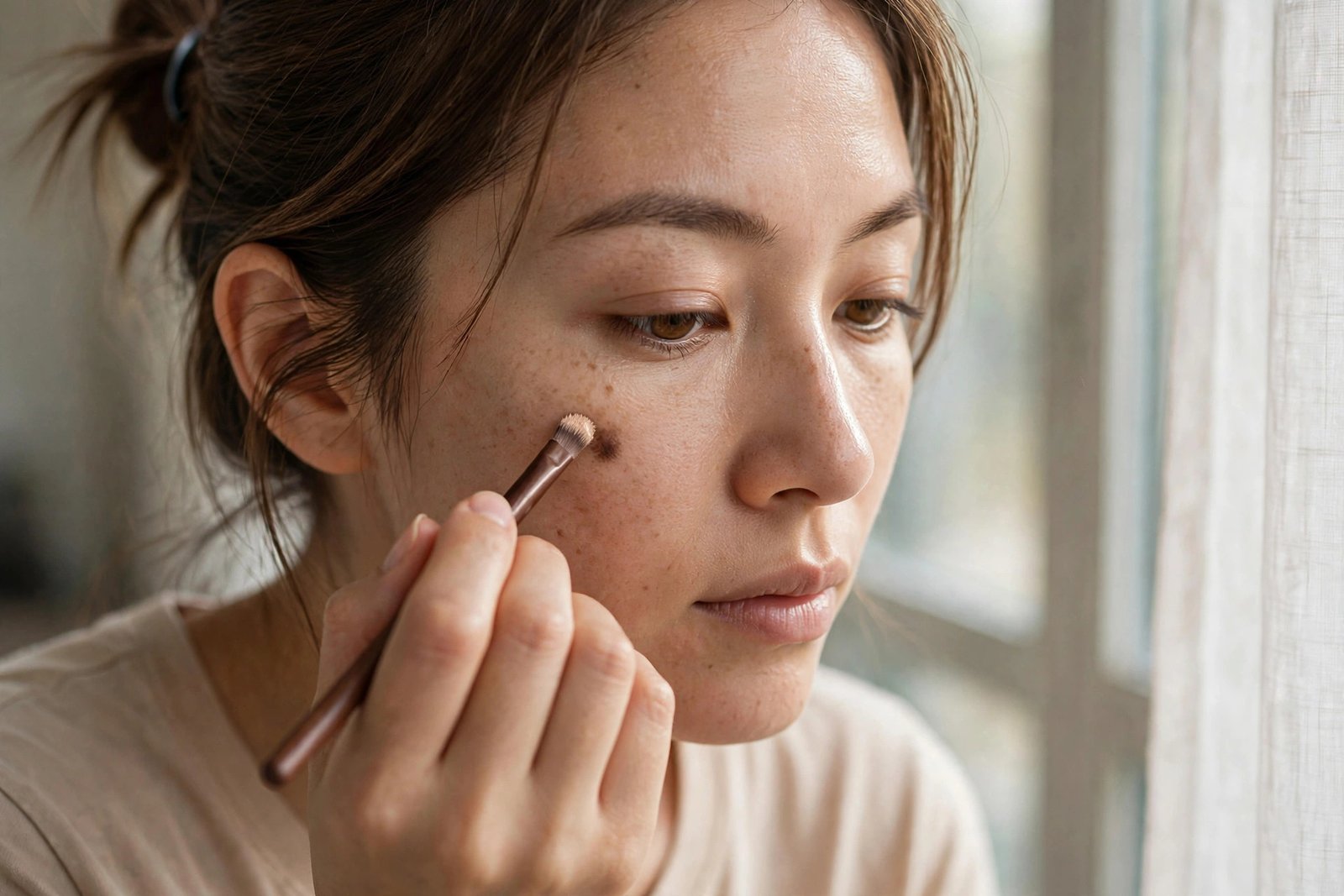
Color theory is the secret: opposite colors on the color wheel cancel each other. Peach/salmon correctors neutralize blue-purple-brown darkness on light to medium skin — the workhorse for most dark spots. Orange correctors do the same job on deep skin tones (peach is too light to neutralize on deep skin). Yellow brightens dullness around spots. Apply corrector only on the dark spot itself with a small brush or fingertip — precision matters; corrector spread across clear skin creates its own discoloration.
This step is what makes “natural” coverage possible. Corrector neutralizes the darkness, so the concealer on top can be sheer and skin-like instead of thick and mask-like. Skipping corrector is why people need three layers of full-coverage concealer — they’re trying to cover with opacity what color theory solves with physics.
The Layering Method: Thin Beats Thick
Step 1: Prime and apply a sheer base (tinted moisturizer or light foundation) over the whole face — evens the general canvas without heaviness.
Step 2: Color-correct individual spots precisely.
Step 3: Pat (never rub) a medium-coverage concealer matched to your skin tone over the corrected spots. Patting deposits; rubbing moves the corrector underneath and undoes step 2.
Step 4: Set lightly with translucent powder only on the concealed spots, not the whole face — all-over powder is what creates the heavy, made-up look.
The result: spots neutralized and concealed, surrounding skin sheer and natural. Total product is less than a full face of medium-coverage foundation, but the spots are better hidden. This is the technique makeup artists use on camera — it photographs as skin, not makeup.
Formula Choices That Make or Break It
Corrector: creamy, pigmented, in the right tone for your skin depth (peach for light-medium, orange for deep). Concealer: one shade matching your skin exactly for spots (lighter concealer is for under-eyes, not spots — light concealer on dark spots creates gray, ashy patches). Base: sheer to light-medium coverage with a natural finish — dewy finishes look more skin-like; matte finishes emphasize texture around spots.
For melasma’s diffuse patches, skip heavy spot-concealing and use a medium-coverage foundation sheered out, plus corrector only on the darkest areas. And throughout: daily SPF is mandatory — UV darkens every spot type further, and covering spots while skipping sunscreen is bailing water with the tap running. The American Academy of Dermatology’s hyperpigmentation guidance lists sun protection as the first-line treatment for all dark spot types.
Treating While Covering: The Long Game
Makeup covers; treatment fades. The ingredients with real evidence for dark spots: vitamin C (melanin inhibition), niacinamide (melanin transfer interference), azelaic acid (particularly good for PIH and melasma, and pregnancy-safe), tranexamic acid (emerging strong evidence for melasma), and retinoids (accelerated turnover). These work over 8–16 weeks — slow, but they reduce what you need to cover. Antioxidant-rich nutrition supports skin repair from within, modestly but genuinely.
What to avoid while treating: picking at spots (creates new PIH — the cycle that never ends), lemon juice and DIY acids (irritation worsens pigmentation, especially in deeper skin tones), and hydroquinone without dermatologist supervision (effective but with real risks including rebound pigmentation).
Covering Melasma: The Hardest Case
Melasma deserves special attention because standard spot-concealing fails it — the patches are too diffuse for precise correction, and heavy coverage looks mask-like across large areas. The melasma method: a medium-coverage foundation sheered out over the whole face for overall evening, peach corrector pressed only into the darkest centers (not the full patch — the edges should stay soft), then a second sheer layer of foundation over the corrected areas to melt everything together. Set minimally. The goal is diminished contrast, not invisibility — melasma covered to “gone” always looks like makeup, while melasma softened to “even-toned” reads as skin.
Treatment-wise, melasma is the most stubborn type: it responds to azelaic acid, tranexamic acid (oral and topical — discuss with a dermatologist), strict sun protection including visible light protection (tinted SPF with iron oxides, since visible light worsens melasma beyond UV), and professional treatments like chemical peels. Heat and hormones trigger it — Chicago summers with strong sun plus hormonal fluctuations are peak melasma season. Mayo Clinic’s melasma resources detail the treatment ladder from topicals to procedures, worth reading before investing in products that can’t touch it.
Chicago-Specific Considerations
Summer lakefront sun is intense and spot-darkening — this is when treatment progress reverses without religious SPF reapplication. Winter is the best treatment season: less UV means brightening actives work without fighting new sun damage, and heavier coverage for holiday events is more comfortable in cool air. Time your most aggressive treatment phase for October through March.
Conclusion
Natural-looking dark spot coverage is color correction plus thin strategic layers: sheer base, precise peach/orange corrector on the spot, patted skin-tone concealer, spot-only powder setting. Know your spot type (PIH, sun spots, melasma) because it changes the approach; match corrector depth to your skin tone; and always pair coverage with SPF and gradual treatment — makeup hides today’s spots while treatment and sun protection prevent tomorrow’s. The goal was never mask-like perfection. It’s skin that looks like skin, spots and all, on your terms.
Frequently Asked Questions
How do I cover dark spots without looking cakey?
Use color corrector (peach for light-medium skin, orange for deep skin) precisely on spots first, then pat skin-tone concealer over it, and set only the spots with powder. Corrector neutralizes darkness so concealer can stay sheer — skipping it is why coverage looks heavy.
What color corrector covers dark spots best?
Peach/salmon for light to medium skin tones, orange for deep skin tones — these neutralize the blue-brown-purple tones of hyperpigmentation. Apply only on the spot itself, not surrounding skin.
Can makeup actually fade dark spots?
No — makeup only covers. Fading requires treatment actives (vitamin C, niacinamide, azelaic acid, retinoids) over 8–16 weeks plus strict sun protection. Use coverage for today and treatment for the long term simultaneously.
Why does concealer make my dark spots look gray?
Using concealer lighter than your skin tone on dark spots creates an ashy gray cast. Spot concealer must match your skin exactly (lighter shades are for under-eyes only), applied over color corrector, not instead of it.