Salon manicures are lovely — and expensive, time-consuming, and sometimes the very thing weakening your nails. The irony of the modern nail cycle: gels and acrylics look perfect for two weeks, then the removal and regrowth leave nails thinner than before, sending you back for more coverage. Breaking that cycle at home isn’t about deprivation; a proper at-home routine genuinely produces stronger nails than most salon-dependent routines, for a fraction of the cost.
This guide covers why nails weaken, the at-home routine that builds strength, the nutrition connection, the habits silently destroying your nails, and Chicago-winter nail survival.
Why Your Nails Are Weak (It’s Rarely Genetics)
Nails are made of keratin, and like hair, they’re dead tissue once they leave the matrix — which means “strengthening” is really about preventing damage to new growth and protecting existing length. The usual culprits aren’t mysterious: constant wet-dry cycles (dishwashing without gloves is nail enemy number one), harsh acetone removers, using nails as tools, aggressive cuticle cutting, and gel/acrylic removal that peels off nail layers. Dermatologist tips for healthy nails start with these basics because they outperform every “hardener” on the market.
One myth to retire: calcium deficiency is rarely the cause of weak nails in people with adequate diets. Biotin gets the marketing, but the evidence for supplements is modest and mostly relevant to true deficiencies. The boring truth is that external care and habits move the needle far more than pills.
The At-Home Strength Routine
Weekly, give yourself a proper manicure: soak briefly in warm (not hot) water, push cuticles back gently with an orangewood stick — never cut them, since cuticles seal out infection — then file in one direction with a fine-grit file. Sawing back and forth creates micro-tears that become breaks. Shape matters for strength: short ovals and squovals resist breakage far better than long stilettos or square corners that catch on everything.
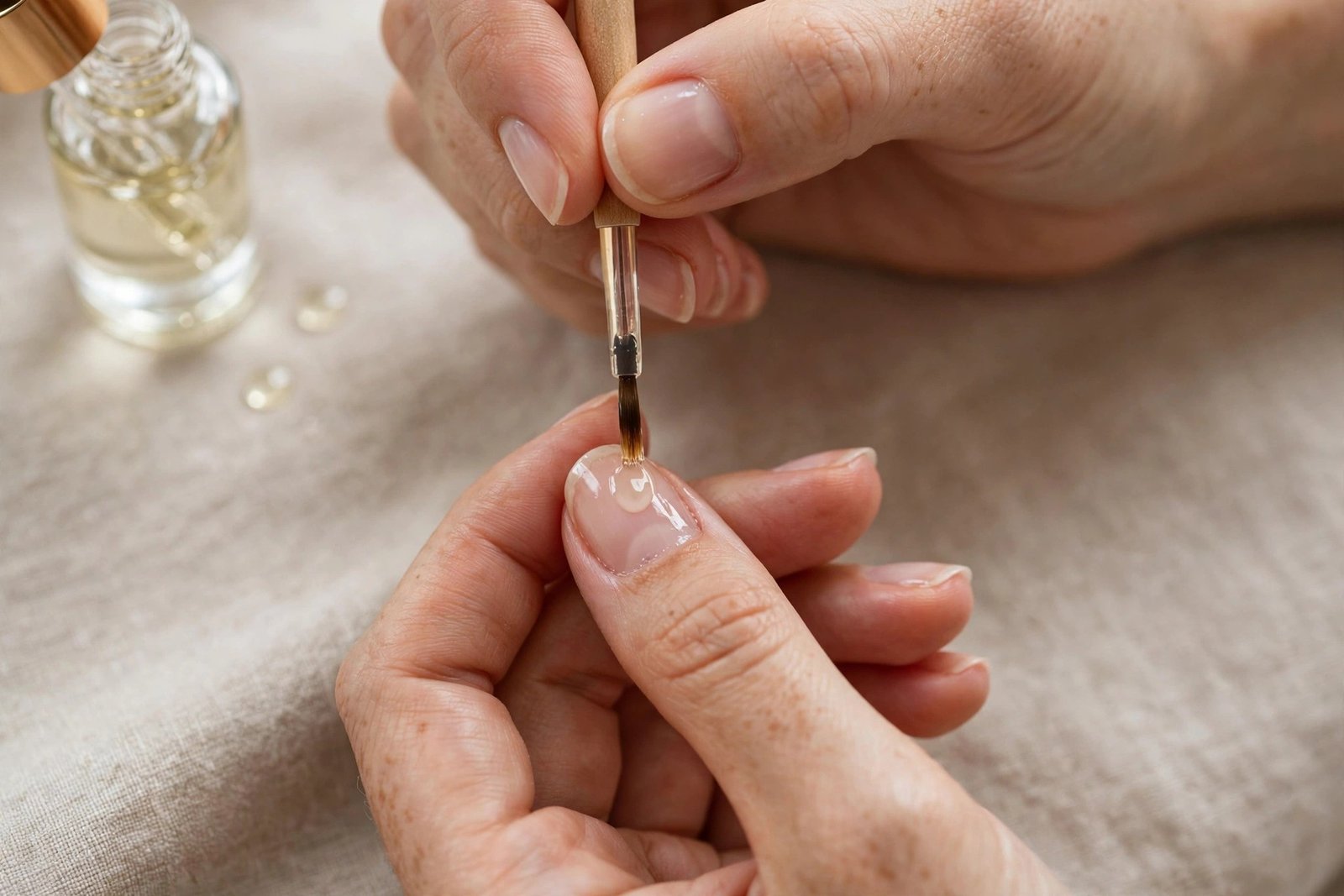
Daily, the routine is almost embarrassingly simple: moisturize nails and cuticles like you moisturize your face. Jojoba oil penetrates the nail plate better than most oils; a drop massaged into each nail nightly makes a visible difference within weeks. Wear gloves for dishes and cleaning — every single time. The American Academy of Dermatology’s nail care basics emphasize keeping nails dry and clean as the foundation, and gloves are how real life complies with that advice.
Polish Smart, Not Never
You don’t have to give up polish. Use a strengthening base coat, keep polish on no more than a week before removing (old polish chips and tempts peeling, which rips nail layers), and remove with non-acetone remover whenever possible. Give nails a bare week between manicures to breathe and rehydrate. If you’re into low-waste at-home nail care as part of sustainable beauty, reusable glass files and non-toxic “clean” polish brands make the routine both greener and gentler.
Nutrition: What Actually Helps
Nails reflect overall nutrition with a months-long delay — the nail you see today started forming months ago. Adequate protein matters most, since keratin is protein; iron deficiency is the nutritional issue most clearly linked to nail problems (spoon-shaped nails are the classic sign). Rather than chasing single supplements, eat consistently well: protein at every meal, iron-rich foods, and enough water. If nails are dramatically ridged, discolored, or separating, that’s a doctor conversation, not a beauty problem — thyroid issues and anemia show up in nails first.
Habits That Silently Destroy Nails
The hall of shame: using nails to open cans and scrape stickers, peeling off gel polish (this removes nail layers — always soak off), biting or picking cuticles, over-filing the surface to “smooth” ridges, and skipping base coat under dark polish (staining is cosmetic, but the dehydration underneath isn’t). Also: hand sanitizer. Post-2020, constant alcohol sanitizer is a real contributor to brittle nails — moisturize after every use, and protecting hands and nails from UV damage daily with hand sunscreen prevents the aging and weakening sun causes to the nail area over decades.
Breaking Up With Gels and Acrylics Safely
If weak nails came from salon enhancements, the transition off them needs care — ripping off the damage source carelessly causes more harm. Never peel or pry off gel or acrylic; peeling removes layers of the natural nail plate, which is precisely why nails feel paper-thin afterward. Have enhancements soaked off properly (at a salon one final time, or carefully at home with acetone-soaked cotton and foil wraps), then commit to the bare-nail recovery period: keep nails short, oil twice daily, and use a ridge-filling base coat if the surface looks uneven.
Expect a recovery timeline of two to three months for the damaged nail to grow out completely — remember, the visible nail today was formed months ago, so patience is structural, not optional. During recovery, resist the urge to cover thin nails with another set of gels “just until they grow”; that’s the cycle you’re breaking. Many former enhancement devotees report that after the recovery period, their natural nails — maintained with the simple routine above — look better than their enhancements ever did, because healthy natural nails have a translucency and smoothness that no overlay quite replicates.
Chicago Winter Nail Survival
Winter is peak nail-breakage season: going from heated indoor air to subzero cold shocks the nail plate, and every wet-dry cycle from snow and handwashing worsens brittleness. Winterize by keeping nails slightly shorter from December through March, doubling down on nightly cuticle oil, wearing warm gloves outdoors (cold makes nails more brittle on contact), and keeping a travel cuticle oil in your bag. The owners of the strongest winter nails aren’t lucky — they’re just consistent with oil and gloves.
Conclusion
Strong nails without salon visits come from unglamorous consistency: gentle weekly filing in one direction, nightly cuticle oil, gloves for every wet task, smart polish habits with breaks in between, and adequate protein in your diet. Stop the damage first — no peeling gels, no nails-as-tools, no cut cuticles — and new growth arrives stronger within two to three months. Salons are a treat, not a requirement; the strongest nails belong to the most consistent home routines, maintained week after week.
Frequently Asked Questions
How long does it take to see stronger nails?
Nails grow about 3mm per month, so fully new nail takes 4–6 months. But you’ll notice less peeling and breakage within 3–4 weeks of consistent oiling and glove use, as the existing nail becomes more flexible and hydrated.
Do nail hardeners actually work?
Some formaldehyde-based hardeners temporarily harden nails but can make them more brittle with overuse — hard isn’t the same as strong. Flexible, hydrated nails resist breaking better than rigid dry ones. Use hardeners sparingly, if at all.
Why do my nails peel in layers?
Peeling (onychoschizia) usually comes from repeated wet-dry cycles and dehydration of the nail plate. Gloves for wet work plus daily oil is the fix; if peeling persists despite this, check iron levels with your doctor.
Is it bad to push back cuticles?
Gently pushing back softened cuticles is fine and recommended. Cutting them is the problem — it breaks the protective seal and invites infection. Never let anyone cut your cuticles, at home or in a salon.