Red lipstick is the most transformative five seconds in makeup — and the most intimidating purchase. The drugstore wall holds forty reds, and somehow none of them look right. The secret the beauty industry doesn’t advertise: “the perfect red” isn’t one shade. It’s the red matched to your undertone, and once you know the formula, you can walk into any store and find yours in minutes. Here’s the complete system.
The Undertone Formula: The Only Rule That Matters
Red lipsticks have undertones just like skin does, and matching them is the entire game:
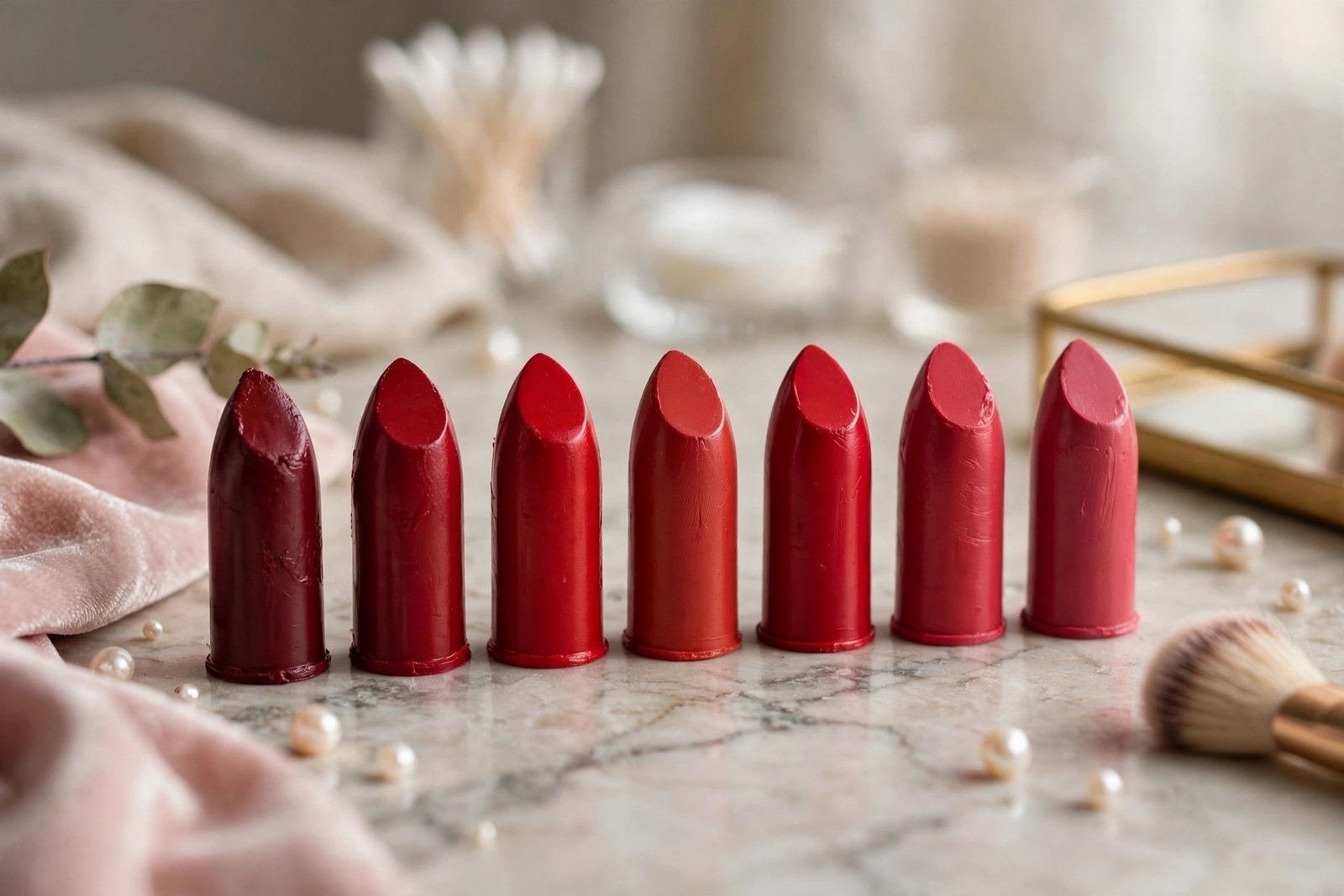
Cool skin undertones (veins look blue/purple, silver jewelry flatters) → blue-based reds: cherry, cranberry, raspberry-red, classic blue-red. The blue base brightens cool skin and makes teeth look whiter — the famous “red lipstick whitens teeth” trick only works with blue-based reds.
Warm skin undertones (veins look green, gold jewelry flatters) → orange-based reds: tomato, poppy, brick, warm coral-red. Orange-based reds harmonize with warm skin’s golden cast instead of fighting it.
Neutral undertones → true neutral reds, and you can borrow from either side. Deep skin tones → rich, saturated reds with depth: burgundy-red, wine-red, deep brick. Sheer reds can look washed out on deep skin; pigment density matters as much as undertone.
This is why “universally flattering reds” mostly fail — they’re usually neutral-blue reds that flatter cool and neutral skin while looking slightly off on strongly warm undertones. The formula beats the hype list every time.
Testing: The Wrist, The Lips, The Light
Swatch on your inner wrist first to see the undertone clearly against your skin, but always test on the lips before buying — lip pigmentation changes how reds read (pigmented lips warm up cool reds; pale lips let the true undertone show). Test 2–3 candidates, then check in natural daylight. Store lighting is designed to sell, not to match.
The smile test: grin widely in the mirror. The right red makes your teeth look brighter and your skin more even — it’s an instant, visible effect, not subtle. The wrong red does the opposite: teeth look yellow, skin looks sallow. Trust the immediate reaction; your eye knows before your brain does.
Formula and Finish: Matching Red to Occasion
Matte liquid: maximum staying power, most dramatic, least forgiving — emphasizes lip texture, so exfoliate first. Best for events and photography.
Satin bullet: the everyday sweet spot — comfortable, buildable, polished without severity. One coat for day, two for night.
Sheer/stain: the beginner’s red — foolproof application, natural effect, easy touch-ups. Ideal if full red feels like too much.
Glossy: youthful and juicy but lowest staying power and most feathering-prone — pair with full anti-bleed prep (liner fill, blotted balm base, invisible wax liner as a dam).
Wearing Red With Confidence (The Real Barrier)
Most people who “can’t wear red” actually found the wrong undertone and concluded red isn’t for them. But there’s also the psychological adjustment: red lips draw the eye, and the first hour feels like everyone is staring (they’re not — or if they are, it’s admiration). Ease in with a stain or sheer formula for a week before committing to full matte. Keep the rest of the face simple — red lips plus minimal eye makeup is the classic balance; red plus heavy smoky eye is editorial, not everyday.
Red lipstick is also a professional power move when done right: a polished satin red reads confident and intentional in work settings. Dressing professionally on a budget pairs naturally with the one-product polish a good red delivers — it’s the highest-impact item in a work makeup bag.
Chicago-Seasonal Red Strategy
Winter: deeper, bluer reds (wine, burgundy-red) suit the season’s aesthetic and show less feathering in dry air when properly prepped. Keep a lip scrub and rich balm in the routine — matte reds on chapped lips are unforgiving. Summer: brighter, sheerer reds (cherry stains, coral-reds) that survive heat better; blot and set for humidity. And year-round: SPF lip balm under your red — lip-area sun protection prevents the UV damage that ages the lip border and worsens feathering over time.
Red Lips at Every Age
Red lipstick has no age limit, but the formula should evolve. In your 20s and 30s, any finish works — experiment freely. After 40, lips thin and fine lines deepen, so the rules shift: favor satin and sheer formulas over dry mattes (matte emphasizes every line), always use the liner-fill base (non-negotiable now), and consider slightly deeper, bluer reds rather than bright orange-reds, which can look harsh against changing skin tone. Exfoliation becomes essential rather than optional. The American Academy of Dermatology’s lip care guidance covers keeping the lip area smooth and protected — the canvas matters more than ever for bold color.
Lipstick Hygiene and Storage
Unsexy but important: lipstick is a bacteria-friendly environment (warm, moist, applied to the mouth). Don’t share bullets, wipe the tip with a tissue after illness, and replace lipsticks every 12–18 months — old lipstick harbors bacteria and the formula degrades, changing both color and texture. Store away from heat (a melted-then-resolidified bullet never applies the same) and out of direct sun, which fades pigments. For the hygiene-conscious, single-use lip brushes for testing at counters prevent the double-dipping that spreads cold sores and infections — Mayo Clinic’s guidance on cold sore transmission specifically warns against sharing lip products.
Conclusion
Your perfect red = your skin undertone matched to the lipstick’s undertone (blue-based for cool, orange-based for warm, rich saturated for deep skin), tested on the lips in daylight, in a formula matched to the occasion. Start sheer if you’re nervous, keep the rest of the face quiet, and prep lips properly every time — especially bold reds, which punish bad prep visibly and reward good prep beautifully. The forty-red wall isn’t overwhelming once you know the formula. Walk in, find your undertone match, smile-test it, and leave with the red that was always yours — replacing the bullet every year to keep the formula fresh. And remember the simplest truth about red lipstick: confidence is the real finish — the right shade just gives you permission to wear it.
Frequently Asked Questions
How do I find the right red lipstick for my skin tone?
Match undertones: cool skin → blue-based reds (cherry, cranberry); warm skin → orange-based reds (tomato, brick); deep skin → rich saturated reds (wine, burgundy). Test on lips in natural daylight and do the smile test — the right red brightens teeth and evens skin instantly.
What red lipstick makes teeth look whiter?
Blue-based reds (cherry, blue-red, cranberry) — the blue undertone contrasts with yellow tones in teeth, making them appear whiter. Orange-based reds do the opposite, emphasizing yellow. This is the most reliable teeth-whitening trick in makeup.
Can I wear red lipstick every day?
Absolutely — choose a satin or sheer formula for comfort, keep eye makeup minimal for balance, and prep lips well. A polished red is appropriate in professional settings and takes five seconds to apply.
Why does red lipstick look wrong on me?
Almost always an undertone mismatch — the wrong red base fights your skin instead of harmonizing. Re-test using the undertone formula above. Also check: unprepped/chapped lips (reds emphasize texture) and too-heavy application (sheer it out first).