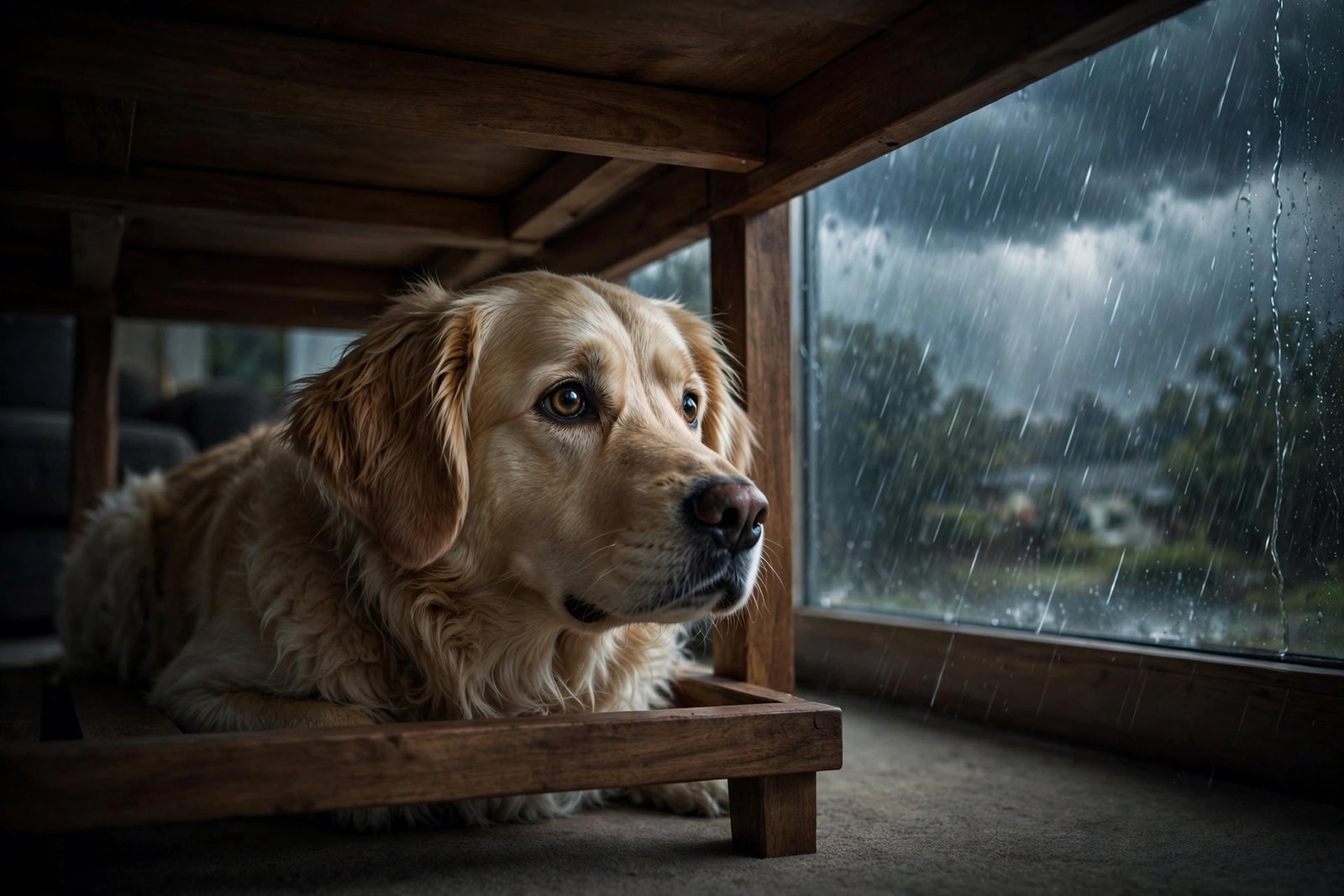
That first distant rumble of thunder rolls over Lake Michigan, and your dog is already trembling under the coffee table before a single drop of rain hits. If you live in Chicago, you know the drill: summer storm season arrives with sirens, sideways rain, and a terrified four-legged shadow glued to your legs. Thunderstorm anxiety is one of the most common behavioral issues veterinarians see in the Midwest, and Chicago’s violent lake-effect storms — with their sudden barometric drops and sharp lightning — can turn an otherwise confident dog into a quivering wreck. The good news is that you can genuinely help. Here’s a vet-informed, battle-tested plan for Chicago dog owners.
Why Chicago Thunderstorms Hit Dogs So Hard
It’s not just the noise. Dogs hear frequencies we can’t, and they feel barometric pressure changes through sensitive pads and inner ears. Research from animal behaviorists shows many dogs react before humans even notice a storm coming — the drop in atmospheric pressure is the early-warning trigger. Chicago storms intensify this: lake-enhanced convection systems can drop pressure rapidly and produce sharp, close-range thunderclaps off the tall buildings, which amplify the sound in dense neighborhoods like Logan Square or Hyde Park.
There’s also the static electricity theory. Some researchers believe the buildup of static in a dog’s coat during storms creates uncomfortable shocks, which explains why storm-phobic dogs often seek out bathrooms, bathtubs, or tile floors — places that ground static. Your dog pressing against metal pipes or the bathtub isn’t random; it’s physics-driven self-soothing.
Finally, Chicago’s high-rise life matters. Dogs in apartments feel the vibration of thunder through the building’s structure, and the howling wind across balconies adds sensory chaos that suburban dogs may experience less intensely.
The Anxiety Toolkit: What Actually Works Before the Storm
Preparation is everything. Storm-phobic dogs do best with a layered plan, and you should start weeks before Chicago’s storm season peaks in June and July.
1. Build a Storm Refuge (Not a Crate Unless They Love It)
Set up a permanent “storm den” in an interior room — ideally a bathroom or closet away from exterior walls and windows. Make it comfortable: a familiar blanket, a worn t-shirt that smells like you, and a safe long-lasting chew. The key is that this space must always be available and always positive. Practice sending your dog there with treats on sunny days so the den itself carries no storm association. For apartment dwellers, keeping a small dog happy in an apartment starts with exactly this kind of cozy, predictable home base.
2. Consider Pressure Wraps
Thundershirts and similar pressure wraps work for roughly half of anxious dogs, according to veterinary behavior surveys — modest, but meaningful. The gentle, constant pressure may calm the nervous system the way swaddling soothes infants. They work best when introduced during calm weather with treats, not slapped on mid-panic when the dog is already over threshold.
3. Talk to Your Vet About Situational Medication
This is the step too many owners skip, and it’s the one with the strongest evidence. Medications like trazodone or sileo (dexmedetomidine gel, the only FDA-approved treatment specifically for noise aversion in dogs) can transform a storm from a trauma into a manageable event. Sileo is absorbed through the gums and starts working in about 30–60 minutes; trazodone typically needs 1–2 hours. Because Chicago storms often build fast, many Chicago vets recommend dosing at the first weather alert rather than waiting for thunder. The AVMA’s pet-owner resources on disaster preparedness emphasizes that storm anxiety is a legitimate medical issue, not a training failure — so a vet conversation is never overkill.
What to Do When the Storm Hits
The storm is here. Here’s your real-time playbook for the pacing, panting, and door-clawing.
Stay Calm and Be Present — But Don’t Overdo Comfort
The old advice to “ignore your dog so you don’t reward fear” has been largely debunked. You cannot reinforce an emotion; fear is not a behavior your dog is “choosing.” Calm, matter-of-fact presence helps. Sit near your dog, keep your voice low and your body language relaxed. Gentle petting is fine if your dog seeks it — what doesn’t help is frantic soothing (“Oh no, baby, it’s okay, it’s okay!”) because your own panic tells the dog there really is something to fear.
Mask the Noise
White noise machines, fans on high, or classical music at moderate volume can blunt the sharp cracks of thunder. Research on shelter dogs suggests classical music specifically reduces stress behaviors. Close the curtains to block lightning flashes, and consider running the dryer or dishwasher — steady household hum beats irregular thunder spikes. In a Chicago apartment, a box fan in the window plus closed blinds goes a long way.
Give the Brain a Job
A frozen Kong stuffed with peanut butter and kibble, a lick mat smeared with yogurt, or a snuffle mat can redirect some of the anxious energy into a calming activity. Licking in particular releases endorphins. Have two or three “storm-only” special toys so they stay novel and high-value.
The Desensitization Plan That Fixes It Long-Term
If your dog’s storm fear is severe, the only true fix is systematic desensitization paired with counterconditioning — ideally under the guidance of a certified veterinary behaviorist or a CPDT-KA trainer. The Chicago area has several excellent ones, including board-certified behaviorists at the University of Illinois veterinary program’s referral network.
The protocol: play storm recordings at extremely low volume while feeding high-value treats, gradually increasing volume over weeks only as long as the dog stays relaxed. Each session lasts 5–10 minutes and always ends on a win. Done properly, this rewires the emotional response; done too fast it can make things worse, which is why the American College of Veterinary Behaviorists recommends professional guidance for severe cases.
What you should NOT do: flooding. Never force a terrified dog to “face their fear” by dragging them outside during a storm or crating them while they panic. Flooding can create learned helplessness that looks like calm but is actually shut-down terror. And never punish storm behaviors like barking or house soiling — punishment layers fear on top of fear.
Chicago-Specific Survival Tips
Chicago’s storm season runs roughly May through September, with the nastiest cells typically rolling in on humid afternoons. Sign up for NWS Chicago weather alerts on your phone so you can medicate or set up the den before the first thunder. Many Chicago dog owners dose situational meds when the sky turns that unmistakable green-gray, not when thunder starts.
Also plan for power outages. Summer storms knock out power across the metro area regularly — keep a battery-powered fan and your dog’s calming supplies in one grab-bag.
One more local note: Chicago’s Fourth of July and New Year’s fireworks produce identical panic in storm-phobic dogs. The exact same toolkit — den, wraps, meds, noise masking — applies, and it helps just as much when you’re traveling with your dog and need a pet-friendly hotel during storm season.
Conclusion
A dog terrified of thunderstorms isn’t being dramatic, stubborn, or badly trained — they’re experiencing a genuine neurological fear response, and Chicago’s intense storms make it harder on them. The path forward is layered: a safe den, pressure wraps for the dogs they help, a real conversation with your vet about situational medication, calm noise-masking management during storms, and, for severe cases, a slow desensitization program with a professional. Most owners who build the full toolkit see dramatic improvement within one storm season. Your dog can’t control the weather over Lake Michigan — but together, you can make every storm survivable, and eventually, just another noisy afternoon.
Frequently Asked Questions
Should I comfort my dog during a thunderstorm?
Yes — calm presence helps. Modern veterinary behavior science says you can’t reinforce fear with comfort; fear is an emotion, not a misbehavior. Stay relaxed, offer gentle contact if your dog seeks it, and avoid frantic soothing that signals you’re scared too.
Do ThunderShirts really work for storm anxiety?
They help roughly half of anxious dogs, per veterinary surveys. They work best as one layer of a bigger plan, introduced during calm weather first. If your dog panics despite a pressure wrap, add vet-prescribed situational medication rather than relying on the wrap alone.
What medication helps dogs with thunderstorm phobia?
Sileo (dexmedetomidine oromucosal gel) is the only FDA-approved drug specifically for canine noise aversion; trazodone is widely prescribed off-label for situational anxiety. Both require a vet prescription and work best given 1–2 hours before the storm peaks. Never use human sedatives like Benadryl as a primary plan without vet guidance.
Can storm anxiety in dogs be cured permanently?
Severe cases rarely vanish entirely, but systematic desensitization with counterconditioning — storm recordings at low volume paired with treats, increasing slowly over weeks — produces lasting improvement for most dogs. A certified veterinary behaviorist gives the best odds; expect a multi-week commitment, not a weekend fix.