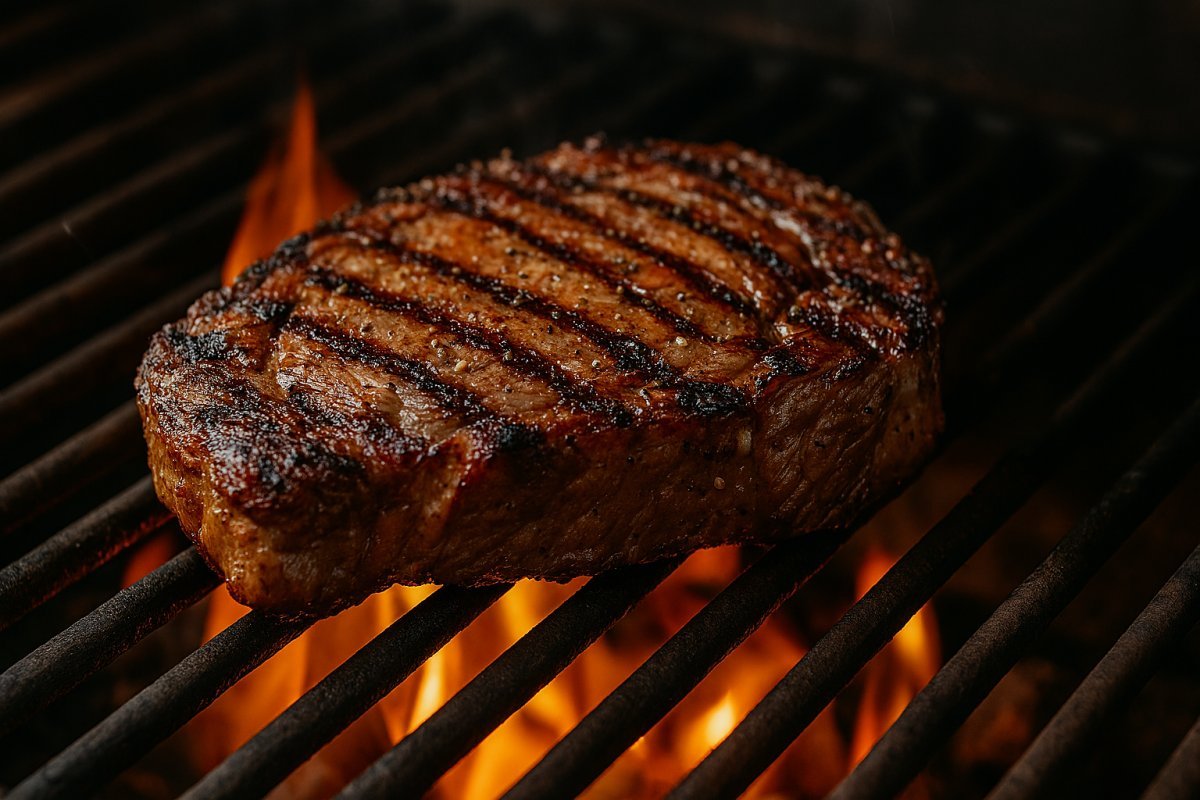
I’ll be honest: my first few attempts at grilling a steak on a gas grill were embarrassing. Gray, tough, and somehow both overcooked and underseasoned. If you want to grill the perfect steak on a gas grill, though, the secret isn’t some expensive gadget — it’s heat management, timing, and knowing when to stop touching the thing.
A gas grill can absolutely produce a steak that rivals your favorite steakhouse. You just have to work with what gas gives you: fast, even, adjustable heat. Below is the exact method I’ve settled on after years of weekend cookouts, broken down so even a first-timer can nail it.
Picking the Right Cut for a Gas Grill
Not every steak belongs on a gas grill. You want cuts with good marbling and at least an inch of thickness, because a thin steak goes from rare to ruined in the time it takes to flip it. My go-to choices are ribeye, New York strip, and sirloin — ribeye for flavor thanks to all that fat, strip for a beefy bite with a nice chew, and sirloin when the budget matters. A thick filet mignon works too, though I’d rather save that money and grab two strips.
Whatever you buy, look for steaks at least 1 to 1.25 inches thick with visible flecks of fat running through the meat. That marbling melts as it cooks and keeps everything juicy. And before you fire up the grill, pull the steak out of the fridge 30 to 45 minutes early. A cold steak hits hot grates and the outside chars while the middle stays raw — letting it come up toward room temperature is one of the simplest ways to get an even cook.
Setting Up Your Gas Grill for Steak
Here’s where most people go wrong: they heat every burner to max and toss the steak on. What you actually want is a two-zone setup. Turn one side of the grill to high and leave the other side on low or off entirely. That hot zone is where the sear happens; the cooler zone is your safety net if flare-ups get aggressive or the steak needs a few more minutes without burning.
Preheat with the lid closed for a good 10 to 15 minutes — gas grills are fast but the grates need time to get screaming hot. While it heats, pat the steak completely dry with paper towels (moisture is the enemy of a good crust), then season generously with coarse salt and cracked black pepper right before it hits the grill. If you love experimenting with marinades on other proteins, my guide on how to marinate chicken for maximum flavor uses the same timing logic — but steak this good needs nothing but salt and pepper.
- Hot zone: high heat, lid closed, grates clean and oiled
- Cool zone: one burner off or on low for gentle finishing
- Tools that matter: instant-read thermometer, long tongs, a clean plate for resting
Searing and Timing: How Long to Grill the Perfect Steak
Lay the steak on the hot zone and — this is the hard part — leave it alone. Flip once, about 2 to 3 minutes per side for a 1-inch steak, and only move it if you need to dodge a flare-up. The crust forms through the Maillard reaction, and that needs sustained contact with hot metal. Constant flipping just steams the surface and kills your sear.
Forget pressing the steak with a spatula, too. All you’re doing is squeezing juice out onto the grates. Instead, use an instant-read thermometer — it’s the only reliable way to know where you are. The USDA’s safe minimum internal temperature for steak is 145°F with a rest, but if you like your steak juicier, pull it a few degrees below your target since carryover cooking will add 3 to 5 degrees while it rests. Serious Eats’ complete guide to grilling steak has excellent data on this if you want to geek out on the science.
- Rare: pull at 120-125°F (bright red center)
- Medium rare: pull at 130-135°F (warm red center) — the sweet spot for most people
- Medium: pull at 135-140°F (warm pink center)
- Medium well: pull at 145-150°F (slightly pink center)
- Well done: 160°F+ (no pink — but expect a drier steak)
Resting, Slicing, and Serving
Resting is non-negotiable. Move the steak to a warm plate or cutting board, tent it loosely with foil, and give it 5 to 10 minutes. The juices redistribute through the meat instead of flooding your cutting board the second you slice in. I know it’s tempting to cut in and check — resist. That first cut should happen at the table.
Slice against the grain for maximum tenderness; look at which way the muscle fibers run and cut perpendicular to them. A sprinkle of flaky sea salt and a knob of butter melting over the top takes it over the finish line. And if you’re grilling for a crowd, keeping your kitchen knives razor sharp makes those clean slices effortless. Round out the meal with grilled vegetables, and if seafood’s on the menu too, my notes on cooking shrimp without overcooking it will save you from rubbery skewers.
Dry-Brining: The Trick to Grill the Perfect Steak Every Time
If you want to grill the perfect steak with even more consistency, try dry-brining: salt the steak generously on all sides and leave it uncovered on a rack in the fridge for 24 hours (or at least 4). The salt initially draws moisture out, then the meat reabsorbs it along with the salt, seasoning the steak deeply and drying the surface for a better sear. It’s the single biggest upgrade after thermometer use, and it costs nothing.
Another pro move is the reverse sear for thick steaks (1.5 inches and up): cook the steak on the cool zone of the grill with the lid closed until it hits about 115°F internal, then sear it hot and fast on the screaming-hot zone for 60-90 seconds per side. You get edge-to-edge pink with a perfect crust — the best of both worlds. Finish with compound butter (softened butter mixed with garlic, herbs, and a squeeze of lemon) melting over the top while it rests. Between dry-brining, the reverse sear, and the two-zone setup, you have a complete system — not just a recipe — for steakhouse results on a gas grill.
- Dry-brine 4-24 hours ahead for deeper seasoning and better sear
- Reverse sear thick steaks: gentle heat first, then a blazing finish
- Compound butter while resting adds restaurant-level richness
The Bottom Line
The formula is simple: thick well-marbled cut, two-zone grill, dry surface and bold seasoning, one flip, thermometer over guesswork, and a real rest. Follow that and your gas grill will turn out steaks that make the steakhouse feel overpriced.