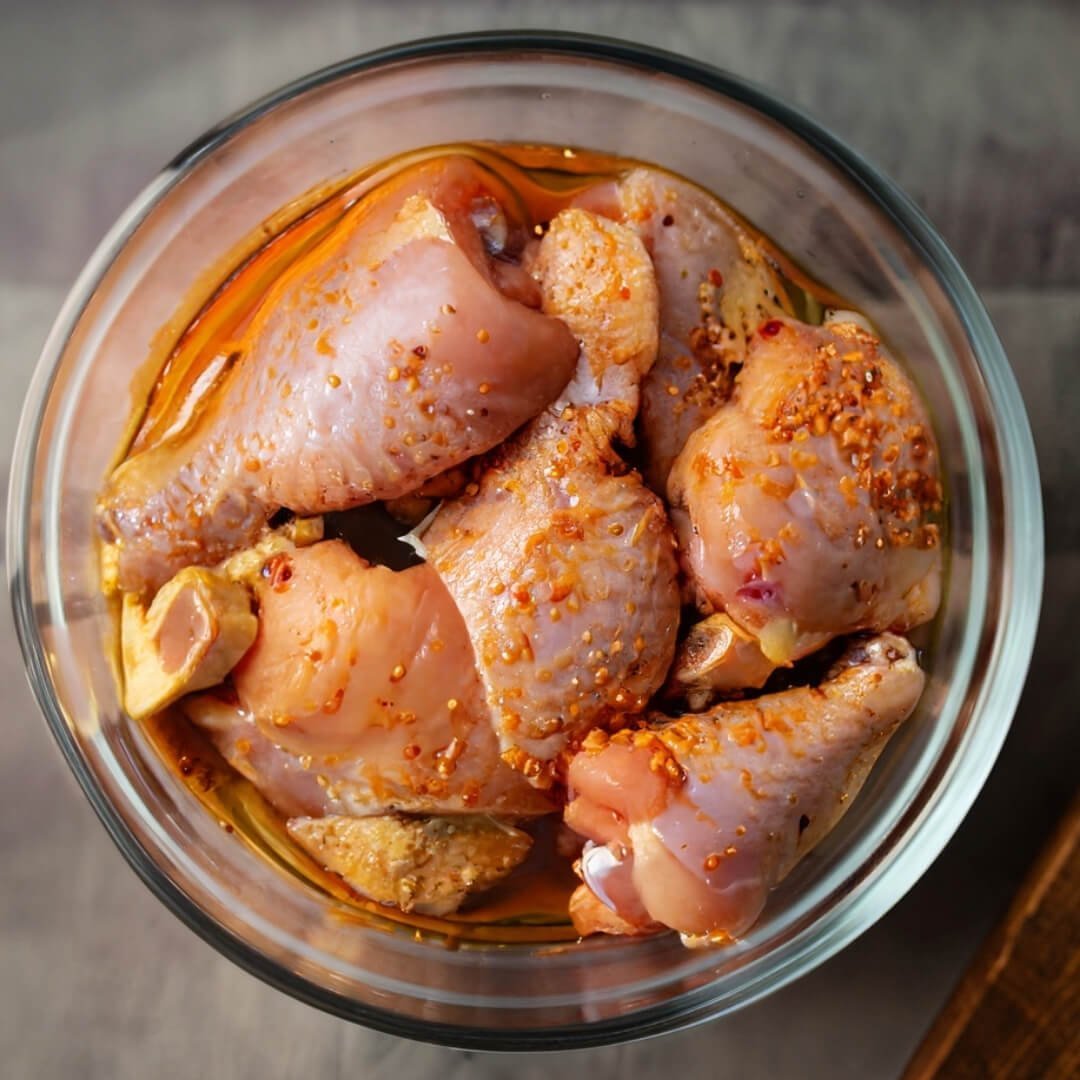
Bland chicken is a choice — usually the result of under-seasoning, under-marinating, or both. The best way to marinate chicken for maximum flavor isn’t a secret recipe; it’s understanding what each part of a marinade does and how long different cuts actually need. Get those right and even plain chicken breast becomes something worth craving.
I marinate chicken at least twice a week, and the method below is the distillation of years of weeknight dinners. Here’s the formula, the timing chart, and the mistakes to avoid.
The Marinade Formula: Fat, Acid, Flavor, Salt
Every effective marinade has four jobs: fat carries flavor and promotes browning (olive oil, yogurt, coconut milk), acid or enzymes tenderize the surface and add brightness (citrus juice, vinegar, yogurt, buttermilk), aromatics bring the actual flavor (garlic, herbs, spices, ginger, soy sauce), and salt seasons deeply — it’s the only ingredient that truly penetrates the meat. My base ratio: 1/2 cup oil or yogurt, 1/4 cup acid, 2-3 tablespoons of bold flavor (soy sauce, mustard, harissa), plus aromatics and 1 teaspoon salt per pound of chicken.
Salt deserves emphasis. An under-salted marinade is the most common failure I see — people build complex flavor profiles and forget the salt that makes them all pop. And use enough marinade to coat every piece; chicken sitting in a puddle on one side marinates on one side. A zip-top bag with the air pressed out gives you full contact with minimal marinade. For weeknight speed, the same bold-flavor logic powers my gas grill steak method — seasoning confidence translates across proteins.
How Long to Marinate Chicken: Timing by Cut
Timing matters more than recipe. Too short and the flavor stays on the surface; too long in acid and the exterior turns mushy and chalky. Here’s what works:
- Boneless breasts: 2-6 hours (they’re thick; need time, but acid turns them mushy past 8)
- Boneless thighs: 2-12 hours (forgiving — hard to over-marinate)
- Bone-in pieces: 4-12 hours or overnight
- Whole chicken: 12-24 hours
- Wings: 2-4 hours
- Never exceed 24 hours in an acidic marinade; 2 hours minimum for any real effect
Marinating Mistakes That Ruin Chicken
The acid trap is the big one: leaving chicken in lime juice or vinegar overnight gives you ceviche-textured mush on the outside and bland meat inside. If you want an overnight marinade, use yogurt or buttermilk instead — their acids are gentle and they tenderize without turning the texture weird. That’s why yogurt-marinated chicken (think chicken tikka) can go 24 hours and only get better.
Never reuse marinade that touched raw chicken unless you boil it first — it needs a full rolling boil for at least a minute to be safe as a sauce. And always marinate in the refrigerator, not on the counter; the USDA is explicit about this because room-temperature marinating is a food-safety gamble. Pat the chicken dry before cooking, too — a wet surface steams instead of sears, which is the same principle behind crispy salmon skin.
Three Go-To Marinades
Lemon herb: olive oil, lemon juice, garlic, oregano, salt, pepper — 2-4 hours. Classic, bright, foolproof. Honey soy: soy sauce, honey, garlic, ginger, sesame oil — 2-6 hours. Sweet, savory, caramelizes beautifully on the grill. Yogurt tikka: plain yogurt, lemon, garam masala, turmeric, garlic, ginger, salt — 6-24 hours. The long-marinade champion.
Make marinade in bulk and freeze it in portions with the chicken already inside the bag — it marinates as it thaws in the fridge, which is the ultimate meal-prep move. Label with the date; frozen marinated chicken keeps 2 to 3 months. Future you will be grateful.
Dry Brines and Injections: Beyond Marinating Chicken for Maximum Flavor
Sometimes the best way to marinate chicken for maximum flavor isn’t a marinade at all. Dry brining — salting chicken pieces (1 teaspoon kosher salt per pound) and refrigerating uncovered 4-24 hours — seasons more deeply than most marinades, since salt penetrates while large flavor molecules mostly stay on the surface. The uncovered rest also dries the skin, which means crispier roasted chicken. For whole birds and thick breasts, dry brining beats wet marinating on both flavor and texture.
Injection (using a flavor injector to pump seasoned butter or broth deep into the meat) is the competition-barbecue secret for whole chickens and turkeys — it puts flavor where marinades can’t reach. And don’t forget the post-cook flavor layer: resting chicken then slicing and drizzling with a bright sauce (chimichurri, salsa verde, or just lemon-herb oil) adds the fresh top notes that long marinades cook off. The complete system is brine or marinate for depth, cook properly, then finish bright — three layers of flavor instead of one.
- Dry brine: 1 tsp kosher salt per lb, 4-24 hrs uncovered in fridge
- Injection: for whole birds, puts flavor deep inside
- Finish bright: chimichurri or lemon-herb oil after cooking
The Best Way to Marinate Chicken for Maximum Flavor in 30 Minutes
Short on time? The best way to marinate chicken for maximum flavor in 30 minutes uses a vacuum trick: put the chicken and marinade in a zip-top bag, press out all the air, and the marinade contacts every surface with zero air pockets — dramatically more effective than a bowl. Even better, use a fork to poke the chicken all over first; the tiny channels let flavor penetrate deeper, faster.
For maximum speed, choose thin cuts (cutlets, tenders) and high-impact marinades: soy-ginger, lime-chili, or balsamic-herb. Thirty focused minutes with full contact beats 4 lazy hours in a bowl. And the microwave-defrost-then-marinate pipeline means you can go from frozen chicken to flavorful dinner in about an hour. Weeknight flavor isn’t about time — it’s about contact, concentration, and not leaving the chicken swimming in a puddle on one side.
The Bottom Line
Fat plus acid plus bold aromatics plus enough salt, matched to the right time for the cut, always refrigerated. That’s the best way to marinate chicken for maximum flavor — juicy, seasoned-through chicken instead of bland protein with tasty sauce on top.