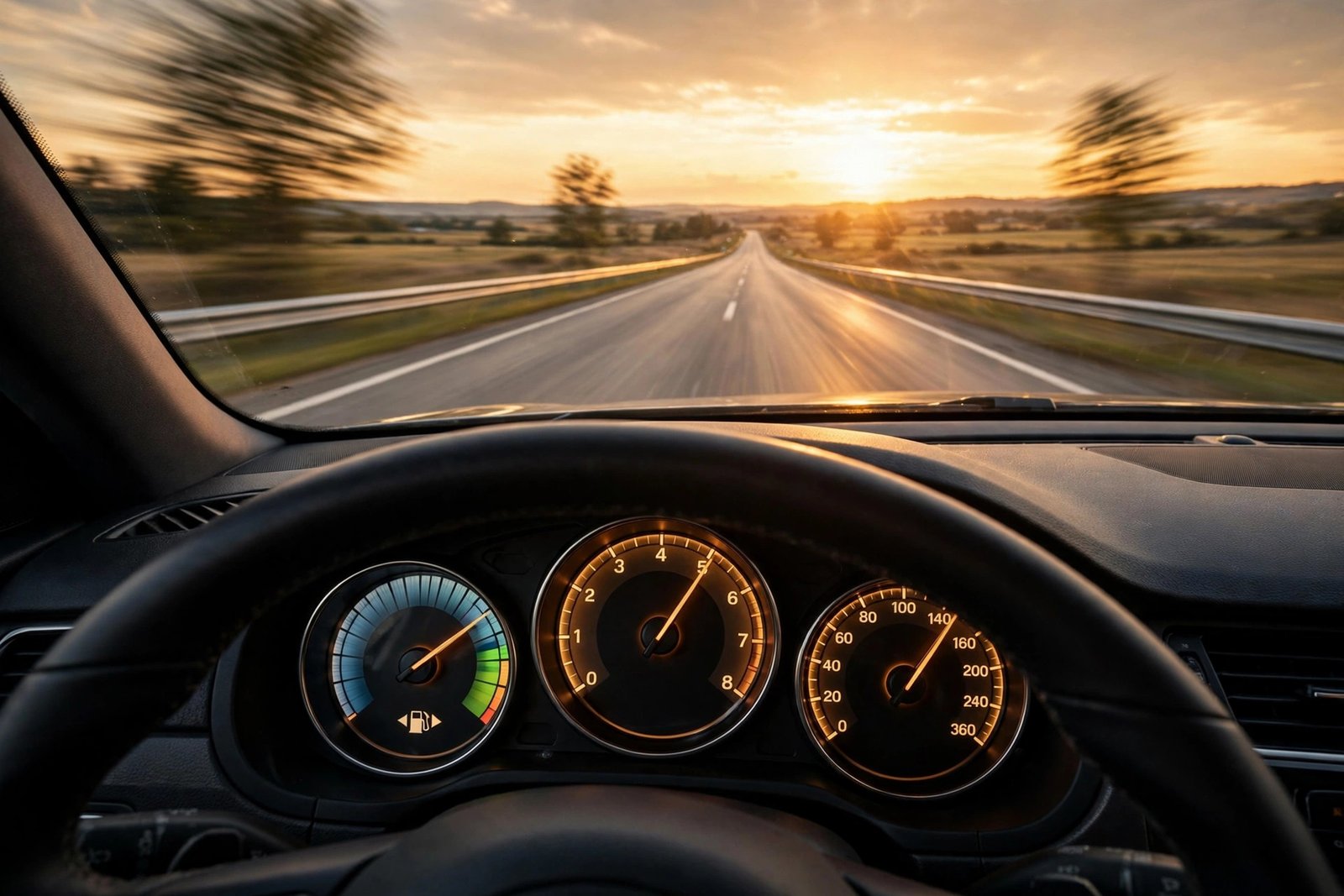
Gas prices do what they want, but your fuel efficiency is largely in your hands. The difference between an efficient driver and a wasteful one in the same car can be 25–30% — that’s like getting a free gallon out of every four. And you don’t need a hybrid, a tune-up kit, or any purchase at all. Just habits and maintenance you probably already know you should do.
Here are the no-upgrade improvements ranked by impact: the driving techniques that matter most, the maintenance that pays for itself, and the Chicago-specific factors working against your mileage.
Driving Habits: The Biggest Lever (Up to 30%)
Slow down on highways. Aerodynamic drag increases exponentially with speed — driving 75 mph instead of 65 can cost 15% in fuel economy. The fueleconomy.gov driving tips confirm what physics dictates: every 5 mph over 50 is like paying an extra $0.30+/gallon. On Chicago’s expressways, the right lane at 65 saves real money versus weaving at 80.
Accelerate gently, anticipate stops. Jackrabbit starts are the #1 city-mileage killer. Accelerate smoothly, look far ahead, and coast to red lights instead of braking late — every braking event wastes the fuel you spent building speed. Cruise control on flat highways maintains steadier speed than your foot. Kill the idle: idling gets 0 mpg — if you’re stopped more than 60 seconds (Chicago winter warm-ups included), shut it off. Modern engines don’t need long warm-ups; 30 seconds then gentle driving warms faster than idling.
Maintenance That Pays for Itself
Tire pressure (up to 3% savings): underinflated tires are the most common efficiency killer — check monthly, because Chicago’s temperature swings bleed pressure constantly (tires lose ~1 PSI per 10°F drop). The correct pressure is on the driver’s door jamb, not the tire sidewall. Air filter: a clogged filter chokes the engine — replace per schedule, more often if you drive dusty construction zones. Motor oil: use the manufacturer’s recommended grade; heavier oil increases friction. Wheel alignment: misalignment drags tires sideways, wasting fuel and rubber — Chicago potholes knock alignments out regularly.
The roof rack rule: remove roof cargo boxes and racks when not in use — they can cost 5–15% in highway economy through drag alone. That empty cargo box is a fuel tax you pay every mile. For the bigger vehicle-cost picture, our guide to planning a cross-country road trip on a budget shows how these savings compound over long distances.
Weight, Trips, and Chicago Winter
Lighten the load: every 100 pounds costs ~1% in economy — clean the trunk, skip the golf clubs as permanent residents. Combine trips: a cold engine uses far more fuel; three errands in one warmed-up loop beats three cold starts. This matters doubly in Chicago winters, when short cold-start trips can nearly double fuel consumption versus summer.
Winter-specific: use the block heater if you have one (warm starts save fuel and engine wear), clear snow fully (driving with a snow roof is drag plus danger), and accept that winter mileage will be 10–20% worse no matter what — don’t chase summer numbers in January. The Department of Energy’s Energy Saver tips quantify these seasonal effects with practical mitigation steps. And the savings add up across the household budget — see our guide to reducing monthly bills without lifestyle changes for where fuel savings fit the bigger picture.
What Doesn’t Work (Myths)
Premium gas in a regular car: zero benefit, pure waste — use what the manual specifies. Fuel additives and “mileage pills”: the FTC has tested these repeatedly; none meaningfully work. Windows down vs. AC: at city speeds, windows down wins; at highway speeds, AC with windows up wins (drag beats compressor load). Coasting in neutral: dangerous and, in modern fuel-injected cars, actually worse — coasting in gear cuts fuel injection entirely, while neutral idles the engine.
Tracking Your MPG: The Feedback Loop
You can’t improve what you don’t measure — and most drivers have no idea what their car actually gets. Start tracking: reset your trip odometer at each fill-up, divide miles driven by gallons added, and log it. Do this for a month to establish your baseline. Then change one habit at a time — slower highway speeds for two weeks, say — and watch the numbers move. This feedback loop is what turns abstract tips into permanent behavior; nothing motivates like watching your own MPG climb.
What to expect: most drivers find their real-world economy 10–20% below the EPA rating, which is normal (EPA tests don’t include Chicago winters or rush-hour idling). Your goal isn’t the window sticker — it’s beating your own baseline by 15–25%. Apps like Fuelly automate the tracking and let you compare against identical vehicles, which tells you whether your car or your habits are the opportunity. Seasonal note: track summer and winter separately — comparing January MPG to July MPG will only discourage you. The drivers who save the most aren’t hypermilers with special techniques; they’re ordinary drivers who started paying attention.
Beyond personal tracking, consider the vehicle’s own feedback: many 2026 cars display real-time economy gauges — glance at them the way you’d glance at your speed. That instant readout trains efficient driving faster than any article, because the cause and effect are immediate: ease off the pedal, watch the number rise. Pair the dashboard feedback with your fill-up log, and you’ve got both the microscope and the telescope on your fuel spending.
Hypermiling Basics: Worth It or Overkill?
Hypermiling — the practice of squeezing maximum mileage through extreme techniques — sits at the far end of fuel efficiency. The mild techniques are just good driving: coasting to stops, gentle acceleration, and proper tire pressure, all covered above. The extreme techniques (drafting trucks closely, engine-off coasting, overinflating tires) cross into unsafe or mechanically questionable territory and aren’t worth it for normal drivers.
Where’s the line? Adopt everything that doesn’t compromise safety or sanity: the driving habits in this guide, plus route planning (fewer left turns across traffic, less idling) and regular maintenance. Skip anything requiring constant dashboard-watching or risky maneuvers — the stress isn’t worth the marginal gallons. The sweet spot most drivers land in: 15–25% better than their old habits, achieved through awareness rather than obsession. That’s hundreds of dollars a year for driving like a thoughtful adult, which you should be doing anyway.
Conclusion
Improving fuel efficiency without upgrades is pure behavior and basic maintenance: slow down on highways, accelerate gently and coast to stops, kill long idles, keep tires properly inflated, remove roof racks, lighten the load, and combine winter trips. Together these deliver 20–30% better mileage — hundreds of dollars a year for zero investment. The most fuel-efficient car is the one you already own, driven well.
Frequently Asked Questions
How do I improve my car’s fuel efficiency without upgrades?
Drive slower on highways, accelerate gently, coast to stops, minimize idling, keep tires properly inflated, remove roof racks, reduce weight, and combine short trips — worth 20–30% combined.
Does driving slower really save gas?
Yes significantly — aerodynamic drag rises exponentially with speed. Dropping from 75 to 65 mph can improve highway economy by ~15%.
Do I need to warm up my car in winter?
Only ~30 seconds — modern engines warm faster driving gently than idling. Long warm-ups waste fuel; use a block heater for extreme cold instead.
Does premium gas improve fuel efficiency?
No, unless your car specifically requires it. Premium in a regular-grade car provides zero benefit — it’s just more expensive.
How much does tire pressure affect gas mileage?
Up to 3% — and underinflation is extremely common, especially with Chicago’s temperature swings. Check monthly using the door-jamb specification.