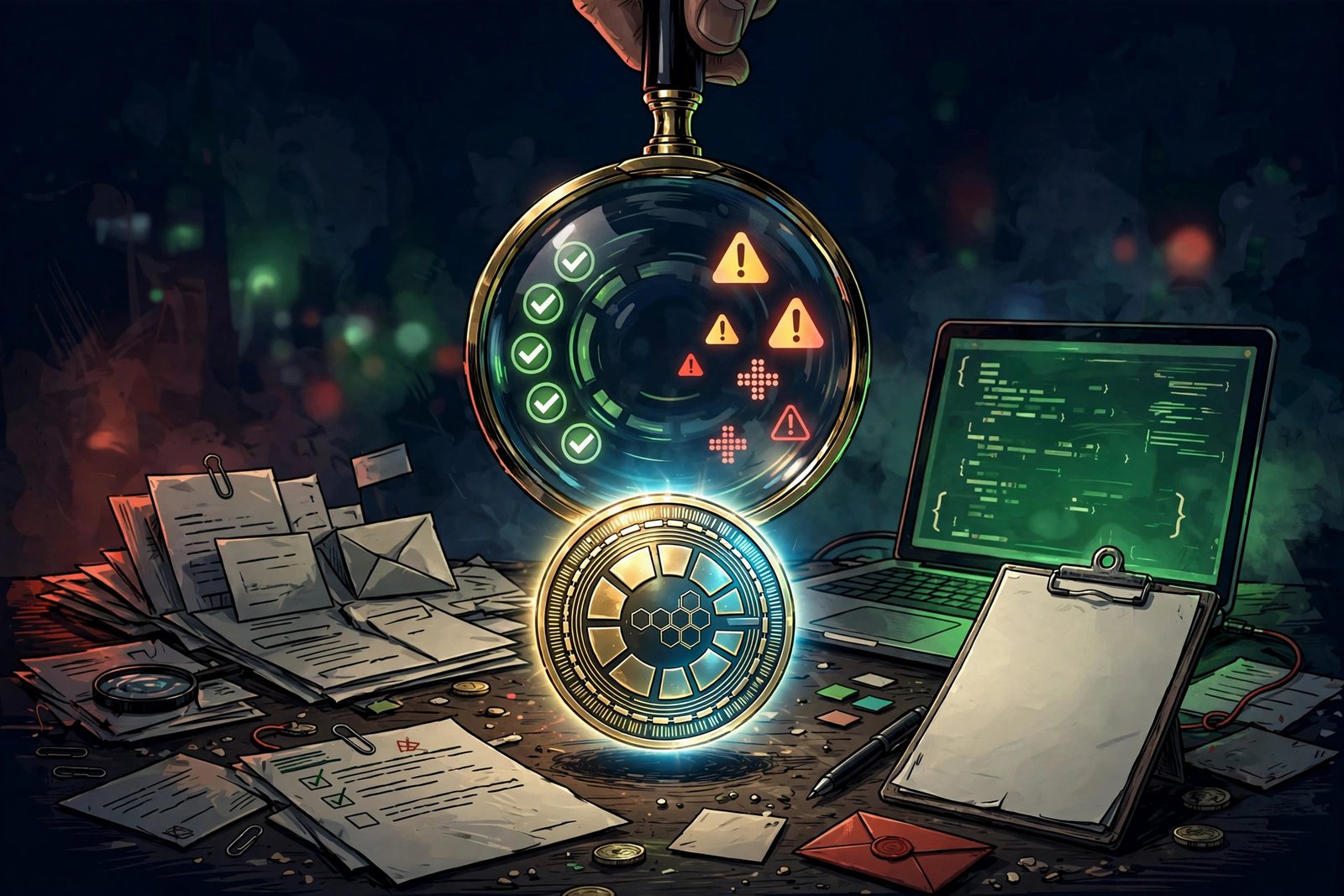
Every week, a new crypto project promises Chicago investors the same thing: get in early, get rich quick. Every week, most of them are worthless — and a meaningful minority are outright scams designed to drain your wallet. The difference between the next legitimate protocol and the next rug pull isn’t luck. It’s a checklist, and it takes about thirty minutes to run.
This guide gives you that checklist: how to investigate a crypto project’s team, technology, tokenomics, and community like a professional analyst, which red flags should make you walk away instantly, and where to verify claims through official channels. No hype, no shilling — just due diligence.
Start With the Team: Anonymous Founders Are a Dealbreaker
The single fastest filter in crypto: can you verify who built this? Legitimate projects have founders with real names, real LinkedIn profiles, real conference talks, and real reputational skin in the game. Search their names plus “scam” and “fraud.” Check whether their claimed credentials check out — “ex-Goldman engineer” should be verifiable.
Anonymous or pseudonymous teams aren’t automatically scams — Bitcoin itself was launched pseudonymously — but in 2026, a new project asking for your money while hiding its founders’ identities deserves extreme skepticism. The pattern in most rug pulls is identical: anonymous team, aggressive marketing, locked liquidity promises that turn out to be lies. If the team won’t show their faces, you shouldn’t show them your wallet.
Read the Whitepaper Like a Skeptic
A legitimate project publishes a technical whitepaper explaining what it does, how it works, and why it needs a token at all. Download it and ask three questions. First: does it describe a real technical mechanism, or is it 40 pages of buzzwords (“synergistic AI-powered Web3 ecosystem”) with no specifics? Second: does the project actually need its own token, or could it work with plain dollars? A huge share of tokens exist solely so insiders have something to sell you. Third: are the claims falsifiable — does it say what the protocol does today, not just what it might do in “phase 4” of a roadmap?
Then check the code. Real projects have public GitHub repositories with regular commits from multiple developers. A repo with three commits from one account, forked from another project with the names changed, is a blinking red light. You don’t need to read code — just check that sustained, multi-contributor development exists. No public code for a project claiming technical innovation? Walk away.
Dissect the Tokenomics Before Anything Else
Tokenomics — how tokens are created, distributed, and released — is where most scams hide in plain sight. Pull up the token distribution and look for these warning signs: insiders and “advisors” holding more than 30–40% of supply; massive unlocks scheduled in the first months after launch (check vesting schedules on the project’s docs); and liquidity that isn’t locked — if developers can pull the trading pool at any moment, they eventually will.
Use free tools to verify: Etherscan or Solscan show you the actual token holder distribution (if the top ten wallets hold 90%+, you’re exit liquidity, not an investor), and token unlock calendars show when insider tokens flood the market. A legitimate project has gradual vesting over years, transparent allocations, and locked liquidity you can verify on-chain — not screenshots of locks, but actual verifiable lock contracts.
Interrogate the Community and Marketing
Scam projects market like casinos; legitimate projects communicate like engineering firms. Red flags in the marketing: guaranteed returns or specific price predictions (“100x incoming”), heavy reliance on influencer shills paid in tokens, Telegram or Discord groups where questioning the project gets you banned within seconds, and countdown timers manufacturing urgency. Real projects answer hard questions; scams delete them.
Also check for fake social proof. Those “as seen on” logos, celebrity endorsements, and partnership announcements are trivially faked — and AI-generated fake reviews and testimonials have made this worse, with scam projects flooding social media with synthetic hype. Reverse-image-search team photos, verify partnership claims on the partner’s official site, and be deeply suspicious of any project whose entire community lives in one Telegram group.
Check for Audits — and Understand Their Limits
Reputable projects pay firms like CertiK, Trail of Bits, or OpenZeppelin to audit their smart contracts, and they publish the full reports — including the vulnerabilities found. “Audited by CertiK” as a badge on a website means nothing; the actual published report with findings and fixes means something. Read the summary: did the auditors find critical issues, and were they actually resolved before launch?
But understand what audits don’t cover: an audit checks code for bugs, not the team’s honesty. A perfectly audited contract can still have an owner function letting developers mint unlimited tokens or drain funds — auditors flag these as “centralization risks,” and investors ignore the flags. Audits reduce technical risk; they do nothing about fraud risk. For the fraud side, the SEC’s investor alerts catalogue the exact schemes targeting retail crypto buyers, and they’re essential reading.
Run the Regulatory Smell Test
Ask whether the project looks like it’s selling an unregistered security. The SEC’s Howey Test asks: are investors putting money into a common enterprise expecting profits from others’ efforts? If yes — and for most token presales the answer is obviously yes — the project is likely selling securities without registration, which means it operates outside investor protections. Projects that loudly insist “this is not a security” while marketing expected returns are telling on themselves.
For Chicago investors specifically, you have local recourse worth knowing: the Illinois Securities Department (under the Secretary of State) investigates investment fraud, and the CFPB’s guidance on virtual currency explains your rights when crypto products go wrong. If a project targeting Illinois residents collapses amid fraud allegations, file complaints with both — enforcement starts with victim reports. And protect yourself operationally too: AI-powered fraud detection now watches many payment rails, but crypto transfers are irreversible, so prevention beats detection every time.
The 30-Minute Legitimacy Checklist
Run every new project through this before investing a dollar: (1) Named, verifiable team with real reputations at stake. (2) Public code with sustained multi-developer activity. (3) Whitepaper describing a real mechanism that genuinely needs a token. (4) Token distribution without insider dominance, gradual vesting, verifiably locked liquidity. (5) Published third-party audit with resolved findings. (6) Community that tolerates criticism and marketing free of guaranteed returns. (7) No regulatory red flags — no unregistered-securities smell, no fake partnerships. A project failing even two of these isn’t necessarily a scam, but it’s not worth your money either. The crypto market offers thousands of options; you can afford to be picky.
Conclusion
Legitimacy in crypto isn’t a vibe — it’s verifiable. Teams, code, tokenomics, audits, and regulatory posture are all checkable facts, and the thirty minutes you spend checking them is the highest-paid half hour in investing. The Chicago investors who survive crypto’s cycles aren’t the ones with the best tips; they’re the ones with the best filters. Build yours, use it ruthlessly, and let the hype pass you by. There will always be another project — the skill is knowing which ones deserve a second look.
Frequently Asked Questions
How do I know if a new crypto project is legit?
Verify the team’s real identities, check for public code with active development, read the whitepaper skeptically, examine token distribution for insider dominance, confirm a published third-party audit, and watch for red flags like guaranteed returns or banned critics.
What is the biggest red flag in a crypto project?
An anonymous team combined with aggressive marketing and promises of guaranteed returns. Individually each is concerning; together they’re the classic rug-pull profile.
Are audited crypto projects safe?
Safer from bugs, not from fraud. Audits check code for vulnerabilities but can’t verify the team’s honesty or prevent founders from abusing admin controls. Always combine audit review with team and tokenomics due diligence.
Where can Chicago investors report crypto fraud?
File with the Illinois Securities Department, the SEC, the CFTC, and the FBI’s Internet Crime Complaint Center (IC3). Multiple reports from victims are often what trigger investigations.
Should I trust crypto influencer recommendations?
No — treat them as paid advertising, because they usually are. Many influencers are compensated in the tokens they promote and sell before their followers can. Do your own checklist regardless of who shills a project.