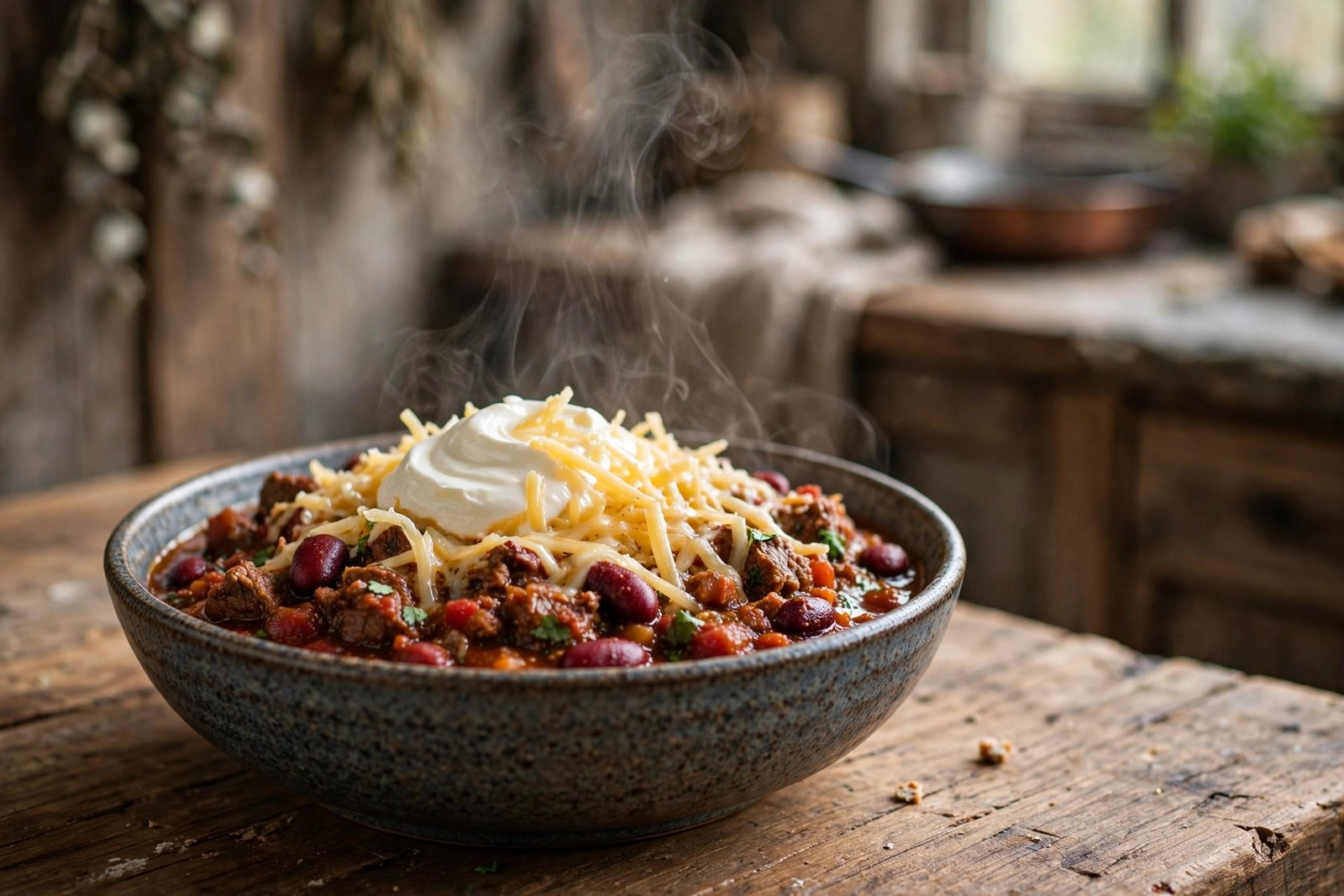
Cooked chili is good in the fridge for 3 to 4 days, stored in an airtight container at 40°F or below. That’s the USDA’s official line for cooked meat dishes, and chili — being essentially a meat-and-bean stew — follows it exactly. Day four is your deadline: eat it, freeze it, or let it go. Past that point, you’re gambling with bacteria you can’t see, smell, or taste.
Chili is one of those foods people routinely push past the limit on, because a big pot always makes more than anyone can eat in a couple of days, and it genuinely seems fine on day five or six. It might even be fine. But “might be” is doing a lot of heavy lifting when food poisoning is on the table — literally.
Why 3 to 4 Days? The Science in Plain English
Once cooked chili cools below 140°F, it enters the USDA’s “danger zone” — the temperature range between 40°F and 140°F where bacteria double every 20 minutes. Your refrigerator slows that growth to a crawl but doesn’t stop it. After about 3 to 4 days, bacterial populations in cooked meat dishes can reach levels that make you sick, even if the food looks and smells perfectly normal. The USDA’s leftovers guidance is blunt about this: 3 to 4 days, no exceptions for dishes that “seem fine.”
Chili’s ingredients don’t buy it extra time, either. The acidity of tomatoes helps slightly, but not enough to matter. The beans and meat are protein-rich — exactly what bacteria want. And every time you open the container, stick a spoon in, or leave the pot on the counter “just for a bit,” you’re resetting the bacterial clock in the wrong direction.
How to Tell If Chili Has Gone Bad
Your senses catch most spoilage, but not all of it — some foodborne pathogens are invisible and odorless, which is exactly why the 3–4 day rule exists regardless of how the chili looks. Still, these are clear discard signals:
Sour or off smell. Fresh chili smells rich, meaty, and spiced. If it smells sour, fermented, or just “wrong,” it’s done. Trust the first sniff, not the third.
Slimy texture or film. A slick, slimy coating on the surface or an oddly glossy film means bacterial colonies have set up shop. Scooping around it doesn’t help — in a liquid dish, contamination spreads throughout.
Mold. Any fuzzy spots, white or green patches — the whole batch goes. Don’t try to salvage the “good part.”
Bloated storage container. If your container lid is bulging or pops with pressure when opened, gas-producing bacteria have been active. Throw it out unopened if you can.
What about a little liquid separation on top? Totally normal — that’s just fat and juices settling. Stir it back in and carry on.
Storing Chili the Right Way
Most people sabotage their chili before it ever reaches the fridge. The mistakes happen in the first two hours after cooking.
Cool it fast. Don’t leave the pot on the stove for hours, and don’t put a steaming cauldron straight into the fridge (it’ll raise the temperature of everything around it). Divide chili into shallow containers — more surface area means faster cooling — and get it under 40°F within 2 hours of cooking. An ice bath in the sink speeds this up dramatically for big batches.
Portion before you store. Storing chili in meal-sized containers instead of one giant tub means you only reheat what you’ll eat. Every reheat-and-cool cycle is another trip through the danger zone, so single portions are both safer and more convenient.
Seal it tight and date it. Airtight containers or zip-top bags with the air pressed out. Write the date on a piece of tape — future you will not remember whether this was Sunday’s batch or last Sunday’s batch.
The same rules apply to other slow-cooked dishes. If you batch-cook regularly, our guide on how long bone broth lasts in the fridge covers nearly identical storage principles for another big-pot staple.
Freezing Chili: The 3-Month Rule
Here’s the move for that enormous pot: freeze what you won’t eat in 3 days. Properly frozen chili keeps excellent quality for 2 to 3 months (safe indefinitely at 0°F, but texture and flavor fade after that). Chili is one of the best freezer foods there is — the flavors actually meld and improve.
Freeze in flat zip-top bags and you’ll thank yourself later: they stack, they thaw fast, and they take up a fraction of the space of rigid containers. Leave an inch of headspace, squeeze out the air, label with the date and contents. Thaw overnight in the fridge — never on the counter — and bring it to a full boil when reheating, stirring to make sure it heats evenly. One freeze-thaw cycle is the limit; don’t refreeze thawed chili.
Reheating Leftover Chili Safely
Bring leftover chili to a rolling boil — 165°F throughout — not just “steaming.” Microwaves are fine but stir halfway, since they heat unevenly and cold spots can harbor bacteria. Only reheat the portion you’re eating right now. And if the chili has been in the fridge for 4 days already, reheating doesn’t reset the clock — heat kills live bacteria but not necessarily the toxins some leave behind. When in doubt, the freezer would have been the right call three days ago.
FAQs
Can you eat chili after 5 days in the fridge?
You shouldn’t. The USDA’s 3–4 day limit for cooked meat dishes exists because harmful bacteria can reach dangerous levels without any visible signs. Day 5 chili might look fine and still make you sick.
Does spicy chili last longer because of the peppers?
No — that’s a myth. Capsaicin has mild antimicrobial properties in a lab dish, but nowhere near enough to meaningfully extend chili’s safe storage life. The 3–4 day rule applies to mild and five-alarm chili alike.
Can you leave chili in a slow cooker overnight?
Only if the cooker is still on and holding the chili above 140°F. A slow cooker that’s been turned off is just a warm incubator — chili left in it at room temperature for more than 2 hours should be discarded.
How long does unopened canned chili last?
Two to 5 years in the pantry, per USDA guidelines for canned goods. Once opened, though, it follows the same 3–4 day refrigerated rule as homemade.
Can you freeze chili with sour cream and cheese on top?
Freeze the chili plain and add toppings fresh when serving. Dairy toppings get grainy and separate in the freezer — the chili itself freezes beautifully without them.