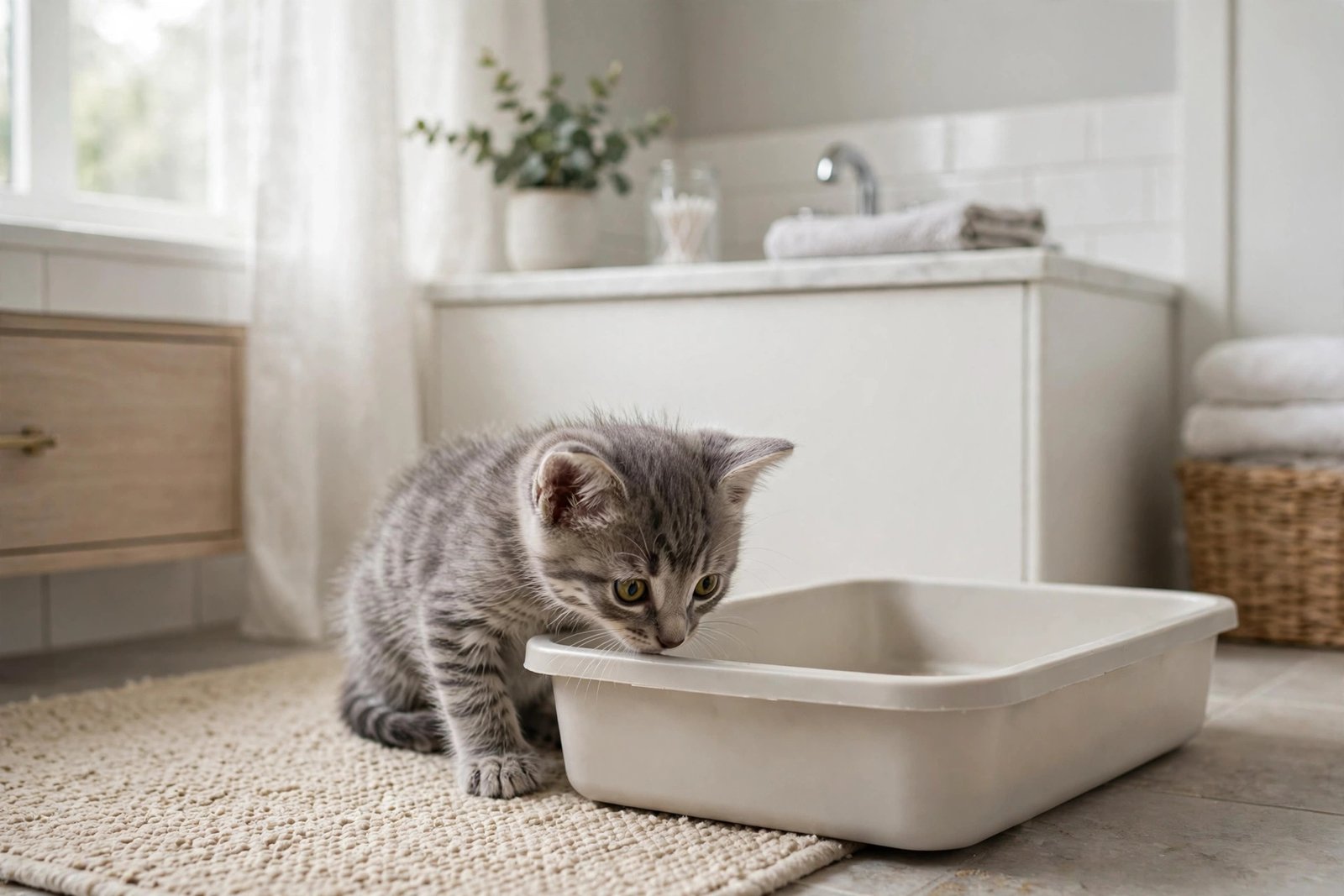
Your new kitten has decided the litter box is modern art to be admired, not used. The corner behind your Chicago apartment’s couch, however, is apparently a perfectly good bathroom. Before you despair, know this: kittens who “refuse” the box are almost never being defiant. They’re telling you something specific is wrong with the box, the litter, the location, or their health. Decode the message and most kittens self-correct within days.
Rule Out Medical Causes First
This step comes first because it changes everything. A kitten straining, crying, or going tiny amounts frequently may have a urinary tract infection or, in males, the beginnings of a urinary blockage — which is an emergency. Diarrhea or constipation can make a kitten associate the box with pain and avoid it. If the refusal is sudden in a previously box-trained kitten, or comes with any straining, blood, or lethargy, see a vet before you change a single thing about the setup. Training can’t fix pain.
Also consider: was this kitten separated too young? Kittens learn box habits from their mother between 3–4 weeks. Orphaned or early-separated kittens (before 8 weeks) sometimes genuinely don’t know what the box is for. These kittens need patient demonstration — gently placing them in the box after meals and naps, and mimicking digging with your finger. They learn fast; they just missed the lesson.
The Box Audit: What’s Wrong With Your Setup
Ninety percent of box refusal is a setup problem. Audit each element:
Box Size and Style
The number-one error: boxes that are too small. The rule is 1.5 times the cat’s body length. Most commercial boxes are sized for aesthetics, not cats. For a kitten, a low-sided box (easy entry) is essential — high sides on a “large” box can defeat a tiny kitten. Covered boxes are a frequent culprit: they trap odors (a cat’s nose is far more sensitive than yours), feel like ambush traps to a nervous kitten, and many cats simply refuse them. Start uncovered. You can experiment with covers later, once habits are solid.
Litter Type
Kittens have strong texture opinions. Most prefer fine-grained, unscented, sand-like clumping litter — it mimics the loose soil their instincts expect. Scented litters, pine pellets, crystal litter, and recycled paper pellets all have higher refusal rates. If your kitten is refusing, switch to plain unscented fine clumping litter before trying anything else. Depth matters too: 2–3 inches. Too shallow feels wrong; too deep (5+ inches) can intimidate a small kitten.
Location, Location, Location
The box should be somewhere quiet, accessible, and escape-proof — not next to the washing machine (sudden spin cycles terrify kittens mid-business), not in a high-traffic hallway, and not across the apartment from where the kitten spends time. A tiny kitten in a large Chicago apartment may simply not make it to a distant box in time. Start with a box in the kitten’s primary room; add more locations as they grow. The formula is one box per cat plus one, spread across the home — not lined up side by side in one room.
Cleanliness
Cats are fastidious to a degree humans find unreasonable. A box that isn’t scooped daily — ideally twice daily for kittens — will be rejected by many cats. The entire box needs a full litter change and wash every 2–4 weeks. If you’ve been scooping weekly, you’ve found your problem. A real cleaning schedule for pet households makes box maintenance automatic rather than aspirational.
The Retraining Protocol
Once the setup is fixed, retrain with confinement — not punishment. Set the kitten up in a small room (a bathroom works) with the corrected box, food, water, and bedding. Small space means the box is always nearby, and success becomes the default. Most kittens get it within 48–72 hours in confinement. The ASPCA’s cat care resources recommend this same confinement method as the fastest reliable reset for box avoidance.
During free-roam time, watch like a hawk. The pre-elimination signals are unmistakable once you know them: sniffing the ground intently, circling, squatting posture, or suddenly breaking away from play to wander. The instant you see signals, calmly carry the kitten to the box. If they go, reward with a treat and gentle praise. If they go outside the box, clean it with an enzymatic cleaner (regular cleaners leave proteins the kitten can still smell, inviting repeats) and say nothing — punishment after the fact is meaningless to a kitten and damages trust.
For the truly box-confused kitten, try Dr. Elsey’s Kitten Attract litter — it contains herbal attractants and has a genuinely strong track record with problem kittens. It’s the closest thing to a cheat code in litter training.
Special Situations
The plant pisser: kittens who prefer houseplants are following the loose-soil instinct. Cover soil with decorative stones or foil temporarily, and make the box’s texture more appealing than the plant’s.
The laundry lover: clothes on the floor smell like you (comfort) and are soft (nice texture). Keep laundry off the floor during training — management is half the battle.
Multi-cat homes: a new kitten may be avoiding the box because the resident cat guards it. This is resource guarding, and the fix is more boxes in separate territories, not discipline. Introducing a new cat to your home gradually prevents exactly this kind of territorial box conflict.
Previous outdoor kittens: strays used to soil may prefer dirt-like textures. Start with a mix of litter and potting soil (pesticide-free), gradually shifting the ratio toward litter over two weeks. Cornell University’s veterinary resources on feline behavior back this gradual texture-transition approach for former outdoor cats.
Conclusion
A kitten refusing the litter box is running a diagnostic on your setup and finding it wanting — wrong litter, wrong box, wrong spot, dirty box, or a medical issue underneath it all. Fix the setup first (uncovered, right-sized, unscented fine litter, quiet accessible location, scooped daily), rule out medical causes, then use short confinement and vigilant redirection to rebuild the habit. Most kittens turn around within a week. The box isn’t the enemy and neither is the kitten — there’s just a translation problem, and now you speak the language.
Frequently Asked Questions
Why won’t my kitten use the litter box all of a sudden?
Sudden refusal in a previously trained kitten usually means a medical issue (UTI, constipation, pain), a dirty box, a changed litter type, or stress from a household change. Rule out medical causes with a vet first, then audit the box setup.
What litter is best for kittens who refuse the box?
Plain unscented fine-grained clumping litter at 2–3 inches depth. Avoid scented, pellet, crystal, and paper litters during training — they have much higher refusal rates. Kitten Attract litter with herbal attractants helps stubborn cases.
Should I punish my kitten for going outside the box?
Never — punishment after the fact means nothing to a kitten and damages your bond. Clean accidents with enzymatic cleaner, fix the underlying setup problem, and reward every correct box use. Prevention and redirection work; punishment doesn’t.
How many litter boxes does a kitten need?
One per cat plus one, spread across different areas of the home. For a single kitten in a larger apartment, two boxes in different rooms prevents “couldn’t make it in time” accidents during the training phase.