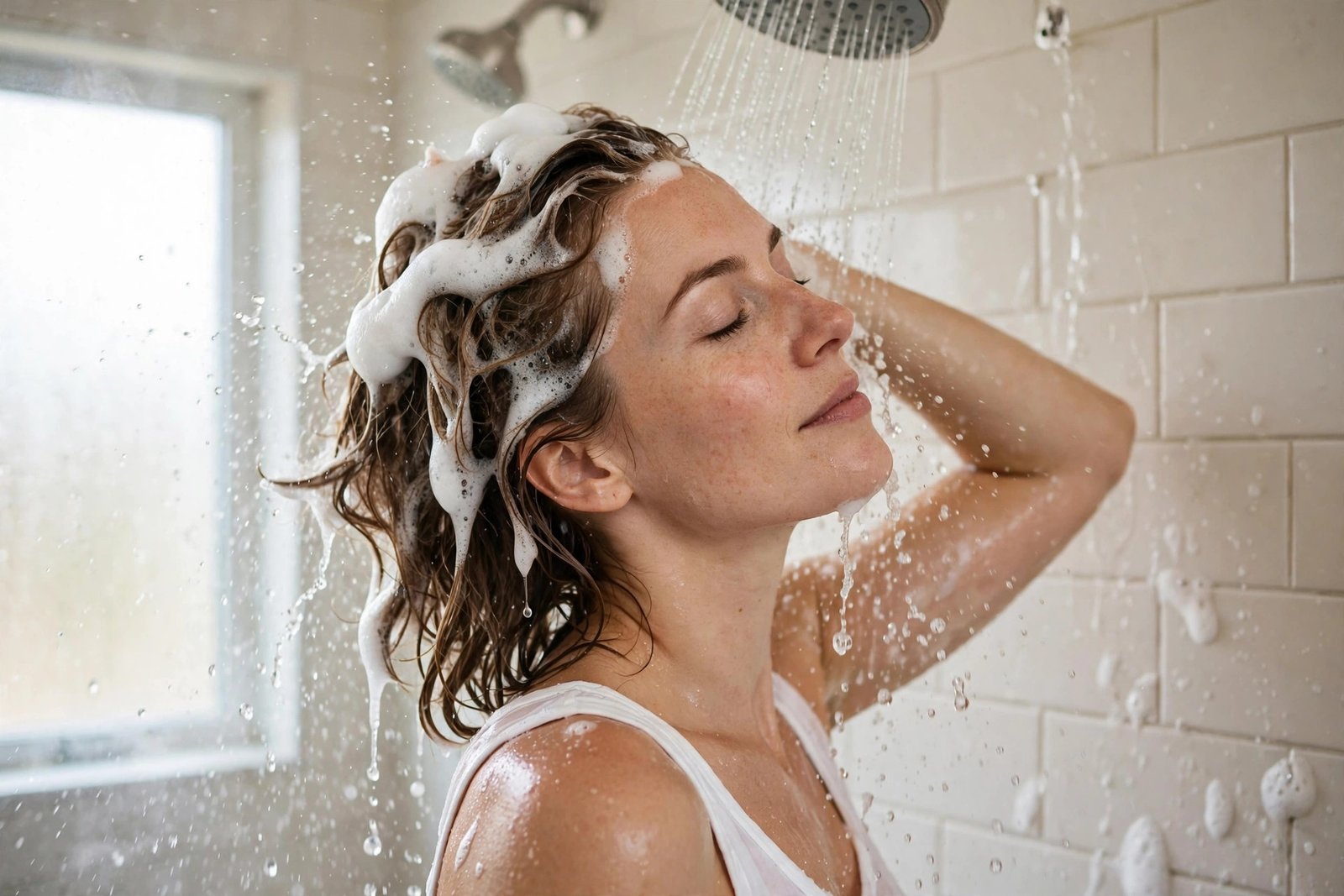
You’ve heard it both ways: “washing daily ruins your hair” and “scalp hygiene requires daily washing.” Both camps speak with total confidence, and both are half-right. Whether daily washing is bad for your hair depends on your hair type, your scalp, your water, and what “washing” actually means in your routine. Chicago adds its own variables — hard water, winter dryness, summer humidity. Here’s the nuanced truth.
What Shampoo Actually Does (and Doesn’t Do)
Shampoo’s job is removing sebum, sweat, dead skin, and product buildup from the scalp. Hair itself — the lengths — doesn’t need “washing”; it needs the runoff. The damage question is really about two things: how aggressively your shampoo strips the scalp’s natural oils, and how much mechanical and thermal stress the full wash-dry-style cycle puts on the hair shaft.
Modern sulfate-free shampoos are dramatically gentler than the harsh detergents of decades past. A gentle shampoo used daily causes far less damage than a harsh sulfate shampoo used twice weekly — the product matters more than the frequency. This is the detail most “never wash daily” advice ignores: it was formulated in the era of aggressive detergents.
Who Can Wash Daily (and Who Shouldn’t)
Daily washing is fine — even beneficial — for: oily scalps and fine hair (sebum travels fast down fine strands, making hair limp and scalp congested within 24 hours); people who exercise daily and sweat heavily; those with seborrheic dermatitis or dandruff (dermatologists often recommend frequent washing with medicated shampoo — leaving flakes and yeast on the scalp worsens the condition); and humid-climate dwellers where sweat and oil accumulate fast.
Daily washing is inadvisable for: dry, coarse, curly, or coily hair types (natural oils take days to travel down textured strands; daily washing strips what little moisture reaches the ends); chemically treated or color-treated hair (every wash fades color and stresses processed hair); and dry, sensitive scalps prone to eczema. These hair types typically thrive on 1–3 washes per week with co-washing or targeted scalp cleansing between.
The scalp-hair distinction is key: many people with dry ends but oily scalps can “wash daily” by shampooing only the scalp and letting the lengths get runoff — or by using dry shampoo strategically on non-wash days. Nutrition for hair and scalp health supports the internal side regardless of your wash frequency.
The Real Damage: It’s Not the Shampoo, It’s the Cycle
Here’s what the research actually shows: the damage associated with frequent washing usually comes from the full cycle, not the shampoo itself. Hot water (opens the cuticle excessively and strips color), aggressive towel-drying (mechanical breakage on wet, elastic hair), daily high-heat styling (cumulative thermal damage), and over-brushing wet hair. Someone who washes daily with lukewarm water, gentle shampoo, careful towel-squeezing, and air-drying does less damage than someone who washes twice weekly but blow-dries on max heat with no protectant both times.
Chicago’s hard water deserves special mention — the metro area has moderately hard water, and mineral buildup (calcium, magnesium) makes hair feel dry, dull, and tangly regardless of wash frequency. If your hair feels straw-like despite good products, try a chelating or clarifying shampoo monthly, or a shower filter. Many “my hair hates washing” complaints are actually hard-water complaints. The American Academy of Dermatology’s hair washing guidance covers water quality and technique factors that matter as much as frequency.
How to Wash Daily Without Damage (If It’s Right for You)
Use a gentle, sulfate-free shampoo matched to your scalp (not your ends). Shampoo the scalp only — massage with fingertips for 60 seconds, let the lather run down the lengths on rinse. Condition mid-lengths to ends every wash; deep-condition weekly. Keep water lukewarm. Squeeze (don’t rub) with a microfiber towel or cotton t-shirt. Apply heat protectant before any heat styling, and give hair heat-free days when possible.
Alternate strategically: even daily washers benefit from occasional co-wash days (conditioner-only cleansing, gentler) or water-only rinses after workouts. And watch the stress connection — chronic stress measurably increases shedding (telogen effluvium), and stressed daily-washers often blame the shampoo for what stress caused.
Co-Washing: The Middle Path
Co-washing (conditioner-only washing) deserves its own explanation because it’s widely misunderstood. Cleansing conditioners contain mild surfactants — enough to lift sweat and light oil, not enough to strip. For curly, coily, and dry hair types, co-washing between shampoo days maintains moisture while keeping the scalp reasonably fresh. But it’s not a shampoo replacement: co-wash-only routines without periodic clarifying lead to buildup (that gummy, dull feeling), and oily or dandruff-prone scalps generally need real shampoo. The balanced approach most curl specialists recommend: co-wash mid-week, clarify with real shampoo weekly or biweekly. Think of it as a spectrum, not a camp — and WebMD’s hair care resources describe how to match cleansing methods to hair type without the ideology.
Chicago Seasonal Strategy
Winter: scale back if you can — indoor heating plus cold air is brutal, and hats trap oil (making scalps feel dirtier faster, perversely). Dry shampoo on day two, silk-lined hats, humidifier at night. Consider a weekly scalp scrub in winter — dead skin accumulates faster in dry conditions, and a scrub keeps follicles clear between washes. Summer: wash as needed — humidity, sweat, and lakefront sunscreen-in-hair justify more frequent washing; just keep it gentle. The seasonal adjustment matters more than any fixed rule.
Conclusion
Daily hair washing isn’t inherently bad — it’s a tool that suits oily scalps, fine hair, active lifestyles, and dandruff-prone scalps, and harms dry, curly, color-treated, or sensitive-scalp hair. The damage people attribute to frequency usually comes from harsh products — so audit your shampoo before blaming your schedule. Know your scalp, choose gentle products, treat the lengths kindly, and adjust for Chicago’s seasons and hard water. The right frequency is the one where your scalp is comfortable, your hair looks good, and neither is complaining.
One caveat: if increased shedding, itching, or flaking persists no matter how you adjust frequency or products, see a dermatologist rather than continuing to experiment. Persistent issues can signal seborrheic dermatitis, psoriasis, or hormonal shedding that no wash schedule fixes on its own — and professional diagnosis beats another year of guessing.
Frequently Asked Questions
Is washing your hair every day bad?
It depends on hair type: fine for oily scalps, fine hair, daily exercisers, and dandruff-prone scalps (with gentle shampoo); inadvisable for dry, curly/coily, color-treated, or sensitive-scalp hair. Most damage attributed to frequency actually comes from harsh shampoo, hot water, and heat styling.
What happens if you wash your hair too often?
Over-stripping natural oils leads to dry, frizzy lengths, scalp rebound oiliness (overproduction compensating for stripping), color fade, and increased breakage — but “too often” varies by hair type, and gentle products raise the threshold significantly.
Is it better to wash hair in the morning or at night?
Neither is inherently better — it’s lifestyle. Morning washing gives volume and style control; night washing saves morning time but requires fully drying before sleep (sleeping on wet hair causes breakage and scalp issues). Never sleep on soaking-wet hair.
Does hard water damage hair?
Yes — mineral buildup from hard water (common in Chicago) makes hair dry, dull, tangly, and resistant to products. Use a clarifying or chelating shampoo monthly, consider a shower filter, and don’t blame your shampoo for what the water is doing.