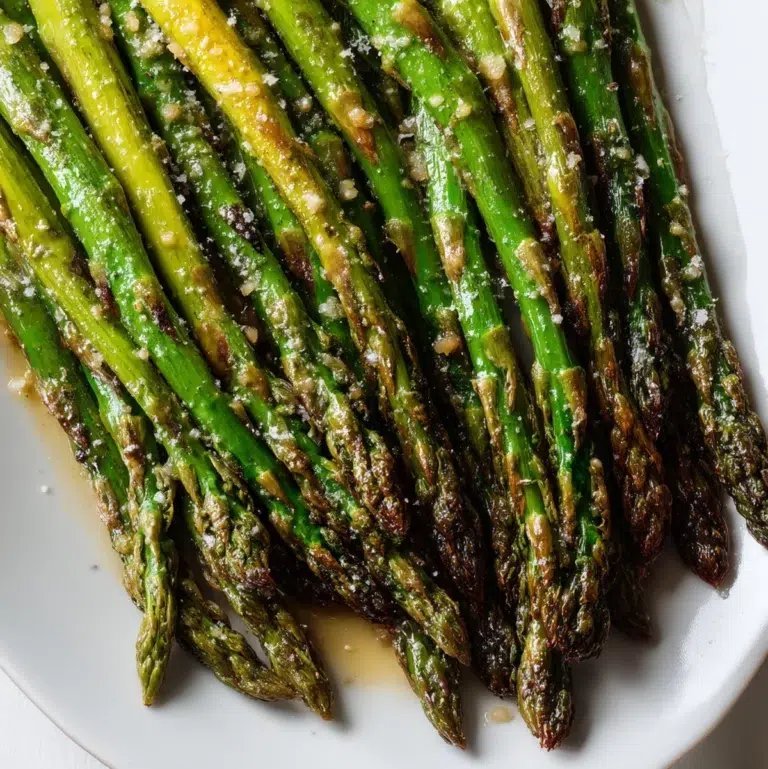
Mushy asparagus is a tragedy — olive-drab, limp, and tasting faintly of regret. The best way to cook asparagus so it is not mushy comes down to two things: high heat and short cooking times. Asparagus goes from crisp-tender to overcooked in about 90 seconds, so timing is everything.
I cook asparagus weekly in spring, and these three methods — roasting, blanching, grilling — have never let me down. Plus the prep trick that fixes woody ends for good.
Prep: Trimming Asparagus the Right Way
Snap off the woody ends — hold a spear near the bottom and bend; it breaks naturally where the tender part begins. Use that first spear as a guide to trim the rest with a knife (faster than snapping each one). For thick spears, peel the lower third with a vegetable peeler; the outer layer is fibrous and peeling it gives you tender results all the way down.
Wash and dry thoroughly. Wet asparagus steams instead of roasts, and steaming is the fast track to mush. Choose spears of similar thickness so they cook evenly — pencil-thin spears need barely 5 minutes while jumbo ones need 12. If your bunch is mixed, separate them by size. This is the same even-cooking logic I use when I freeze vegetables for later: uniform size, uniform results.
Roasting: The Best Way to Cook Asparagus Crisp
Toss trimmed spears with olive oil, salt, and pepper — just enough oil to coat — and spread them in a single layer on a baking sheet. Roast at 425°F for 8 to 12 minutes depending on thickness, shaking the pan once halfway through. They’re done when the tips are lightly crisped and a spear bends slightly but still has snap. The high heat caramelizes the natural sugars while the quick time keeps the interior crisp-tender.
Variations: add minced garlic in the last 3 minutes (it burns if added earlier), finish with lemon zest and parmesan, or wrap bundles in prosciutto for a dinner-party upgrade. Roasting is my default because it’s hands-off and nearly impossible to mess up as long as you don’t walk away — set a timer, because the line between perfect and mushy is thin.
- 425°F, single layer, 8-12 min depending on thickness
- Done when tips crisp and spears bend with snap
- Add garlic only in final 3 minutes to prevent burning
Blanching and Grilling Asparagus
Blanching is the method for asparagus salads and crudités: boil salted water, drop spears in for 2 to 3 minutes until bright green and just tender, then plunge into ice water immediately. The ice bath stops the cooking dead — skip it and residual heat pushes them into mush. Drain well and they’re perfect for salads or a quick sauté later.
Grilling gives you smoky char: toss with oil and salt, lay perpendicular to the grates (or use a grill basket), and grill over medium-high for 4 to 6 minutes, turning once. The direct heat chars the outside while the inside stays snappy — the same high-heat principle as grilling the perfect steak. Serve grilled asparagus with a squeeze of lemon and shaved parmesan; it’s the side dish that makes the whole plate look professional.
Why Asparagus Gets Mushy (and How to Rescue It)
Mushiness comes from overcooking breaking down the cell walls — once they’re gone, no technique brings back the snap. The usual culprits: boiling too long, crowding the pan (which drops the temperature and steams instead of roasts), and cooking thin and thick spears together. If you catch it early, an ice bath can halt the damage, but truly mushy asparagus has only one dignified fate: blend it into soup.
Honestly, asparagus soup from overcooked spears is delicious — simmer with onion and potato, blend with cream, and nobody knows it was a rescue mission. But with high heat, single layers, and a timer, you won’t need the rescue. Serve alongside crispy-skinned salmon for a 20-minute dinner that tastes like a restaurant.
Seasoning Ideas When You Cook Asparagus So It Is Not Mushy
Once you’ve nailed how to cook asparagus so it is not mushy, seasoning is where it gets fun. The classic trio — lemon, parmesan, and black pepper — works because acid, salt, and fat hit every taste bud; add them in the last minute so the lemon stays bright. Garlic butter (added in the final 2 minutes of roasting) is indulgent and foolproof. Balsamic glaze drizzled after cooking adds sweet-tart complexity that pairs beautifully with the char from grilling.
For something different: toss hot asparagus with miso butter (white miso + softened butter, 1:2 ratio) for umami depth, or with toasted sesame oil, sesame seeds, and a splash of soy for an Asian-inspired side. Crumbled bacon and a soft-poached egg turn it into a light lunch. Fresh herbs — dill, tarragon, chives — added after cooking keep their brightness. The rule: season simply when the asparagus is perfect (great produce needs little), and get creative when you need to rescue a slightly overcooked batch — bold flavors forgive a multitude of sins. EatingWell’s asparagus guide has more seasonal ideas worth trying.
Asparagus Soup From Any Spears
The rescue plan for asparagus that’s gone slightly too soft: soup. Simmer the spears (even the overcooked ones) with a diced onion and potato in broth for 15 minutes, blend until silky, and finish with cream and lemon. Overcooked asparagus makes better soup than perfect asparagus does — the broken-down cell walls blend smoother. It’s the dignified second life for any batch that missed the crisp-tender window.
For intentional soup, roast the asparagus first for deeper flavor, then blend. Top with the crispy tips reserved from roasting (roast a few extra spears and snip the tips for garnish), a swirl of cream, and cracked pepper. What started as a texture failure becomes the most elegant thing on the table — nobody needs to know it was a rescue mission.
The Bottom Line
Trim well, dry thoroughly, cook hot and fast — roast at 425°F, blanch 2-3 minutes with an ice bath, or grill 4-6 minutes. That’s the best way to cook asparagus so it is not mushy: bright green, crisp-tender, never sad.