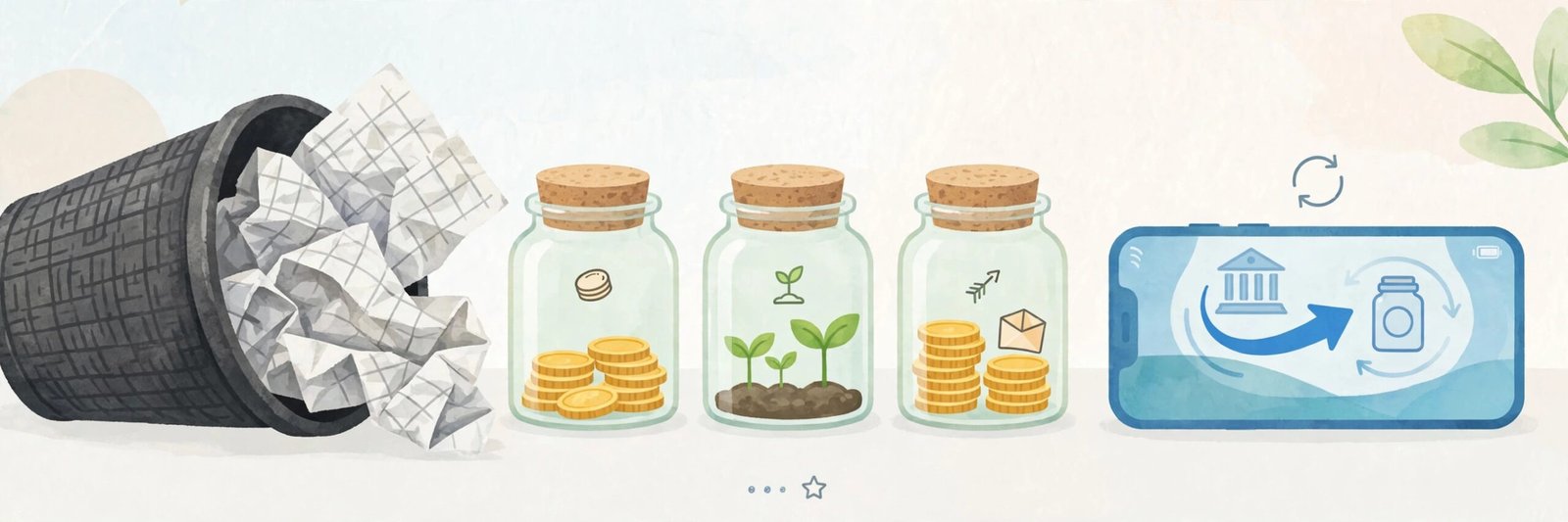
Let’s be honest: spreadsheets are where budgets go to die. You download a beautiful template, fill it in enthusiastically for eleven days, miss a weekend, and never open it again. The spreadsheet isn’t the problem — you are not a spreadsheet person, and no amount of color-coded cells will change that. The good news: some of the most effective budgeting systems ever devised involve zero spreadsheets, zero apps, and zero math beyond what you can do in your head.
This guide is for Chicagoans who want control of their money without becoming amateur accountants. Pick one system below, start this week, and join the ranks of people whose budgets actually survive contact with real life.
Why Spreadsheets Fail (It’s Not You)
Spreadsheet budgets fail for a structural reason: they demand ongoing manual data entry, which is a habit almost nobody sustains. Research on habit formation shows that systems requiring daily willpower collapse within weeks — and manual expense tracking is pure willpower. Every transaction becomes a homework assignment. Miss a few days and the guilt makes you avoid the spreadsheet entirely, which is worse than never starting.
The systems that work share one trait: they front-load the effort and automate the rest. Set it up once, let structure do the work, check in occasionally. If a budgeting method needs you to be disciplined every single day, it’s badly designed — for humans, anyway. Choose the system below that matches your personality, not the one that looks most impressive.
System 1: The 50/30/20 Rule (The “Good Enough” Champion)
The simplest legitimate budget in existence: 50% of take-home pay to needs (rent, groceries, bills, minimum debt payments), 30% to wants (dining out, hobbies, fun), 20% to savings and extra debt payments. No tracking every coffee — just three buckets, checked monthly. If your Chicago rent eats 50% alone (common), adjust the ratios to fit reality — 60/20/20 still beats no system.
Implementation without spreadsheets: set up automatic transfers on payday — 20% to savings before you see it, bills on autopay from the needs account, and whatever’s left is guilt-free spending. Park that automatic savings in an account that’s actually protected — the FDIC’s consumer resources show how to verify your bank’s insurance coverage. One monthly 10-minute check: are the buckets roughly right? That’s the entire system. Our full breakdown of the 50/30/20 budgeting rule covers the nuances, but the headline is: this works because it’s simple enough to survive.
System 2: Pay Yourself First (The Laziest Effective Method)
Even simpler: decide a savings amount, automate its transfer on payday, and spend the rest freely with zero tracking. Save $400/month? Set the auto-transfer, then live your life. This inverts traditional budgeting — instead of tracking spending to find savings, you secure savings first and let spending sort itself out.
It works because it harnesses inertia instead of fighting it: the money leaves before temptation arrives. The risk is lifestyle creep absorbing the remainder — if spending consistently exceeds what’s left, increase the auto-save gradually ($25/month bumps are painless) rather than adding tracking. For most spreadsheet-haters, this single automation outperforms every budgeting app ever downloaded.
System 3: The Cash Envelope System (Nuclear Option)
For chronic overspenders, nothing beats physical cash. Withdraw your discretionary spending money in cash each payday, divide it into envelopes labeled Groceries, Fun, Gas, etc. When an envelope’s empty, that category is done until next payday. No willpower required at the register — the envelope makes the decision.
Yes, it’s old-fashioned. Yes, it works absurdly well — studies consistently show people spend 12–20% less with cash than cards, because handing over physical bills triggers the “pain of paying” that cards numb. Modern twist: use a separate debit card per category instead of literal envelopes if cash feels archaic. The mechanism (hard category limits) matters more than the medium.
System 4: The “One Number” Budget
Calculate: monthly take-home minus fixed bills minus savings goal equals your spendable number. That’s it — one number. $1,200/month for everything discretionary. Track only that single number (a banking app’s spending summary does it automatically), and as long as you stay under it, every purchase is pre-approved. No categories, no guilt about lattes versus lunches — just one ceiling.
This is the system for people who hate detail but want a guardrail. Most banking apps (Chase, Capital One, and Chicago’s local banks all offer this) show running monthly spend by category automatically — glance weekly, adjust if you’re trending over. Pair it with bill autopay and you’ve got a complete financial system requiring maybe 15 minutes a month. For building the tracking habit painlessly, our roundup of the best free habit-tracking apps applies surprisingly well — budgeting is a habit, and habit tools work on money too.
When to Actually Use an App (The Exception)
Some spreadsheet-haters do fine with the right app — the key is picking one that automates rather than demands. YNAB (You Need A Budget) is the gold standard for reformed overspenders willing to spend 30 minutes weekly; its “give every dollar a job” philosophy is envelope budgeting digitized. Monarch Money and Copilot offer beautiful automatic tracking for the hands-off crowd. Mint’s shutdown scattered users, but its replacements are arguably better.
The test for any app: does it reduce your effort or increase it? If you’re manually categorizing transactions nightly, the app failed — switch systems. The best budgeting tool is the one you’ll still be using in six months, which for most people means the simplest one, not the most powerful. And whatever you choose, the CFPB’s guidance on tracking spending offers solid principles that work with any system.
Conclusion
Budgeting without spreadsheets isn’t a compromise — it’s an upgrade. The 50/30/20 rule, pay-yourself-first automation, cash envelopes, or the one-number budget all outperform elaborate spreadsheets because they survive real life: no daily data entry, no guilt spirals, no abandoned templates. Pick the one that fits your personality, automate what you can, and check in monthly. If your first pick doesn’t stick after a month, try another — the failure is in the fit, not in you. Your money doesn’t need a spreadsheet. It needs a system you’ll actually use.
Frequently Asked Questions
How do I start a budget when I hate spreadsheets?
Pick a no-tracking system: the 50/30/20 rule (three buckets), pay-yourself-first automation (save first, spend the rest), cash envelopes (hard category limits), or the one-number budget (single monthly ceiling). All work without spreadsheets.
What is the simplest budgeting method?
Pay yourself first: automate a savings transfer on payday and spend the rest freely. One setup step, zero ongoing tracking, and it guarantees savings happen — which is the entire point of budgeting.
Does the 50/30/20 rule work in expensive cities like Chicago?
Yes, with adjusted ratios — Chicago rents often push needs above 50%, so 60/20/20 or similar adaptations are fine. The principle (cap wants, automate savings) matters more than exact percentages.
Are budgeting apps better than spreadsheets?
For most people, yes — good apps automate tracking instead of demanding manual entry. But the best system is the simplest one you’ll sustain; an app you abandon is worse than envelopes you use.
How often should I check my budget?
Monthly, 10–15 minutes: verify buckets are roughly right, adjust for life changes, done. Daily checking is unnecessary with automated systems and often counterproductive — it turns budgeting into anxiety.