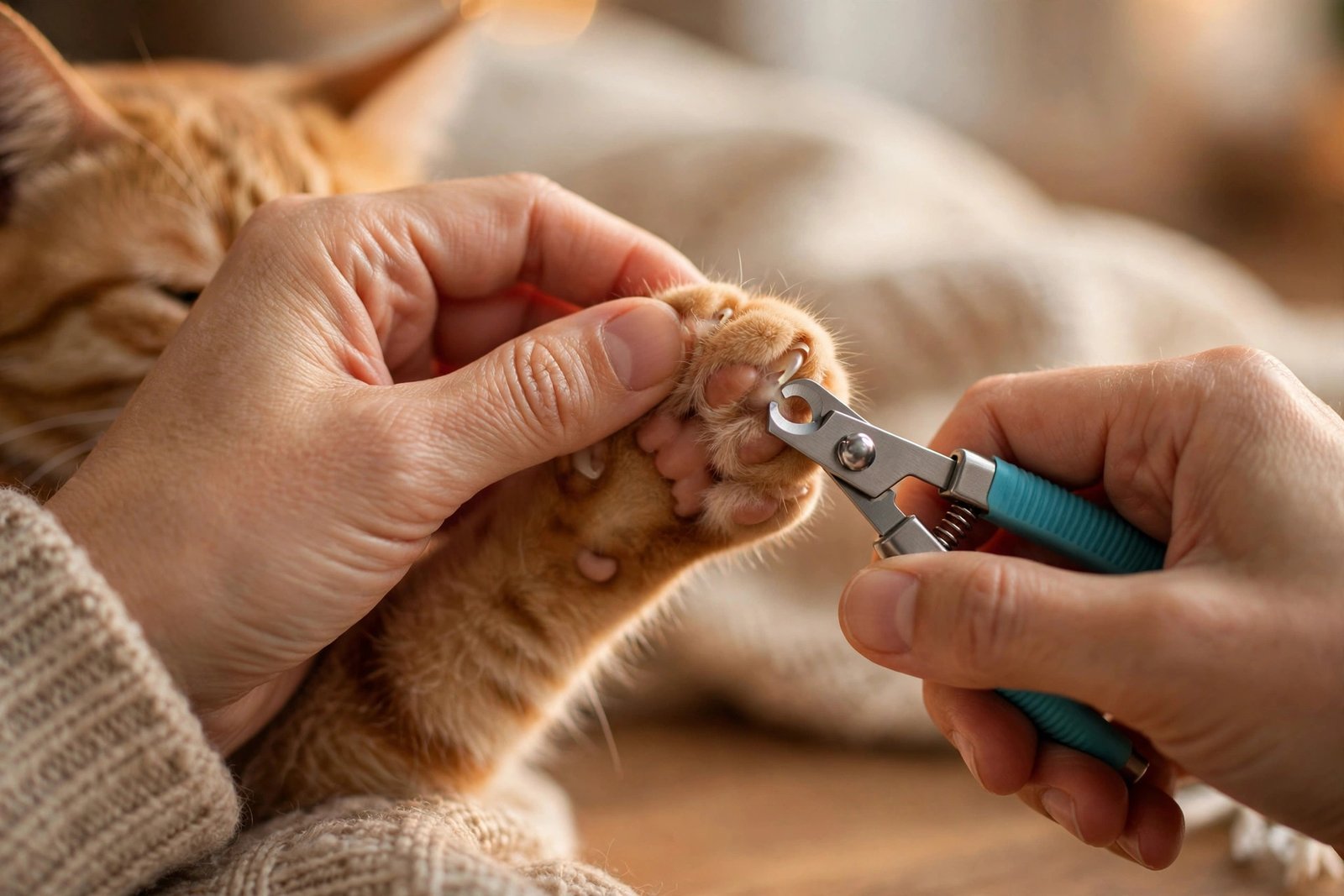
There’s a special kind of dread that comes with the nail clippers emerging from the drawer — yours, not the cat’s. The cat, sensing your tension, is already under the bed. Trimming a cat’s nails without getting scratched feels like defusing a bomb, but it’s actually a skill with a clear method: the right setup, reading feline body language, and knowing that stopping early is a strategy, not a failure.
Below is the complete technique — tools, positioning, the two-person and solo methods, the “one paw per day” rule that changes everything, and what to do when it goes wrong (because sometimes it will).
Why Cats Hate Nail Trims (It’s Not Spite)
Cats’ paws are extraordinarily sensitive — packed with nerve endings that make them excellent hunters and terrible pedicure clients. Being restrained triggers a prey animal’s panic response, and past bad experiences (a quicked nail, a forced hold) create lasting associations. Understanding this reframes the task: you’re not battling a difficult cat, you’re asking a sensitive animal to tolerate something unnatural. Patience isn’t just kinder — it’s faster, because a calm cat is trimmable and a panicked one isn’t.
Start by decoupling the clippers from the event. For a week before your first real attempt, touch and gently press your cat’s paws during calm cuddle sessions, rewarding with treats. Let them sniff the clippers. Clip one nail, treat lavishly, and stop. You’re building a new association: paw handling predicts chicken, not trauma. The ASPCA’s cat grooming guidance stresses this desensitization approach for exactly this reason.
The Right Tools (and the Ones to Avoid)
Use scissor-style or guillotine cat nail clippers — sharp ones. Dull clippers crush the nail instead of cutting it, which hurts and teaches the cat that trims are awful. Human nail clippers work for kittens but can split adult cat nails. Have styptic powder on hand before you start, not after you need it. Good lighting is non-negotiable: you must see the quick — the pink vein inside the nail. On dark nails where the quick is invisible, trim only the sharp hooked tip, erring conservative.
Set up in a quiet room with the door closed (a bolted cat mid-trim is a scratched owner). Many Chicago owners do trims in the bathroom — small, easy to block exits, and tile floors make cleanup simple. Keep treats within reach. If you’re new to cats entirely, read the best way to introduce a new cat to your home first — a settled, trusting cat is dramatically easier to handle.
The Technique, Step by Step
Position the cat in your lap facing away from you, or on a table with a non-slip mat. Gently press the top and bottom of one toe to extend the claw. Identify the quick, then clip only the sharp tip — about 2 millimeters past where the nail starts to curve, staying well clear of the pink. One smooth, confident cut beats hesitant nibbling. Treat after each paw, or even each nail for nervous cats.
The solo method that works best: wait until the cat is sleepy — post-nap, not post-zoomies. Drape the cat across your lap, trim what you can calmly, and stop at the first sign of real stress (see below). The two-person method: one person holds and treats while the other trims. Some owners swear by the “burrito” — wrapping the cat in a towel with one paw exposed — for truly resistant cats; it prevents scratching without the death-grip that escalates panic.
The One-Paw-Per-Day Rule
This is the technique that changes everything for scratch-prone households: you don’t have to do all four paws in one session. Trim one paw today, another tomorrow. Ten calm nails across four days beats forty nails in one traumatic session that makes next month impossible. Professional groomers do marathons; smart owners do maintenance. Trimming every two to three weeks keeps nails short enough that each session is quick.
Reading the Body Language: When to Stop
Cats broadcast their limits clearly if you watch: tail lashing, skin rippling along the back, ears flattening, growling, or the sudden freeze that precedes an explosion. The Cornell University’s Feline Health Center emphasizes recognizing stress signals early — pushing past them teaches the cat that warnings don’t work, so they skip straight to biting next time. Stop at the first tail-lash, treat, and release. You can always finish tomorrow; you can’t un-teach a traumatic session.
Never punish a cat for resisting. Scruffing, yelling, or forced restraint might get today’s nails done but guarantees next month is worse. This is also why the environment matters so much: a calm room, a sleepy cat, and treats staged in advance turn nail trims from a wrestling match into a two-minute routine. Many owners find that pairing trims with an existing calm ritual — right after evening cuddle time, for instance — makes the cat barely register what’s happening. Consistency of context builds the habit for both of you. If your cat is truly unhandleable, that’s useful information — not failure. It means the job belongs to your vet or a professional groomer, ideally with the vet’s guidance on whether mild sedation for nail trims is appropriate for severely anxious cats.
If You Cut the Quick
It happens to everyone eventually. Don’t panic — apply styptic powder with gentle pressure for a few seconds and it will stop. If you don’t have styptic powder, cornstarch works in a pinch. The cat will forgive you faster if you stay calm, offer a high-value treat, and end the session on that note rather than pushing through the remaining nails while you’re both rattled. Keeping a tidy home around shedding season is a separate battle — see the best schedule for cleaning a house with pets.
Conclusion
Trimming your cat’s nails without getting scratched comes down to preparation over force: desensitize paw handling for a week, use sharp proper clippers in good light, trim only the hooked tip clear of the quick, work when the cat is sleepy, and embrace the one-paw-per-day rule. Read the tail, respect the warnings, and stop early — a calm partial trim beats a traumatic complete one every time. And if your cat’s temperament truly won’t allow it, handing the job to a professional is responsible ownership, not defeat.
Frequently Asked Questions
How often should I trim my cat’s nails?
Every two to three weeks for most indoor cats. Outdoor cats that climb and scratch naturally may need less frequent trims. If you can hear clicking on hard floors, they’re overdue.
Should I trim my cat’s back claws too?
Yes, though they’re usually less sharp since back claws get less use. They’re also harder to access — many owners do front paws weekly and back paws monthly. The same quick-avoidance rules apply.
Are nail caps a good alternative to trimming?
Soft nail caps can work for cats that won’t tolerate trimming, but they need replacing every 4–6 weeks, some cats chew them off, and they don’t suit every cat. Discuss with your vet whether they’re appropriate for yours.
My cat only lets the vet do it — is that okay?
Absolutely. A vet or groomer trim every few weeks is a perfectly valid plan, especially for senior or anxious cats. Mention it at regular checkups so it becomes routine rather than a special stressful trip.