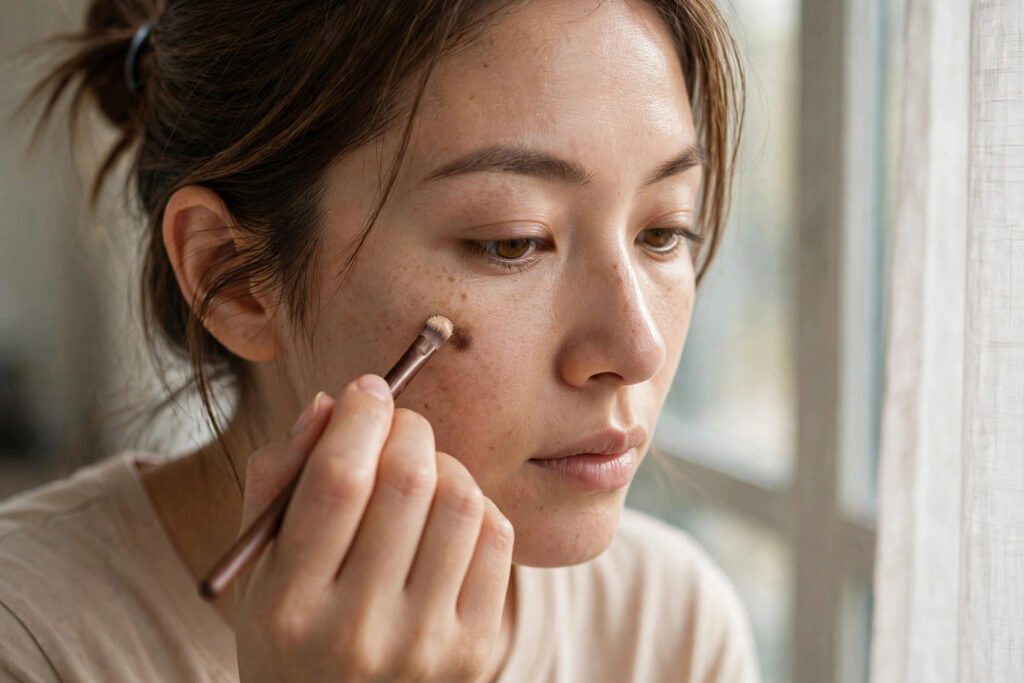
Your foundation looked flawless at 8 a.m. By 3 p.m. it’s sitting on your skin like drywall — cakey, cracked, emphasizing every pore and line. The afternoon cake-up is the most common foundation complaint, and it’s almost never the foundation’s fault alone. It’s a chain reaction starting with morning prep and ending with midday oil, and every link is fixable. Here’s the full diagnosis and cure.
Why Foundation Cakes: The Five Causes
1. Too much product. The number-one cause, full stop. Thick layers of foundation dry down into a mask that cracks with facial movement. Most people use 2–3 times what they need — a pea-sized amount covers the whole face when applied properly.
2. Wrong formula for your skin type. Matte full-coverage foundation on dry skin cakes by noon; dewy foundation on very oily skin breaks down into patchy cake. The formula must match the skin — this mismatch causes more caking than any application error.
3. Skipping or rushing prep. Foundation applied over dry, unexfoliated, unmoisturized skin has nothing to grip smoothly — it sits on texture and emphasizes it. Conversely, foundation over still-tacky moisturizer never sets properly and cakes as it dries unevenly.
4. Powder overkill. Setting the entire face heavily with powder, then touching up with powder throughout the day, builds the layer cake literally. Each powder application adds another dry layer.
5. Dehydrated skin underneath. When skin is dehydrated, it pulls moisture from the foundation above it, leaving the pigments and powders behind as cake. Chicago winter is peak season for this — indoor heating dehydrates skin relentlessly.
The Morning Fix: Prep and Application
Exfoliate regularly (1–3x/week with a chemical exfoliant) — smooth skin takes foundation smoothly. This is the most skipped step and the highest-impact one for chronic cakers.
Moisturize properly and wait. Apply moisturizer to damp skin, then wait 3–5 minutes until it’s fully absorbed — not tacky. The tackiness test: press a fingertip to your cheek; if it sticks slightly, wait longer. Foundation over tacky base is the fastest route to afternoon cake.
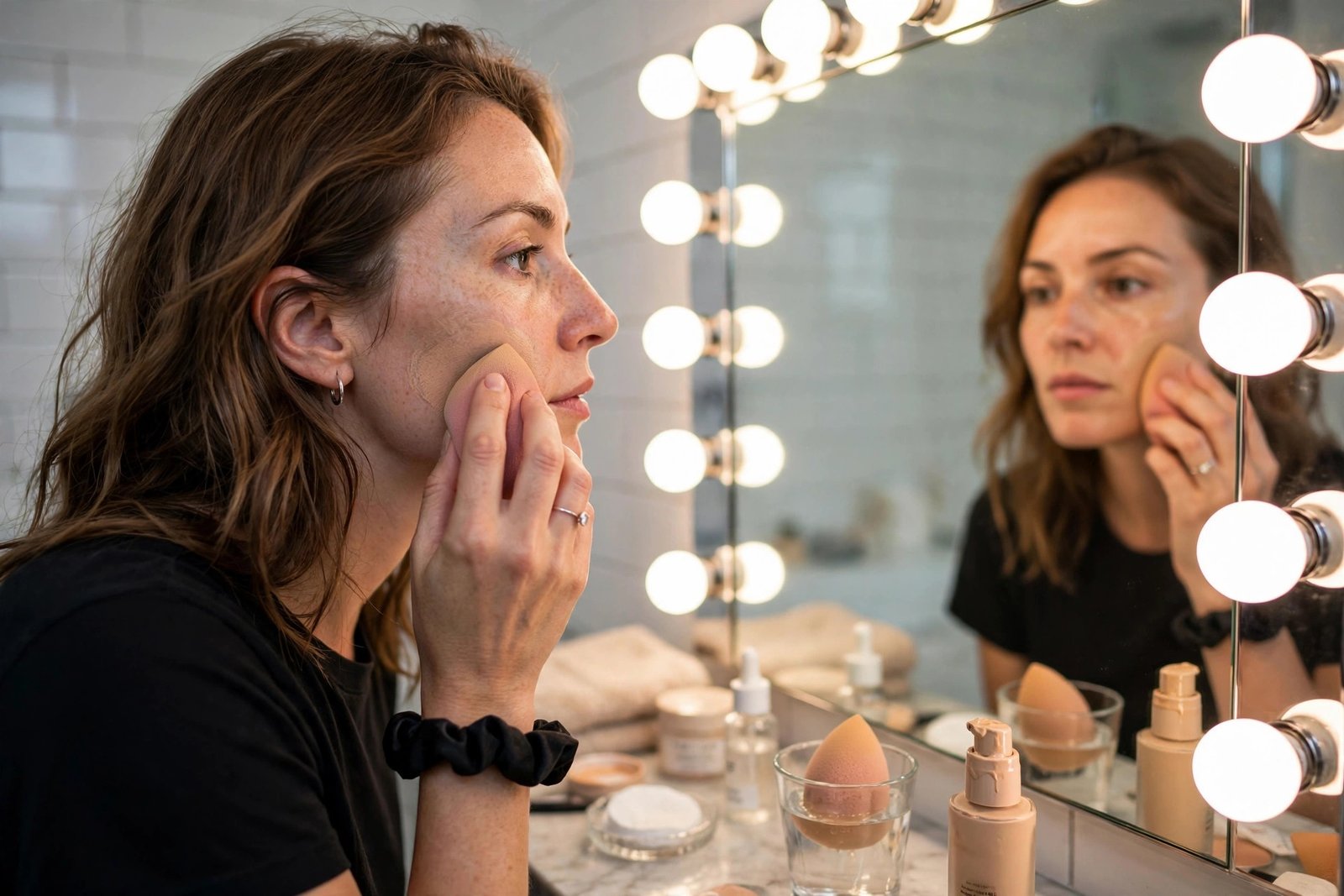
Use less foundation, applied in thin layers. Dot small amounts on forehead, cheeks, nose, chin — then blend outward with a damp sponge (pressing/ bouncing motions, not dragging). Build coverage only where needed (redness, spots) rather than applying a second full layer. The damp sponge sheers the product to a skin-like finish automatically.
Match formula to skin. Dry skin: hydrating, serum, or dewy-finish foundations. Oily skin: oil-free, long-wear, or matte (but lightweight matte, not mask matte). Combination: hydrating formula with strategic powder only on the T-zone. And sunscreen underneath should be a gel or fluid formula that sets fully — heavy sunscreens that never quite dry are a hidden caking culprit.
Setting Without Caking
Set strategically, not globally. Press a small amount of finely-milled translucent powder only where you get oily or where makeup moves (usually T-zone), using a fluffy brush — never the whole face. For dry skin, skip powder entirely and use setting spray: mist, then press with a damp sponge. The spray sets without adding dry layers.
The American Academy of Dermatology’s cosmetic guidance notes that heavy powder routines emphasize texture and fine lines — particularly relevant as skin matures. If your caking worsened after 35, the powder is the first suspect, not the foundation.
The 3 P.M. Rescue Protocol
Already cakey? Don’t add more product — that’s how layer cakes are built. Instead: press a damp sponge (or a tissue lightly misted with setting spray or even water) firmly over the cakey areas. The moisture reactivates the foundation, letting you press it back into a smooth finish. Blot excess oil first with blotting papers if shine is part of the problem. Then — only if needed — press the tiniest amount of powder on the T-zone. This 60-second reset looks like a fresh application.
Prevent the cycle: carry blotting papers, not powder, for midday touch-ups. Papers remove the oil that breaks foundation down without adding product. Powder touch-ups are for the T-zone only, and only after blotting.
Tools Matter: Sponge vs. Brush vs. Fingers
Your application tool changes how much product ends up on your face — and therefore how much can cake. Damp beauty sponges sheer product out automatically, deposit the thinnest layer, and are the best anti-caking tool available. They absorb some product (the trade-off), but the skin-like finish is worth it for cake-prone skin. Foundation brushes (dense buffing brushes) apply more product with more coverage — better for full-coverage needs, worse for caking risk. Use light pressure and buff, don’t paint. Fingers warm the product for easy blending and work well for sheer formulas, but deposit unevenly and transfer oils — fine for tinted moisturizer, poor for full-coverage foundation.
The hybrid method cake-prone people swear by: apply with fingers or brush for placement, then bounce a damp sponge over everything to sheer it down and press it in. You get the coverage where you placed it with the sponge’s skin-like finish everywhere. Clean tools weekly — dirty sponges harbor bacteria and apply product patchily, which reads as caking. Healthline’s makeup application guides compare tool techniques with dermatologist input on hygiene.
Chicago’s Seasonal Caking Patterns
Winter caking is dehydration-driven: indoor heating sucks moisture from skin all day, and by afternoon the foundation is sitting on a drier canvas than the morning. Fix: richer nighttime moisturizer, hydrating serum under foundation, humidifier at home, and winterizing against dry indoor heating — the environment is part of the makeup equation. Summer caking is oil-and-humidity-driven: switch to lighter, long-wear formulas, set the T-zone properly, and blot midday. Same symptom, opposite causes, opposite fixes — which is why seasonal formula switching matters.
Conclusion
Afternoon caking is a system failure, not a product failure: too much product, wrong formula for skin type, rushed prep, powder overkill, and dehydrated skin underneath. Fix it in order — exfoliate regularly, moisturize and wait for full absorption, use half the foundation in thin sponge-pressed layers, set only the T-zone, and rescue midday with moisture-pressing instead of more powder. Adjust seasonally for Chicago’s dehydration winters and humid summers. Foundation should look like skin at 5 p.m., not like a renovation project. Now it will.
Frequently Asked Questions
Why does my foundation look cakey after a few hours?
The five causes: too much product, wrong formula for your skin type, foundation applied over tacky moisturizer, excessive powder, and dehydrated skin pulling moisture from the foundation. Most cases involve at least three of these simultaneously.
How do I stop foundation from caking on dry skin?
Exfoliate 1–3x weekly, apply moisturizer to damp skin and wait for full absorption, use a hydrating/serum foundation in thin layers with a damp sponge, skip powder or use setting spray instead, and run a humidifier in dry environments.
Should I use powder if my foundation cakes?
Less powder, more strategically — only on the T-zone with a fluffy brush, never the whole face. For dry or mature skin, replace powder with setting spray pressed in with a damp sponge. Midday, blot with papers before considering any powder touch-up.
How do I fix cakey foundation without redoing my makeup?
Press a damp sponge (or tissue misted with setting spray) firmly over cakey areas — the moisture reactivates the foundation for a smooth re-blend. Blot oil first with blotting papers. Don’t add more foundation or powder; that builds the cake further.