Ask three Chicago dog owners how often they bathe their pup and you’ll get four answers — and at least one person insisting you’re doing it wrong. The anxiety is understandable: bathe too rarely and your couch tells the story; bathe too often and your dog’s skin turns flaky and itchy, especially when Chicago’s furnace-dry winter air is already stealing moisture. So what’s the real schedule? It depends on your dog’s coat, lifestyle, and the season — but there are clear rules vets agree on.
This guide gives you the breed-by-breed framework, the Chicago winter adjustment most owners miss, the shampoo and technique details that prevent dryness, and the warning signs that mean “call the vet, not the groomer.”
The Real Answer: Every 4–8 Weeks for Most Dogs
For the average healthy dog, the AKC’s bathing frequency guidance lands at roughly once a month — a range of every four to eight weeks. But “average” hides enormous variation. Oily-coated breeds like Basset Hounds may need baths every one to two weeks, while double-coated breeds like Huskies and Malamutes often do best with baths only every two to three months, since over-washing strips the natural oils their coat depends on. Hairless breeds are the extreme exception, sometimes needing weekly baths.
Lifestyle matters as much as breed. A dog that hikes the lakefront trails and swims will need more frequent baths than a couch-loving senior. Dogs with skin conditions follow their vet’s medicated schedule, not the internet’s. And puppies under eight weeks generally shouldn’t be bathed at all unless truly filthy — spot-clean instead. When in doubt, the sniff-and-feel test beats the calendar: if the coat feels greasy or smells despite brushing, it’s bath time.
The Chicago Winter Adjustment
Here’s what national guides don’t tell you: Chicago winters are brutal on dog skin. Forced-air heating drops indoor humidity to desert levels, road salt irritates paws and bellies, and the combination means winter is when over-bathing damage shows up fastest. From December through March, stretch your dog’s bath interval by two to four weeks if you can, and compensate with more frequent brushing — which distributes natural oils and removes dirt without water.
Winter paw care is non-negotiable: rinse or wipe paws after every salty walk, consider booties for sensitive dogs, and apply a paw balm before walks. If your home runs dry, a humidifier in the room where your dog sleeps helps their skin as much as yours. And post-bath in winter, dry thoroughly — a damp dog in a cold apartment is a recipe for chills and itchy skin.
Choosing a Shampoo That Won’t Dry the Skin
Human shampoo is the number-one cause of bath-related dryness — our skin’s pH is more acidic than a dog’s, so human products disrupt their skin barrier. Use a dog-specific shampoo, and for dry-prone dogs choose an oatmeal-based or moisturizing formula. The ASPCA’s dog grooming tips emphasize lukewarm water (hot water strips oils faster) and thorough rinsing — leftover shampoo residue is a hidden itch trigger that owners blame on “sensitive skin.”
Skip the scented “deep-cleaning” formulas for routine baths; they’re the harshest. A gentle, soap-free cleanser used regularly beats a harsh clarifying shampoo used rarely. And conditioner isn’t just for show dogs — a light dog conditioner after shampooing replaces moisture, particularly for long-haired breeds and winter baths.
The Technique: How You Bathe Matters as Much as How Often
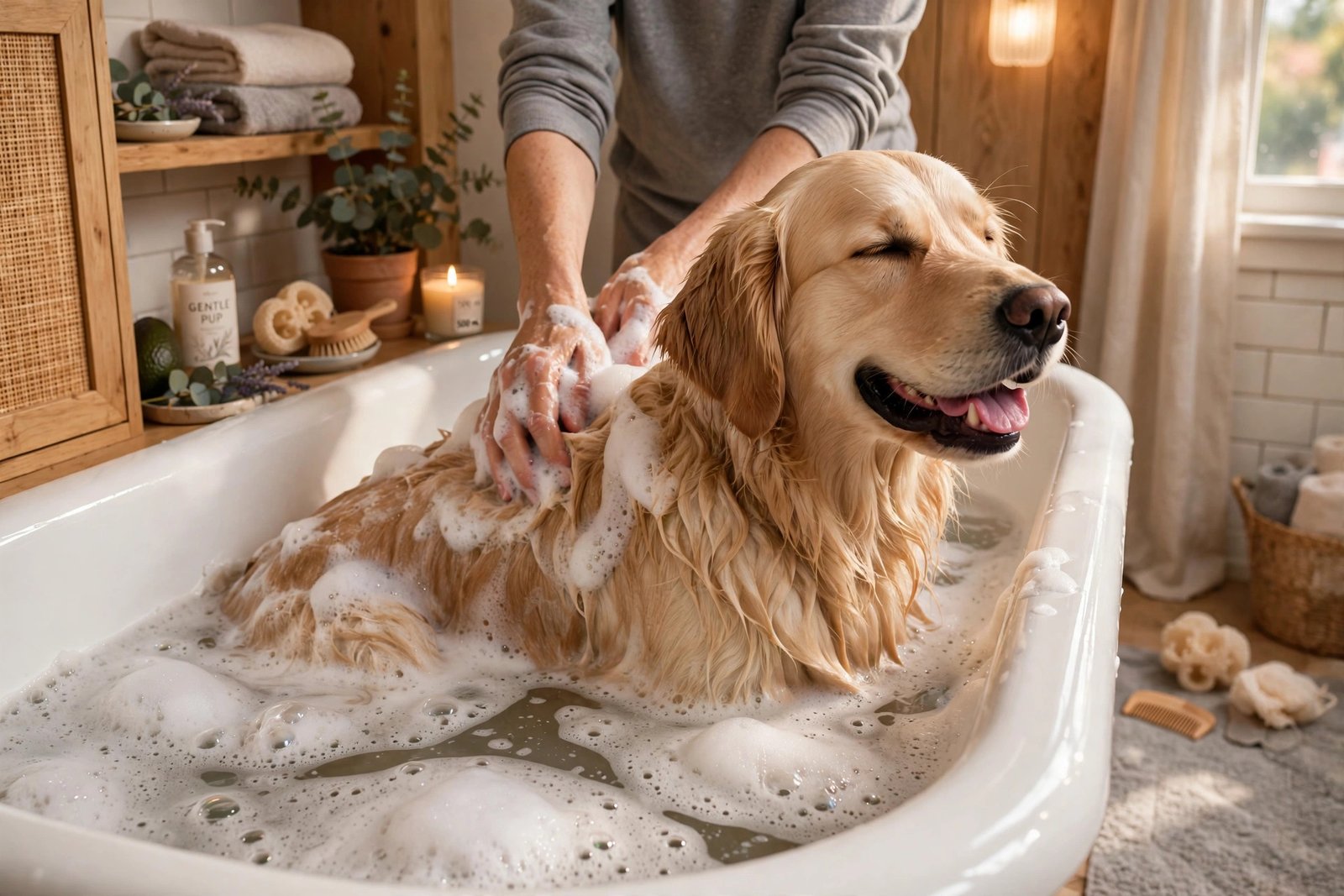
Brush thoroughly before the bath — water tightens tangles into mats. Wet the coat completely, then apply shampoo from neck to tail (never pour directly on the face; use a damp cloth for the face). Massage with your fingertips, not nails, for a full two to three minutes so the cleanser actually works. Rinse until the water runs completely clear and the coat squeaks slightly — then rinse once more. Most owners under-rinse, and residue is the itch culprit.
Dry with an absorbent towel using a blotting motion, not vigorous rubbing which tangles long coats. A blow dryer on the coolest, lowest setting held at a distance works for thick coats; let the dog air-dry in a warm room otherwise. Finish with a thorough post-bath brush-out once fully dry. Between baths, brushing is your secret weapon: a five-minute brush-out two or three times a week removes loose dirt, prevents mats, and distributes the skin’s natural oils down the hair shaft — which is precisely what keeps the coat soft and flake-free without water. For double-coated breeds, an undercoat rake during spring and fall shedding season does more for odor and cleanliness than an extra bath ever will. Think of brushing as maintenance and bathing as a reset; dogs with diligent brushing routines can comfortably stretch toward the longer end of the four-to-eight-week range, which is exactly what dry Chicago winters demand. If you’re weighing dog ownership generally, check the best low-maintenance pets for busy professionals — grooming demands vary enormously by breed. Apartment dwellers should also see keeping a small dog happy in an apartment all day, and the best flooring for homes with dogs and kids if bath-day shake-offs are redecorating your floors.
Warning Signs: When It’s Not Just Dry Skin
Some flakiness is normal in winter. But see your vet if you notice persistent scratching, red or inflamed patches, hot spots, hair loss, a yeasty or unusually foul odor, or dandruff that doesn’t improve with gentler bathing. These can signal allergies (extremely common in Chicago, where ragweed season is fierce), bacterial or yeast infections, or thyroid issues. Don’t just bathe more frequently hoping it resolves — over-bathing an infected or allergic dog makes everything worse.
Conclusion
Most Chicago dogs thrive on a bath every four to eight weeks — less in winter, adjusted for coat type and lifestyle — with a gentle dog-specific shampoo, lukewarm water, and a truly thorough rinse. Brush more, bathe thoughtfully, protect paws from road salt, and run a humidifier in the dry months. Your dog’s skin will tell you when the schedule is right: a soft, flake-free coat with no scratching. And when in doubt, your vet’s advice beats any calendar — including this one.
Frequently Asked Questions
Can I bathe my dog with Dawn dish soap in an emergency?
Wildlife rescuers use it for oil spills, but it’s far too harsh for routine use — it strips natural oils aggressively. In a true emergency (skunk, grease), a single use is fine, followed by a moisturizing dog shampoo. Never make it a habit.
Why does my dog smell bad just days after a bath?
Persistent odor despite bathing often signals a skin infection, yeast overgrowth, ear infection, or dental issues — not a need for more baths. See your vet rather than increasing bath frequency.
Should I bathe my dog before or after a haircut?
Groomers generally prefer bathing before the cut — clean hair cuts more evenly. For at-home trims, bathe first, dry completely, then trim. Never cut a matted coat without addressing the mats first.
Is it okay to use dry shampoo on dogs between baths?
Dog-specific waterless foams and wipes are fine for touch-ups between baths, especially for paw and belly wipe-downs after salty Chicago walks. They’re a supplement to bathing, not a replacement.