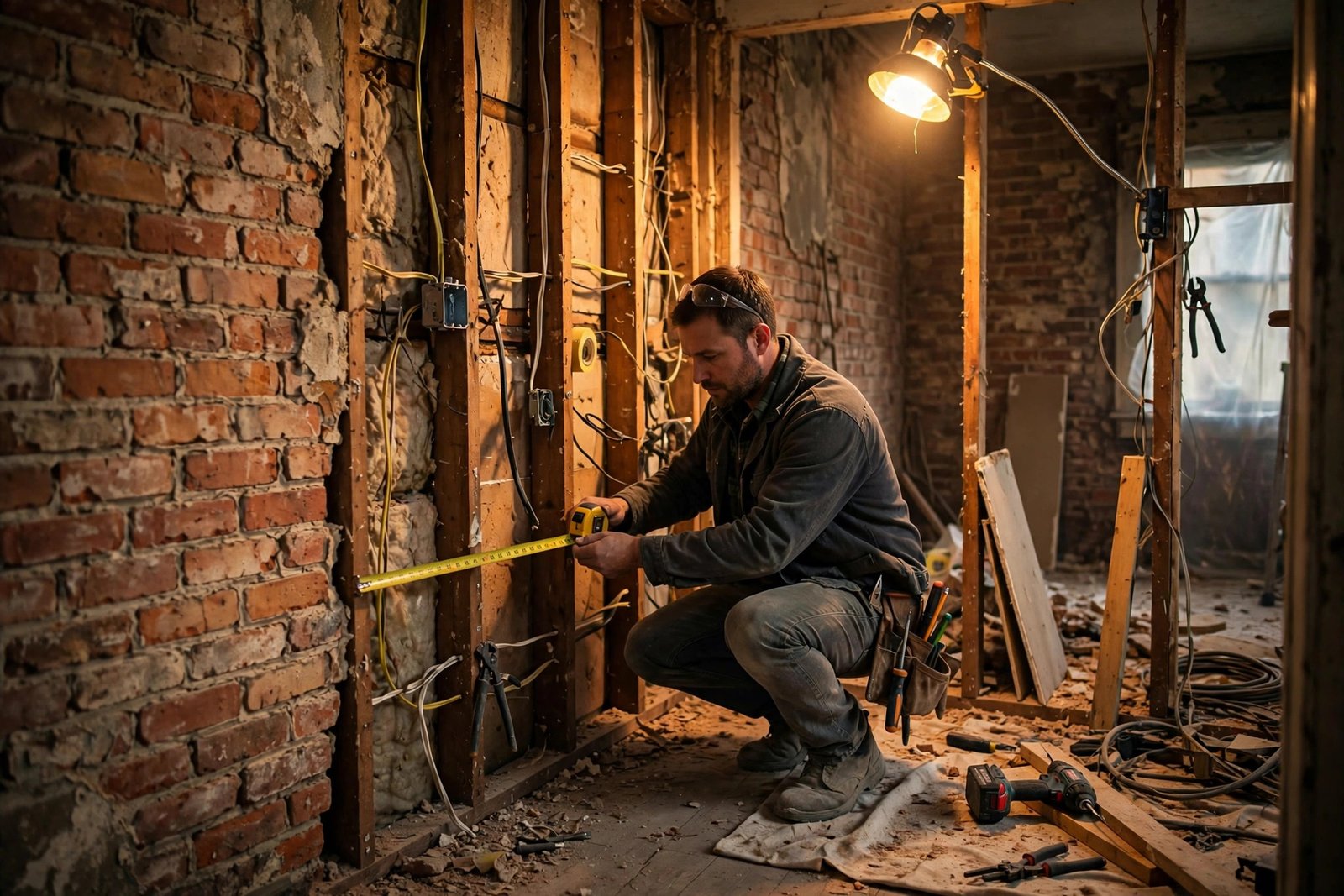
That charming brick two-flat in Pilsen listed at $289,000 looks like a steal — until the inspection reveals knob-and-tube wiring, a 40-year-old furnace, and a foundation crack that makes your stomach drop. This is the fixer-upper dilemma every Chicago buyer faces: the discount is real, but so are the costs hiding behind the drywall. Estimating renovation costs before you buy is the difference between building equity and buying yourself a money pit. Here is how to build a realistic budget before you make an offer.
Start With Chicago’s Real Price Ranges, Not National Averages
National renovation cost guides are misleading in Chicago because labor rates, permit fees, and the age of the housing stock skew everything upward. Most Chicago homes were built before 1940, which means plaster walls, outdated electrical, galvanized plumbing, and lead paint are the norm rather than the exception. As a rough framework for the Chicago market in 2026:
- Cosmetic refresh (paint, flooring, fixtures, minor kitchen updates): $25,000–$60,000
- Mid-range renovation (full kitchen or bath remodel, some electrical/plumbing): $75,000–$150,000
- Gut renovation (down to the studs, new systems throughout): $150,000–$300,000+
General contractors in the Chicago area typically charge $100–$200 per square foot for full renovations, with high-end finishes pushing past $250. A 1,500-square-foot bungalow gut therefore lands in the $150,000–$300,000 range before you add a single design upgrade.
The Walkthrough Estimate: Your First-Pass Budget in 30 Minutes
Before hiring anyone, do a structured walkthrough and price each room using unit costs. Bring a tape measure, a flashlight, and your phone camera. For each area, note the condition and assign a rough cost:
Kitchen
The most expensive room in the house. Refacing cabinets runs $4,000–$9,000; full replacement with mid-range cabinets runs $15,000–$30,000. Countertops add $2,500–$6,000 for quartz. Appliances for a full suite run $5,000–$12,000. For perspective on smaller kitchen work, what kitchen cabinet replacement costs on a budget is a useful baseline, and the cheapest ways to update an outdated kitchen can show you where cosmetic fixes end and real remodels begin.
Bathrooms
A hall bath refresh (new vanity, toilet, tile surround, fixtures) runs $8,000–$15,000. A full gut with layout changes runs $20,000–$40,000, especially once you touch Chicago’s notorious cast-iron plumbing stacks.
Electrical
This is the budget-killer in pre-war Chicago homes. Replacing knob-and-tube wiring throughout a house runs $8,000–$15,000. A panel upgrade from 60-amp to 200-amp service runs $2,500–$4,500. Budget for both if the house still has a fuse box.
Plumbing and HVAC
A new furnace in Chicago runs $4,500–$8,000; central air adds $5,000–$10,000. Repiping a house with PEX runs $4,000–$10,000 depending on size. A new water heater is $1,500–$3,000 installed.
Roof and Exterior
A new asphalt shingle roof on a typical Chicago bungalow runs $10,000–$18,000. Tuckpointing brick — extremely common here — runs $8–$15 per square foot, which adds up fast on a full facade.
Use the 70 Percent Rule as a Sanity Check
Investors use the 70 percent rule: do not pay more than 70 percent of the after-repair value minus repair costs. If comparable renovated homes in the neighborhood sell for $400,000 and you estimate $80,000 in repairs, your maximum purchase price is $200,000. Even as an owner-occupant, running this math protects you from overpaying. If the asking price blows past the 70 percent figure, the “deal” is not a deal.
Get Contractor Bids Before the Offer When Possible
A walkthrough estimate gets you within 20–30 percent. For real numbers, invite two or three general contractors to walk the property during your due-diligence period. Many Chicago contractors will provide a rough bid for free if they sense a real project. Ask each one:
- What is the all-in price, and what is explicitly excluded?
- How long will the project take, and what is the payment schedule?
- Are you licensed, bonded, and insured in the City of Chicago?
- Who pulls the permits, and are permit fees included?
Verify licenses through the City of Chicago’s Department of Buildings. Unlicensed work can void your insurance and create nightmares at resale — the Chicago Department of Buildings publishes contractor requirements and permit guidance.
Do Not Forget the Hidden Line Items
First-time renovators consistently underestimate five costs:
- Permits: Chicago permit fees for a major renovation can run $2,000–$5,000+, plus the cost of architectural drawings if structural changes are involved.
- Contingency: Add 15–20 percent on top of every estimate. In a 100-year-old Chicago home, you will find something — always.
- Temporary housing: A gut renovation takes 4–8 months. Budget rent for that period.
- Lead and asbestos: Testing and abatement in pre-1978 homes can add $3,000–$10,000. Federal law requires EPA lead-safe practices in older homes.
- Carrying costs: Mortgage payments, taxes, insurance, and utilities during months of construction with no one living there.
Financing the Renovation: Know Your Options
How you pay for the work changes the math. An FHA 203(k) loan bundles purchase and renovation into one mortgage with as little as 3.5 percent down — popular with Chicago first-time buyers. Fannie Mae’s HomeStyle loan does the same for conventional borrowers. Alternatively, buy with a standard mortgage and fund renovations with cash or a home equity line later. Each path has different appraisal and contractor requirements, so talk to a lender experienced with renovation loans before you fall in love with a property.
Red Flags That Should Scare You Off
Some problems turn a fixer-upper from a project into a trap. Walk away — or discount brutally — if you see major foundation failure (horizontal cracks, bowing walls), extensive fire damage, pervasive mold behind walls, or a house that has been gutted and abandoned mid-renovation with open permits. Chicago’s Department of Buildings can place violations on a property that become the new owner’s problem, so check the building’s violation history before you buy.
Conclusion
Estimating renovation costs before buying a Chicago fixer-upper is a discipline, not a guess. Walk the property with unit costs in mind, apply the 70 percent rule, get real contractor bids during due diligence, and pad everything with a 20 percent contingency plus permits, abatement, and carrying costs. The buyers who get burned are not the ones who found too many problems — they are the ones who never priced the problems before making an offer. Do the math first, and the fixer-upper becomes what it should be: the cheapest path to the home you actually want.
Frequently Asked Questions
How much does it cost to renovate a house in Chicago per square foot?
Expect $100–$200 per square foot for a full renovation by a general contractor in the Chicago area, with high-end finishes exceeding $250 per square foot. Cosmetic-only updates run considerably less.
What is the 70 percent rule in house flipping?
Do not pay more than 70 percent of the home’s after-repair value, minus the cost of repairs. It is an investor guideline, but owner-occupants can use it as a sanity check to avoid overpaying for a fixer-upper.
Can I get a mortgage that covers renovation costs?
Yes. FHA 203(k) loans and Fannie Mae HomeStyle loans combine the purchase price and renovation budget into a single mortgage, which is ideal for Chicago buyers who lack large cash reserves for repairs.
Do I need permits to renovate a house in Chicago?
Most significant work — electrical, plumbing, structural changes, and additions — requires permits from the Chicago Department of Buildings. Cosmetic work like painting and flooring generally does not. Unpermitted work can cause insurance and resale problems.
How much contingency should I add to a renovation budget?
Add 15–20 percent for homes built before 1940, which describes most of Chicago’s housing stock. Older homes hide outdated wiring, plumbing, and structural surprises that only appear once walls are opened.