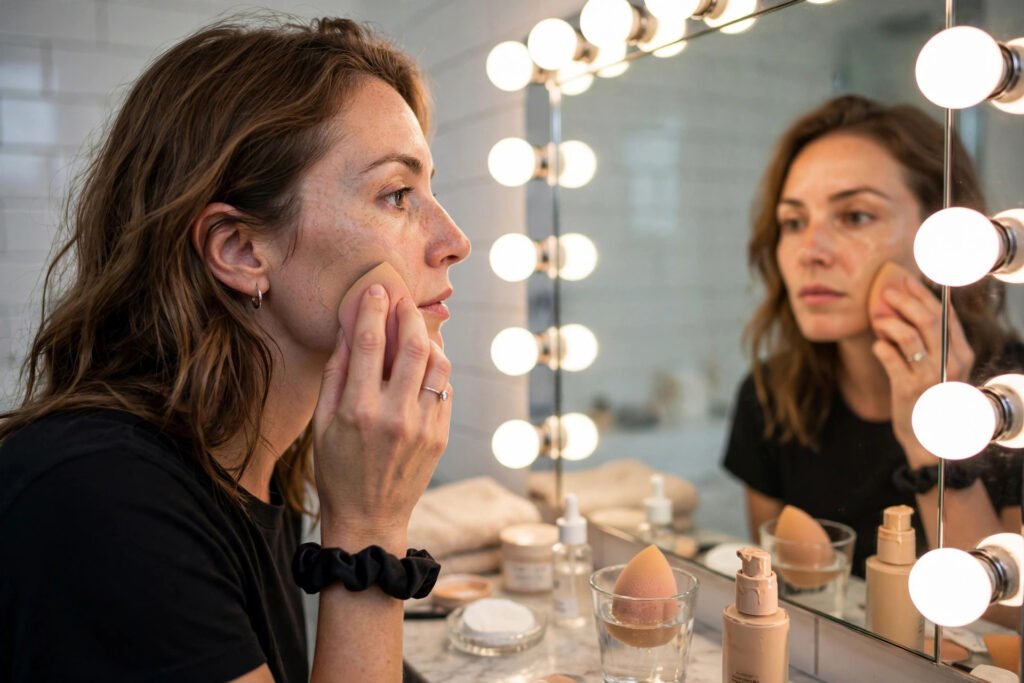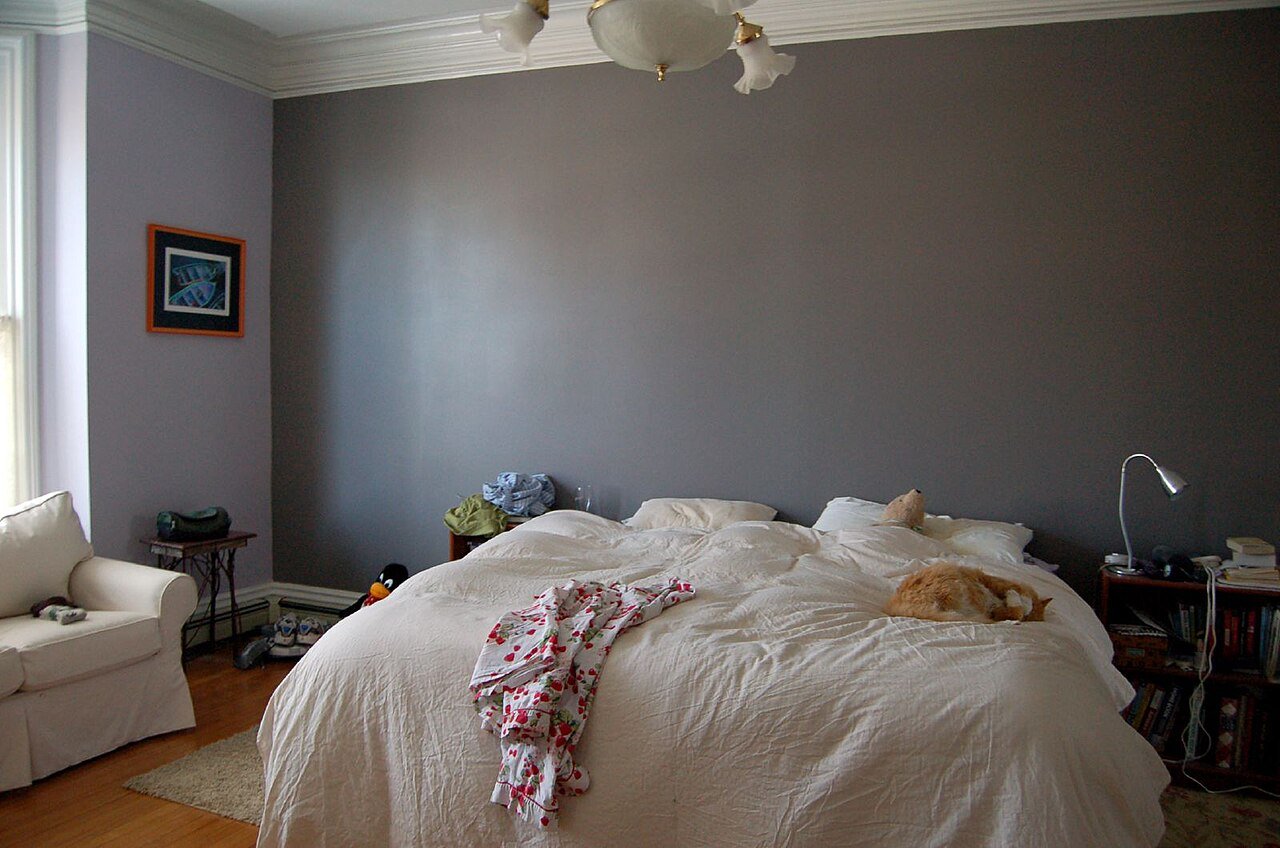
Learning how to make your bedroom darker for better sleep is one of the highest-impact sleep upgrades you can make, and it’s weirdly underrated. Your brain decides when to release melatonin based on light hitting your eyes — even small amounts of light through closed eyelids can suppress it. Streetlights, LED chargers, the neighbor’s porch light, that sliver under the blinds: all of it tells your brain “not quite night yet.” Fix the light, and many people fall asleep faster and sleep deeper within days.
I learned this the hard way in an apartment facing a parking lot floodlight. I thought I was just a bad sleeper. Then I taped blackout material over the window for one week as an experiment, and the difference was embarrassing — I’d been blaming my brain for what was actually a lighting problem.
Start with the windows (the biggest leak)
Blackout curtains — the real ones
Not “room darkening” (marketing for “slightly dimmer”) — actual blackout curtains, which block 99–100% of light. What matters: get them wider and longer than the window, mount the rod 4–6 inches beyond the frame on each side and a few inches above, and let them pool slightly or reach the floor. Light sneaks around edges, not through fabric, so coverage area matters more than curtain thickness. Expect $25–50 per window for decent ones.
The cheap nuclear option: blackout film or portable panels
If you’re renting and can’t mount rods, or you want total darkness: portable blackout shades with suction cups ($15–25) stick directly to the glass and remove without a trace. Static-cling blackout window film does the same semi-permanently. For the truly committed, cutting black foam board to fit snugly inside the window frame creates near-total darkness for a few dollars — ugly from outside, glorious from inside.
Seal the edges
Even good curtains leak at the top, sides, and bottom. Fixes: wraparound curtain rods that curve back to the wall, magnetic strips or Velcro attaching curtain edges to the wall, and a draft-stopper-style roll along the bottom. The goal is a light seal, not just a curtain.
Kill the indoor light sources
Once windows are handled, the enemy is inside the room:
- Electronics LEDs. Chargers, power strips, TVs on standby, air purifiers — put black electrical tape over every LED. A $4 roll of tape fixes a dozen tiny suns.
- Charge devices outside the bedroom. This kills two birds: the LED glow and the phone-in-bed habit. If the phone must stay, face it down and enable Do Not Disturb. How can I spend less time on my phone every evening covers the broader evening phone problem.
- Door gaps. Light from the hallway under the door is surprisingly disruptive. A door draft stopper or a rolled towel handles it.
- Nightlights. If you need one for bathroom trips, use a dim red or amber motion-sensor light in the hallway — red wavelengths disrupt melatonin far less than white or blue.
- Clock displays. Dim them, turn them around, or replace with a non-illuminated clock. Watching the time also fuels insomnia anxiety — double win.
The sleep mask: the $12 backup plan
A good contoured sleep mask (the kind that doesn’t touch your eyelashes) achieves 90% of blackout curtains for $10–15. It’s also the travel solution and the renter’s best friend. If full blackout feels like too much project right now, start with the mask tonight and do the curtains this weekend. Side sleepers: look for masks with thin straps or a wraparound design.
What “dark enough” actually means
The test: lie in bed with eyes closed for two minutes, then open them. If you can make out shapes and details, it’s too bright. True sleep darkness means opening your eyes to essentially nothing. Most people are shocked how far their bedroom is from this — and how much better they sleep once it’s fixed. The Sleep Foundation’s bedroom environment guidance backs this up: darkness, cool temperature (around 65°F/18°C), and quiet are the three pillars, and darkness is the easiest to fix.
Don’t forget the other two pillars
While you’re at it: a cool room (crack a window or lower the thermostat an hour before bed) and consistent quiet (earplugs, white noise machine, or a fan). Light gets the headline, but the trio together is what makes a bedroom genuinely sleep-optimized. And if falling asleep is only half the battle, How do I create a relaxing evening routine to sleep better covers the full relaxing evening routine and What are the most effective ways to wake up earlier consistently the morning side of the equation.
Renters: the no-drill blackout method
If you cannot put holes in the walls, you still have options. Tension rods inside the window frame hold lightweight blackout curtains with zero hardware — measure the frame width carefully, since tension rods slip if they are even slightly off. For a truly dark room, combine the tension-rod curtains with portable suction-cup blackout shades behind them; the double layer kills the edge leaks that single curtains miss. When you move, everything comes down in minutes with no trace.
One more renter trick: if your bedroom has an en-suite bathroom with a bright nightlight or a hallway that leaks under the door, a draft stopper handles the door gap and a $3 plug-in cover or tape handles the LEDs. Total renter blackout budget: under $50, zero deposit risk. And if you are decorating the rest of the rental too, How can I decorate a rental apartment without damaging the walls covers the full no-damage playbook — your sleep setup and your security deposit can coexist.
Quick test tonight: lie in bed with the lights off for two minutes, then open your eyes. If you can see shapes clearly, tape over the worst LED offenders before you sleep — black electrical tape on charger lights and power strips takes five minutes and costs almost nothing. Do the curtains this weekend; do the tape tonight. Most people are stunned how much of their “insomnia” was actually half a dozen tiny lights.
Further reading: bedroom environment tips from the Sleep Foundation.
Takeaway: Make your bedroom darker with real blackout curtains mounted wider than the window, sealed edges, taped-over LEDs, devices charged elsewhere, and a sleep mask as backup. Test with the eyes-closed-then-open check. It’s a weekend project under $75 that pays off every single night — often the fastest sleep improvement you’ll ever make.