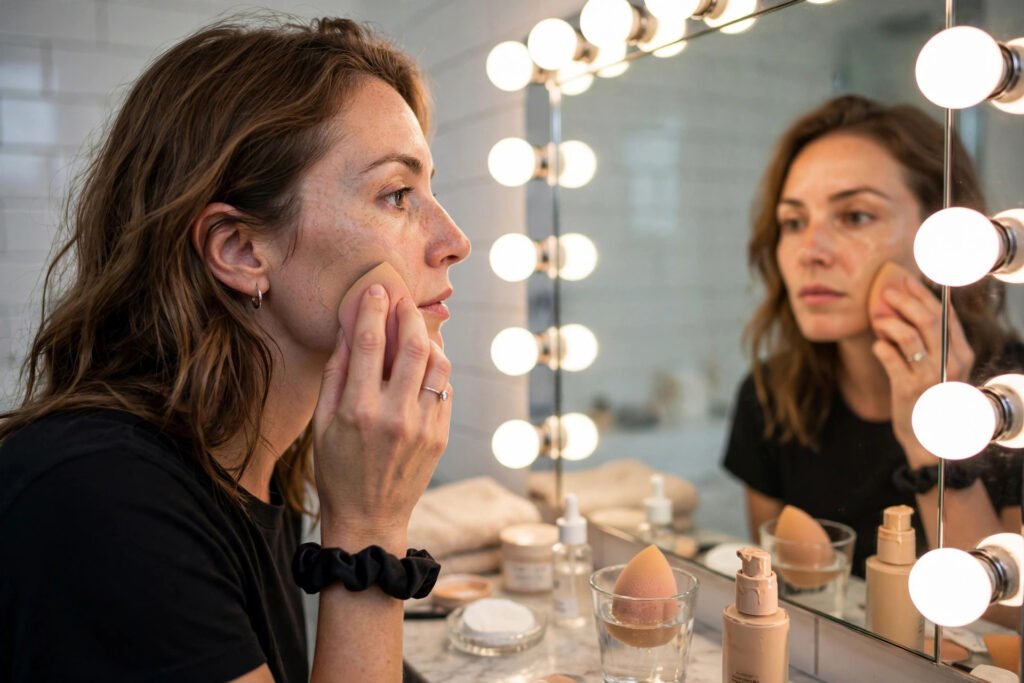
Skincare for beginners has a paradox problem: the more you research, the more confused you get. Twelve-step routines, forty-ingredient product lists, and influencers insisting you need seven serums before breakfast. The result is analysis paralysis — or worse, a bathroom counter full of expensive products fighting each other while your skin gets angrier.
Here’s the liberating truth dermatologists will tell you: a beginner needs four steps. Cleanser, moisturizer, sunscreen, and (optionally, later) one treatment. Everything else is optimization for later. This guide builds that foundation correctly — including the order that matters and the Chicago-specific adjustments your skin actually needs.
Step 1: Cleanser (The Only Job Is to Clean)
A cleanser’s job is to remove sunscreen, sweat, and grime without stripping your skin. That’s it — it doesn’t need to exfoliate, brighten, or transform. For beginners: a gentle, fragrance-free cleanser (gel for oily skin, cream or lotion for dry skin), lukewarm water, 30–60 seconds of massaging, morning and night.
The mistakes: hot water (strips oils), over-cleansing (that “squeaky clean” tightness means you’ve damaged your barrier), and harsh scrubs or brushes. If your face feels tight after washing, your cleanser is too aggressive — switch to something gentler, not something stronger. Double cleansing (oil cleanser then water cleanser) is only necessary if you wear heavy makeup or waterproof sunscreen; most beginners don’t need it.
Step 2: Moisturizer (Seal the Deal)
Moisturizer does two things: adds water-attracting ingredients (humectants like hyaluronic acid and glycerin) and seals them in (emollients and occlusives like ceramides and squalane). Apply to slightly damp skin — it locks in that surface moisture. Lighter gel-cream for oily skin, richer cream for dry skin; the $12–$18 drugstore options (CeraVe, Vanicream, Neutrogena Hydro Boost) perform as well as luxury for this step.
Chicago’s winters are the real test: indoor heating plus subzero wind destroys skin barriers. From November to March, switch to a heavier moisturizer, consider a humidifier in the bedroom, and don’t skip moisturizer even if your skin feels oily — dehydrated oily skin overproduces oil to compensate. The FDA’s cosmetics page is a useful reality check on what moisturizer claims are regulated (few) versus marketing (most).
Step 3: Sunscreen (The Non-Negotiable)
If you adopt one step, make it this one. Daily sunscreen prevents more aging, dark spots, and skin cancer than every serum combined. Broad-spectrum SPF 30+, a nickel-sized amount for the face, applied every morning as the last step — and reapplied if you’re outdoors for hours. Yes, even in Chicago winters; yes, even on cloudy days; yes, even if you “don’t burn.”
Beginner friction points: white cast (try chemical or tinted mineral formulas), greasiness (gel and fluid formulas exist for oily skin), and breaking out (look for “non-comedogenic” labeling). Finding your formula is personal — our guide to choosing the right sunscreen for sensitive skin walks through the options. The American Academy of Dermatology’s sun protection guidance backs the daily-use case with the full weight of dermatological consensus.
Step 4: One Treatment (Later, Not Now)
Run the three-step core for 4–6 weeks first. Your skin needs a stable baseline before you can tell what a new product does. Then — and only then — add one treatment targeting your top concern: vitamin C for dullness and dark spots, niacinamide for oil and pores, a gentle retinoid for texture and aging, or benzoyl peroxide/salicylic acid for breakouts. One at a time, introduced slowly.
The cardinal beginner sin is adding four actives in week one, irritating your skin, and having no idea which product caused it. Patience isn’t just a virtue in skincare — it’s the diagnostic method. If things go sideways despite care, check what a dermatologist visit actually costs — professional guidance is cheaper than a year of wrong guesses.
The Order That Matters (And What Doesn’t)
Morning: cleanser → moisturizer → sunscreen. Evening: cleanser → treatment (when you add one) → moisturizer. The rule is thinnest to thickest, with sunscreen always last in the morning. Wait about a minute between layers — not the 20-minute rituals some influencers preach, just enough that each layer isn’t sliding off.
What doesn’t matter as much as claimed: exact wait times, applying in upward strokes (direction doesn’t change absorption), and expensive tools. Your fingers, clean and gentle, outperform most gadgets.
Adjusting Your Routine by Season (The Chicago Edition)
A routine that works in July will fail you in January — Chicago’s climate demands seasonal adjustments. Winter (Nov–Mar): switch to a cream cleanser if your gel starts feeling tight, upgrade to a heavier moisturizer, add a hydrating serum (hyaluronic acid on damp skin) under your cream, run a bedroom humidifier, and take lukewarm — not hot — showers. Lips and hands need their own protection: keep balm and hand cream everywhere.
Summer (Jun–Aug): switch to a lighter gel moisturizer, be religious about sunscreen reapplication (sweat and lakefront sun demand it), and consider a vitamin C serum in the morning for the antioxidant boost during high-UV months. Transition seasons: spring and fall are when most people over-exfoliate chasing “glow” — resist; instead, gradually swap moisturizer weights as temperatures shift. The principle: your skin’s needs change with humidity and temperature, so your routine should flex twice a year. Watch for the signals — tightness means more moisture, congestion means lighter layers — and adjust before problems compound.
Conclusion
A beginner skincare routine is four steps, not fourteen: gentle cleanser, appropriate moisturizer, daily sunscreen, and one treatment added later. Give the core 4–6 weeks before judging, introduce new products one at a time, and adjust for Chicago’s brutal winters with heavier moisture and barrier support. Skincare rewards consistency over complexity — the person who does three steps daily for a year will always beat the person who does twelve steps for a month. Start simple, stay consistent, and let your skin tell you what it needs next.
Frequently Asked Questions
How do I build a simple skincare routine for beginners?
Start with three steps: gentle cleanser, moisturizer, and daily SPF 30+ sunscreen. Run this for 4–6 weeks, then add one treatment (like vitamin C or niacinamide) for your top concern.
What order do I apply skincare products?
Thinnest to thickest: cleanser → treatment serums → moisturizer, with sunscreen always last in the morning routine.
How long before I see results from a new routine?
Give any routine 4–6 weeks minimum — skin cell turnover takes about 28 days. Brightening and anti-aging ingredients need 8–12 weeks for visible change.
Do I need expensive products for good skin?
No. Drugstore staples ($12–$18) perform as well as luxury for cleanser and moisturizer. Spend selectively on treatments with proven actives if anywhere.
Do I need sunscreen in Chicago winters?
Yes — UV penetrates clouds and reflects off snow, and daily exposure accumulates year-round. Make SPF 30+ a 365-day habit regardless of season.
How do I know if a product is breaking me out?
Introduce products one at a time and watch for 2–3 weeks — breakouts appearing within days of a new product, in areas where you don’t normally break out, point to the product. True purging (from actives like retinoids) only occurs where you already get clogged pores and resolves within a month. Keep a simple log of when you introduced each product; without it, identifying the culprit among five new products is guesswork.
Can I use the same routine morning and night?
Mostly yes for beginners — cleanser and moisturizer work both times. The differences: sunscreen is mornings only, and treatments (when you add them) are usually evenings only. There’s no need for separate AM/PM product lines when starting out; one good moisturizer and one good cleanser serve both routines. Complexity can come later if your skin ever demands it.